Media teams must use viewing signals to find missed households, sequence messages, and stop wasting impressions across screens.
AdImpact projects a record $11.6 billion in political advertising during the 2026 election cycle. Campaigns & Elections reported that the revised estimate placed connected television, or CTV, at $2.7 billion, giving campaigns a powerful reason to improve how they find streaming households. Media directors can no longer rely only on a voter’s age, income, party score, and television market when audiences divide their attention across broadcast channels, streaming applications, gaming consoles, and other connected inputs.
Automatic Content Recognition, or ACR, adds viewing behavior to that campaign picture. It can identify content displayed on an opted in smart television and help advertisers measure household exposure, but it does not tell a campaign which person sat in front of the screen or how that person voted. Treat ACR as a sharper planning signal, connect it carefully to voter and household data, and require every vendor to explain exactly what its data can and cannot prove.
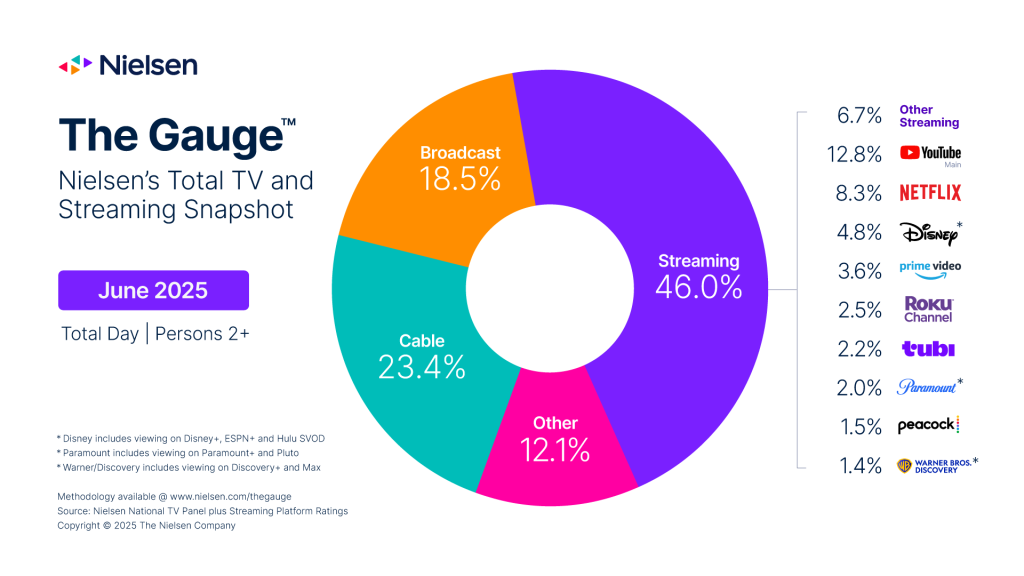
Streaming has permanently changed the television battlefield, but campaigns still need to distinguish audience scale from target accuracy. Nielsen reported that streaming represented 46% of total television usage in June 2025, compared with 44.8% one month earlier. Those figures measure national viewing during specific months, so they demonstrate rapid audience movement without proving that every district or voter demographic behaves the same way.
Campaigns should use that shift as a command to audit reach, not as permission to abandon broadcast. AdImpact’s updated projection still assigns broadcast television $5.6 billion and 48% of projected political advertising spending, twice CTV’s projected share. Build the district plan around actual voter viewing patterns, then fund broadcast, cable, streaming, and digital channels according to the households each medium can reach.
Streaming reached 46% of television usage in June 2025, via Nielsen.
Budget pressure makes that reach audit urgent. AdImpact increased its CTV projection from $2.5 billion to $2.7 billion, while major digital platforms are projected to receive $1.6 billion. Campaigns that wait until inventory tightens will pay more to correct missed audiences, while teams that map reach early can reserve the right mix of television and digital placements.
Broadcast remains dominant, but CTV will command a projected $2.7 billion in 2026.
Media directors should begin with three practical questions. Identify which persuadable and turnout households cannot be reached efficiently through the existing television schedule, determine which streaming inventory can reach those homes, and set a maximum frequency across every participating platform. That approach turns CTV from a fashionable line item into a controlled campaign tool.
ACR recognizes content by creating a digital signature from material displayed on a supported smart television and comparing that signature with a reference library. Depending on the manufacturer and system, the detected material can include programming, movies, commercials, or content delivered through connected inputs. This capability gives measurement companies a more direct signal of what appeared on a screen than a demographic estimate based only on the program’s expected audience.
Accuracy still requires careful language. Samsung explains that its optional ACR feature can collect viewing history, a television identifier, and an IP address when a user has opted into its Viewing Information Services. Samsung also states that it does not record or watch the displayed content, so campaigns should describe digital signatures and viewing information rather than claim that manufacturers store everything shown on the television.
Opted in televisions supply screen level signals for media measurement, via VIZIO Platform Plus.
Household exposure is not individual voter identity. One television may serve several people with different political views, and an IP address may connect numerous devices without proving which resident watched a program or advertisement. Campaigns should therefore pair ACR with voter files and other permitted household data while retaining uncertainty in every audience decision.
ACR adds household exposure signals without confirming individual voter identity.
Demand a written methodology before buying against any ACR audience. Ask how consumers opted in, which television models contribute data, how quickly exposure information becomes available, how household matches are created, and what percentage of records fail to match. Those answers protect the campaign from buying false precision.
ACR becomes strategically useful when campaigns connect verified television exposure with a disciplined follow up plan. A media team may create an audience of participating households associated with a rival advertisement, then deliver a contrasting message through eligible CTV or digital inventory. Industry teams sometimes call this practice conquesting, but campaigns should describe it as exposure based follow up and avoid promising an instant response that the vendor cannot guarantee.
Message order matters more than technological novelty. A voter who first encounters an attack may need factual rebuttal, while a household that has already received the campaign’s biography spot may be ready for an issue specific appeal or turnout message. Sequence creative by persuasion stage, set a clear delivery window, and stop serving the same message once additional impressions add irritation instead of information.
Connected television campaigns depend on coordinated inventory and measurement partners, via Roku Advertising.
Cross screen delivery requires another layer of verification. The Electronic Frontier Foundation explains that political campaigns commonly combine voter records with consumer information and may use IP based systems to place advertisements across household devices. ACR can contribute television exposure information to that process, but a separate identity system usually performs the household or device match.
Field and media teams should share a single operational plan. Let the media team report which target households have received each creative sequence, let field staff identify persuasion or turnout priorities, and compare both sets of information without treating an advertising impression as proof of support. That coordination can reduce waste and keep television, mobile, canvassing, and direct mail focused on the same campaign objective.
Political value does not erase privacy risk. ACR may involve sensitive viewing information, household identifiers, and connections to other campaign or consumer records. Campaigns should make consent, data retention, permitted uses, and deletion requirements part of vendor selection before any audience enters a media platform.
History shows why those safeguards matter. In 2017, the Federal Trade Commission announced a $2.2 million settlement after alleging that Vizio collected viewing information from 11 million consumer televisions without adequate knowledge or consent. The resulting order required prominent disclosure, affirmative express consent, deletion of specified historical data, and a comprehensive privacy program.
Political data profiles can combine voter, consumer, and behavioral assumptions, via the Electronic Frontier Foundation.
Current manufacturer policies cannot be inferred from that historical case. Samsung says users can turn its ACR feature on or off through television settings, while VIZIO Platform Plus describes its data as coming from opted in devices. Campaigns must verify the current policy governing the specific dataset instead of applying one company’s practice to the entire market.
Accuracy deserves the same scrutiny as consent. Vendors should disclose device coverage, geographic limits, recognition rates, household match rates, processing delays, and the platforms excluded from their measurement. Media buyers should test a limited audience first, compare results against a control group when possible, and expand only when the evidence supports the investment.
Smart television data gives campaigns a valuable new view of household media exposure. It can show that participating televisions displayed particular content and can support more disciplined reach, sequencing, and frequency decisions. It cannot identify every viewer, reveal personal political beliefs, or replace the voter file.
Campaigns should act on that distinction. Audit streaming reach, verify every vendor’s data path, build exposure based creative sequences, and coordinate media decisions with field priorities. Reject claims of instant response, perfect identity, complete cross platform visibility, or automatic persuasion.
CTV’s projected $2.7 billion share of the 2026 political advertising market guarantees that these questions will move closer to the center of campaign planning. Teams that combine viewing signals with consent, accuracy, and clear campaign objectives can use ACR responsibly. Teams that buy the promise without testing the data risk paying premium prices for another imperfect demographic proxy.