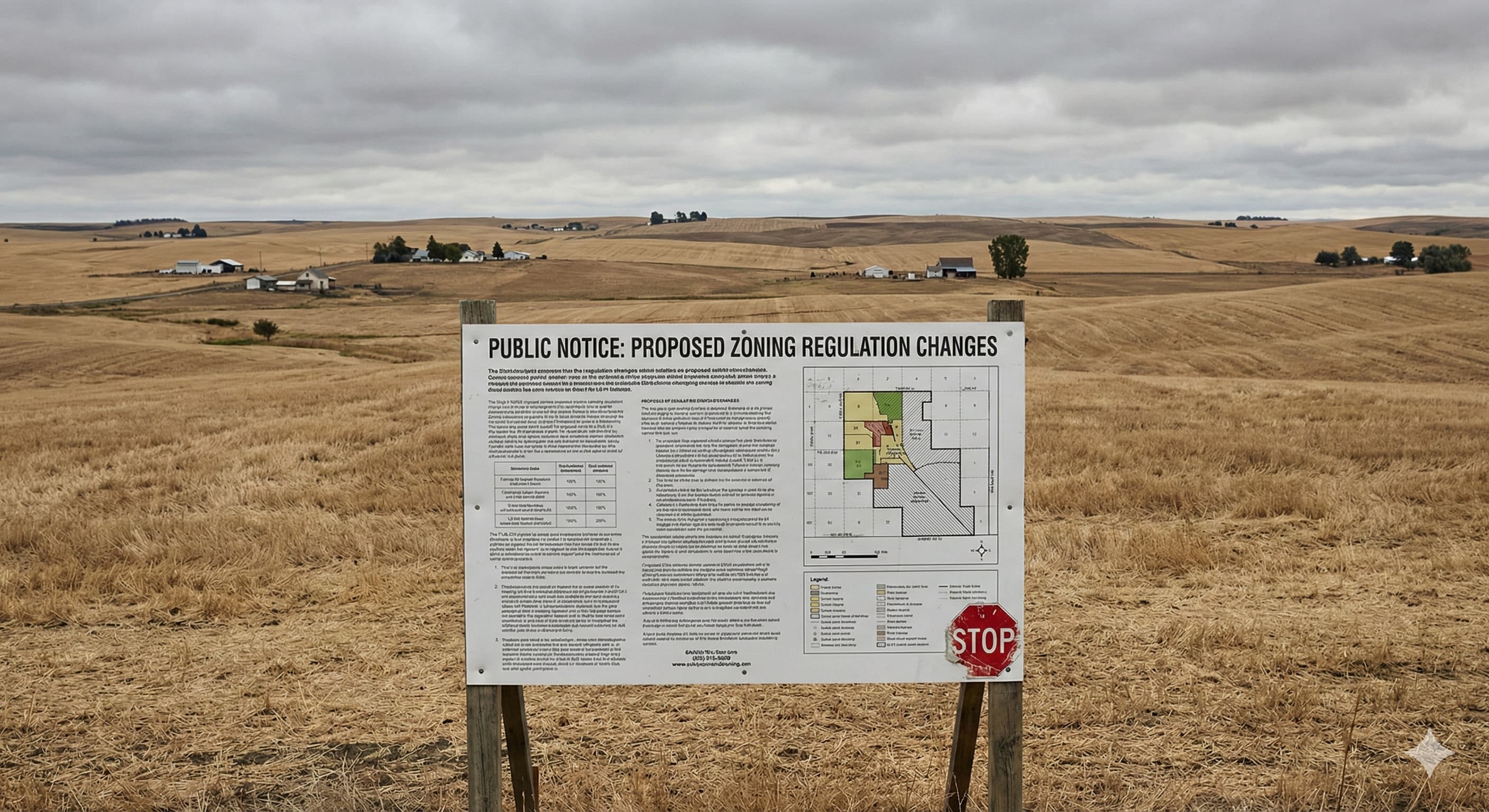
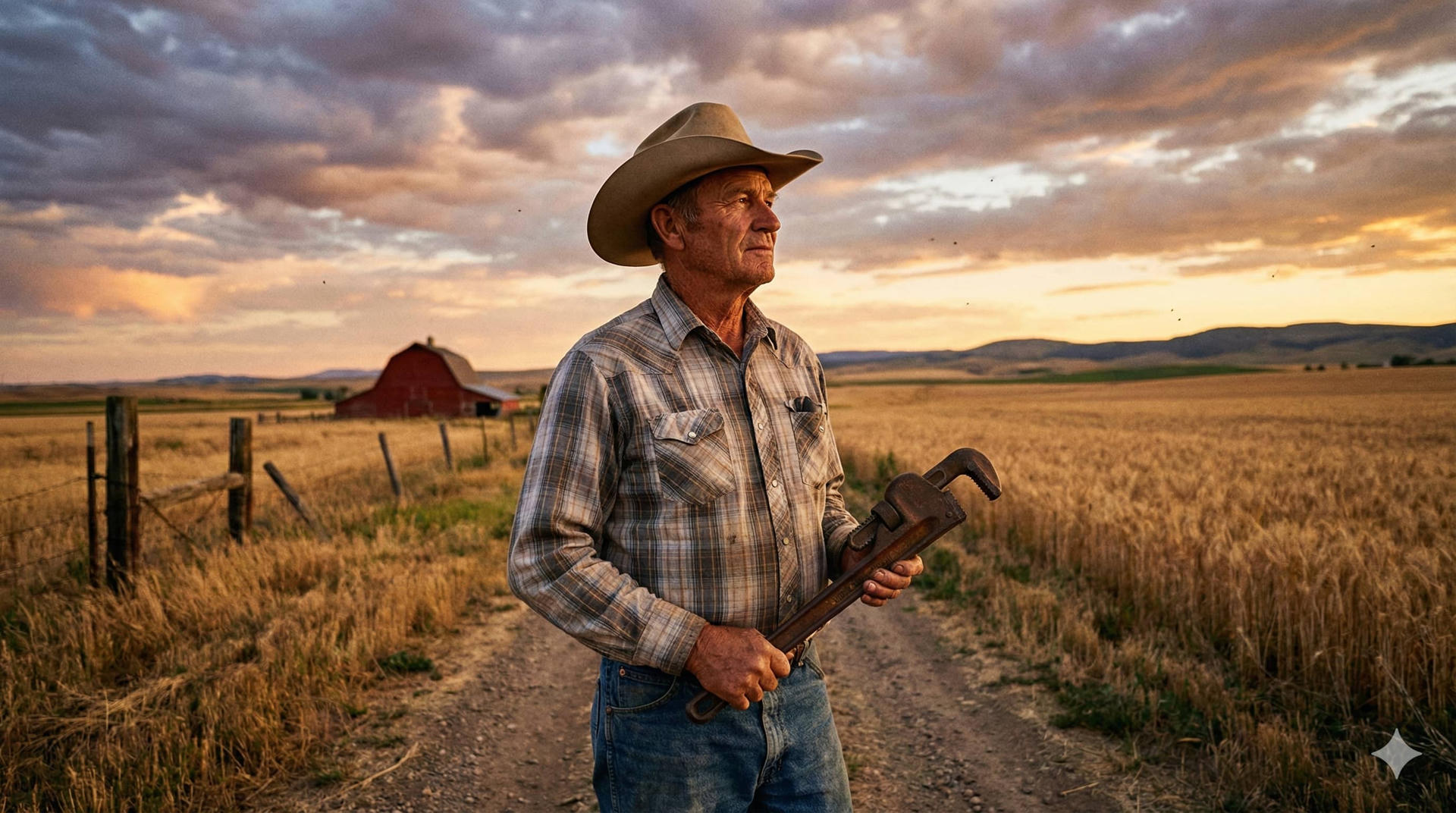

Rural resentment is not only about economics; it’s a respect and status conflict that shapes who counts as “deserving” and helps explain why Republicans keep finding receptive ground in small-town America.
What to Know
- A major Wisconsin fight over public-sector unions revealed something deeper than economics: rural voters often respond first to status, respect, and identity.
- In many small towns, “hard work” is defined as physical, hands-on labor—so desk jobs can be seen as less demanding or less deserving.
- That cultural gap feeds resentment toward government and public institutions, especially when rural families feel they’re struggling while others feel “protected.”
- When politics is interpreted through dignity and “who respects us,” policy details matter less than how a candidate signals belonging.
- The GOP opportunity is often validation first: Republicans tend to gain when they acknowledge the dignity/status grievance and speak in plain terms about fairness, respect, and who gets listened to.
The Definition of "Real Work" (The Respect Gap)
In many small towns, “hard work” isn’t an abstract virtue—it’s a lived physical reality. It usually means early mornings, long shifts, and worn joints.
As Katherine Cramer explains in her interview with Jacobin regarding her book The Politics of Resentment:
“There’s a notion in rural America of a hard worker as someone who’s outdoors or using their hands or in the factory using their bodies all day”.
-jpg.jpeg?width=237&height=356&name=book%20cover%20(1)-jpg.jpeg)
Cover image of The Politics of Resentment by Katherine J. Cramer
That’s where the respect gap opens. Office and administrative work can be real work, but in a rural setting, it often looks different—clean hands, steady hours, and less physical risk. Cramer notes that in many struggling rural areas, “public employees are the highest-paid people in the community”. When rural residents think about public-sector roles like teachers and government staff, they see a distinct lack of physical burden. Cramer found that to many residents, “being a teacher didn’t look like backbreaking work,” but rather “looks to many people like a pretty cushy job” defined by “pensions and health care and their summers off”.
-png-1.png?width=213&height=237&name=image%20(1)-png-1.png)
This is not only an argument about wages. It’s a story about deservingness: who is carrying the load, and who is protected from the downside. When that story hardens, government stops sounding like “help” and starts sounding like a system that takes from people who produce and shields people who regulate, manage, or supervise.
That’s why Wisconsin’s 2011 fight over public-sector unions became so politically clarifying.
-png.png?width=384&height=514&name=image%20(2)-png.png)
Many rural voters didn’t experience it as a technical policy dispute. They experienced it as a fairness test—proof that someone was finally willing to say out loud what they already believed: the system was tilted, and the people doing the hardest work were not the ones being rewarded.
That respect gap becomes especially visible when rural workers compare their own economic insecurity to the stability they see in public-sector jobs
The Benefits Gap: Who Gets Protected
In many hollowed-out rural communities, the school district or county building can feel like the last place offering stable, middle-class work. That reality changes how public employees are perceived. Teachers, administrators, and agency staff stop reading as “neighbors with jobs” and start reading as symbols of security.
As Katherine Cramer told Jacobin, to many residents, these roles look like
“a pretty cushy job” defined by “pensions and health care and their summers off”.
In some towns, she notes that “10 percent of every community is a public employee of some kind,” often making them the “highest-paid people in the community”. This can make them the most visible “haves” in an economy of “have-nots.”
The chart below, titled "The Roots of Resentment," visualizes the wage disparity that fuels rural frustration with the public sector.
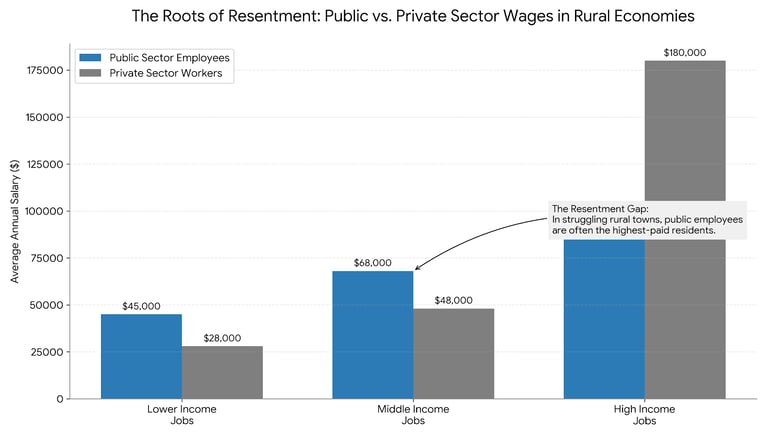
Data Concept: Based on income distribution analysis in The Politics of Resentment by Katherine J. Cramer
The chart captures something that raw policy data often misses: in lower and middle income brackets, which represent the majority of the rural workforce, public sector employees frequently out-earn their private sector counterparts. In many small towns, teachers, police officers, and municipal administrators are among the most economically stable residents.
This contrast matters because private industry in many rural communities has stagnated or left entirely. When government jobs remain the most visible source of stable pay and benefits, it creates a perception gap that feels deeply personal to those working in logging, farming, trucking, or small manufacturing.
The grievance often lands as a blunt fairness question. As Katherine Cramer documents in her research, rural workers frequently ask:
"I can't afford health care for myself or my family, and yet my taxes are going up so that I can pay for health care for public employees."
In that frame, new spending doesn't sound like help. It sounds like more extraction. Meanwhile, the highest private sector incomes remain concentrated in distant cities or ownership classes, largely invisible to the local rural labor market.
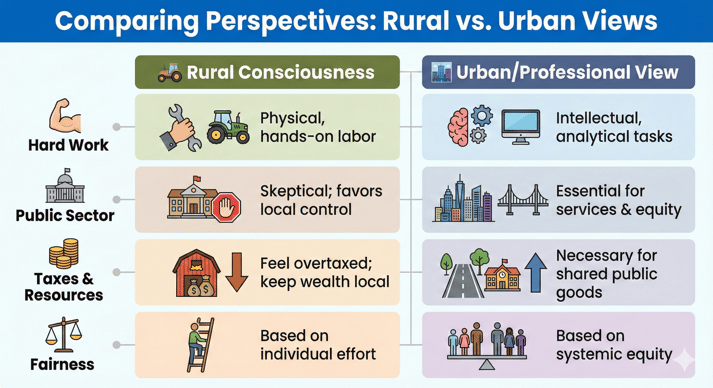
Contrasting perspectives on labor, government, and fairness rooted in “rural consciousness.” Based on Katherine Cramer’s The Politics of Resentment. (Created by Campaign Now with Gemini.)
The nature of the work can intensify the perception. Where “real work” is defined as physical, place-based labor and year-round endurance, the school calendar and job protections can become emotional triggers. Cramer observes that “there’s a notion in rural America of a hard worker as someone who’s outdoors or using their hands or in the factory using their bodies all day”. This sentiment has deep roots—Cramer notes in her book that “as recently as 1936, [government] employees were referred to as ‘tax eaters,’” a shorthand that still carries weight in the rural imagination today.
Wisconsin Case Study: When the Union Fight Became a Fairness Fight
When Governor Scott Walker introduced Act 10 in 2011, curbing collective bargaining for many public-sector unions, Madison exploded in protest, with crowds that reportedly reached 100,000 at the Capitol. But the political meaning of that moment split sharply by geography. In many rural communities, the fight was not processed as a philosophical debate about labor rights. It was processed as a fairness test—a referendum on who was protected, who was exposed, and who was expected to pay.
-png.png?width=249&height=202&name=image%20(3)-png.png)
In struggling small towns, public employees including teachers, school staff, and municipal workers were often seen as holding the last remaining stable jobs: reliable paychecks, strong benefits, and retirement security. Meanwhile, private-sector workers in farming, logging, and manufacturing faced stagnant wages, layoffs, and shrinking benefits. That contrast produced a ready-made interpretation of Act 10 as a correction to a system that felt tilted toward the insulated and away from the exposed.
Layered onto the economics was status. When hard work is culturally defined as physical, year-round labor, office-based work can read as sheltered, and perks like summers off become symbols of a rigged arrangement. Walker's move worked politically because it harnessed that pre-existing resentment and gave it a concrete target. Act 10 turned a technical debate about bargaining rules into a visible story about who the system protects, and signaled to many rural voters that someone was finally willing to level the field.
Our Money Goes Somewhere Else: The Fair Share Problem
Over time, the resentment around benefits and job security broadens into a bigger conviction: rural communities are not getting their “fair share.” In that story, the rural economy produces tangible value like food, timber, energy, and materials while decision-making and visible investment concentrate somewhere else. Money leaves as taxes and fees, and what returns feels abstract, delayed, or routed through priorities set in metropolitan centers. Rural voters often perceive a one-way flow where contributions go up front but the payoff rarely comes home.
That economic grievance quickly becomes an influence grievance. Many rural voters do not just feel underfunded; they feel unheard. The important calls, they believe, are made elsewhere by people in capitals and agencies who do not live with the consequences. Survey research backs this perception, as rural residents consistently report lower external efficacy, meaning less confidence that government is responsive to people like them than urban residents. Even where rural America has structural leverage on paper, it can still feel politically invisible in practice.
This is where “rule from afar” becomes a political accelerant. If you already believe resources flow out and decisions flow in, then every new mandate, regulation, or policy shock lands as further proof that the system is not built for you. That sets up the next dynamic: the battles where local control becomes the headline—and resentment hardens into durable voting behavior.
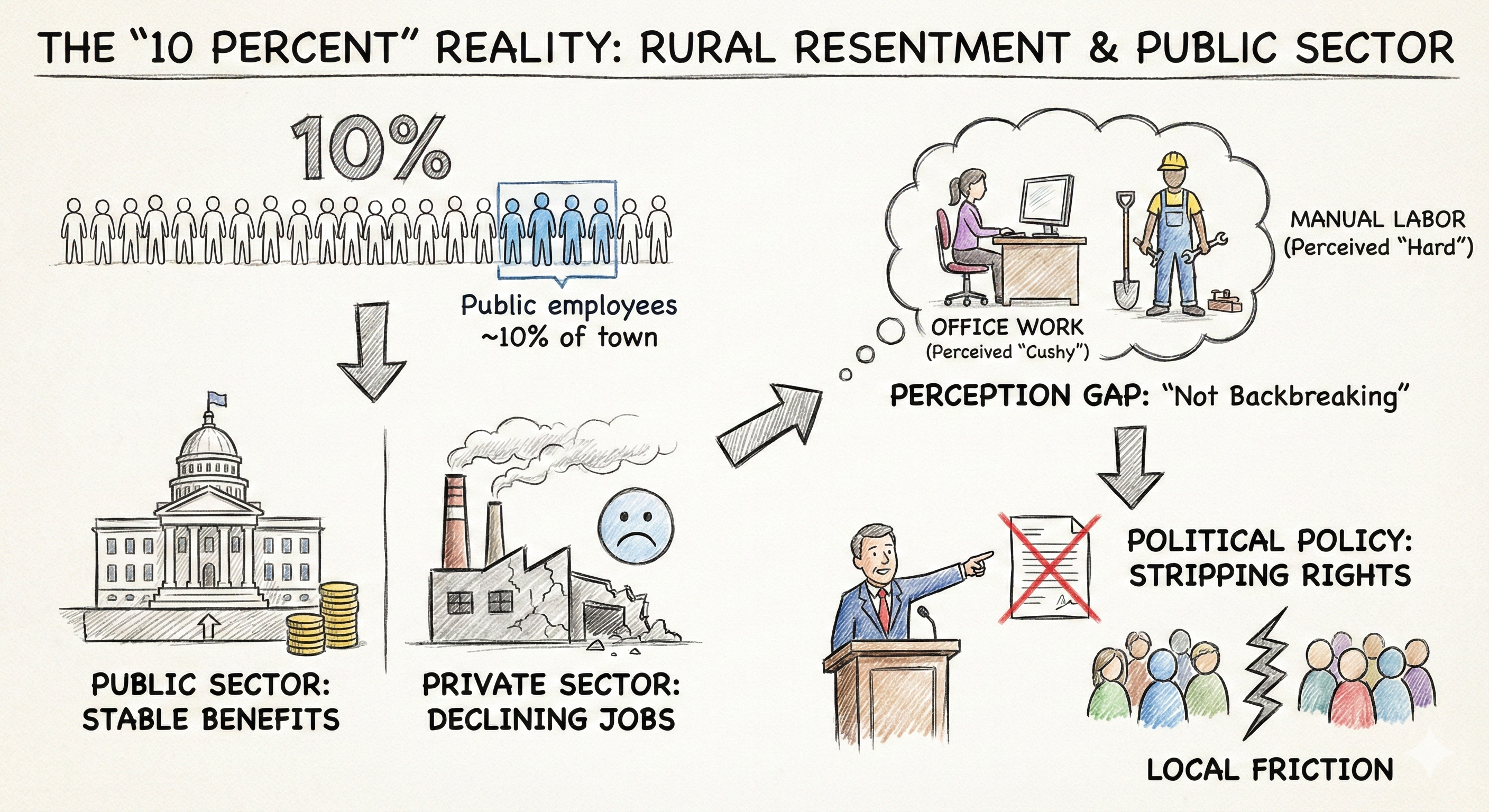
How perceived “cushy” public sector jobs fueled rural resentment. Based on Katherine Cramer’s The Politics of Resentment. (Created by Campaign Now with Gemini.)
The GOP Opportunity
Republicans have held rural ground less by winning every policy argument and more by winning the “respect” argument. When rural voters feel ignored or talked down to, the GOP’s edge is that it tends to validate the grievance first—then offer a clear contrast: local control over distant decision-making, and visible presence over election-season flybys.
That advantage is real, but it is not automatic. Rural support is often conditional: voters want proof that leaders will keep showing up, listen to local constraints, and deliver tangible outcomes that match the language of fairness and dignity. If Republicans treat rural communities as “locked in,” or rely too heavily on culture-war signaling without follow-through, the trust they’ve banked can thin out fast. The opportunity is to make cultural alignment durable by pairing it with consistent engagement and credible, local-facing results.
Wrap Up
The grievance over respect and fairness gives Republicans a real opening, but keeping it requires more than echoing the frustration. Rural voters are looking for proof that “being heard” produces outcomes—jobs that stick, costs that ease, and rules that feel grounded in local realities. If the GOP cannot translate cultural alignment into visible improvements, the advantage can soften into disappointment. The challenge is to turn recognition into results: reduce the sense of one-way extraction, show up consistently, and deliver changes people can feel in their communities.
Part of: The Rural Realignment Series
- The full story: How Democrats Lost the Rural Vote
- Next in this series: How the GOP Can Lock In Rural Economic Realignment in 2026 and Beyond
- Also read: Ending ‘Rule from Afar’: How the GOP Can Give Voice to the ‘Ignored’ Voter