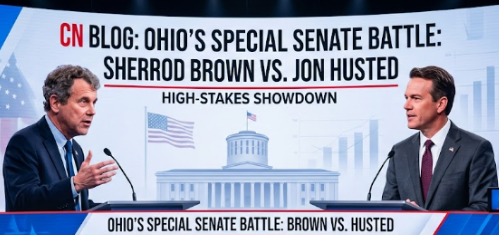

A high-stakes Senate showdown could help determine which party controls the chamber after 2026.
What to Know
- The seat opened after JD Vance resigned to become vice president.
- Jon Husted was appointed to the Senate and is now defending the seat in a special election.
- Former Senator Sherrod Brown is attempting a political comeback after losing in 2024.
- Brown has raised roughly $25.9 million compared to Husted's $10.5 million.
- Outside groups have already reserved more than $119 million in advertising, signaling one of the most expensive Senate races of 2026.
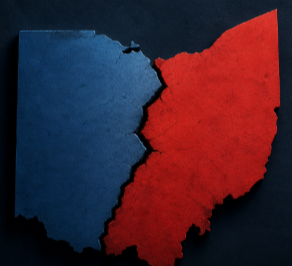
The political spotlight is shifting back to the Buckeye State. Following the May 5, 2026, primary elections, the stage is officially set for what promises to be one of the most high-stakes, expensive, and closely watched congressional races of the year: Ohio’s U.S. Senate special election.
This rare November showdown features a classic heavyweight political matchup: former Democratic Senator Sherrod Brown attempting a massive political comeback against the newly appointed Republican incumbent, Senator Jon Husted.
The Backstory: How We Got Here
The seat, originally won by JD Vance in 2022, became vacant in January 2025 following Vance's resignation to serve as Vice President of the United States. To fill the vacancy, Ohio Governor Mike DeWine appointed his then-Lieutenant Governor, Jon Husted, to the chamber.

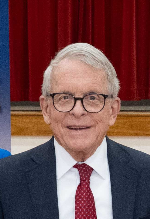
Vice President JD Vance at Board of Peace; photo via White House, Gov. Mike DeWine
The stakes are particularly unusual for Husted because Ohio has not held a U.S. Senate special election since 1954. After being appointed to fill the vacancy created by JD Vance's resignation, Husted must now campaign to keep the seat while simultaneously adjusting to life in Washington. He has described the transition as a demanding one, citing a hectic travel schedule and the challenges of navigating complex national issues ranging from trade to foreign policy.
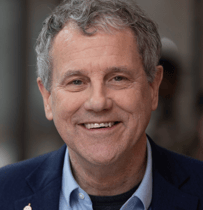
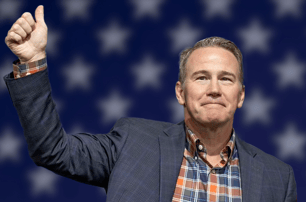
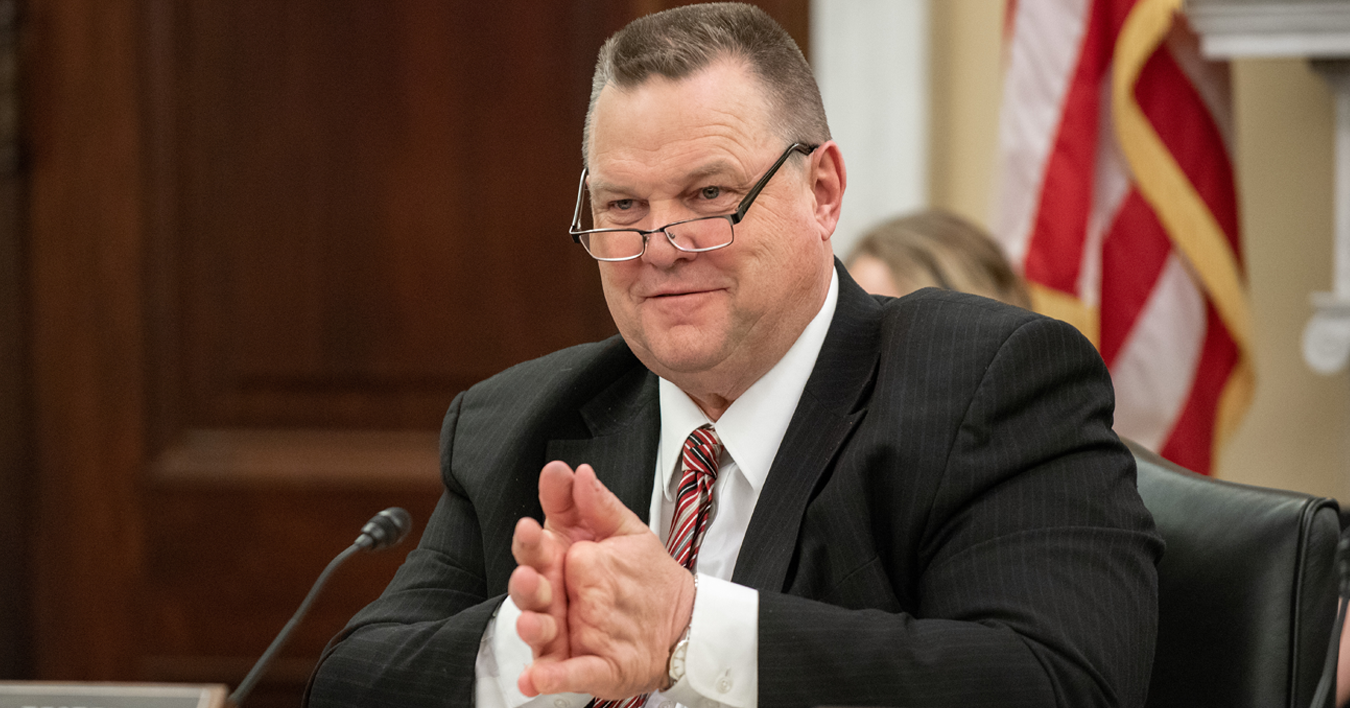
Former Senator Sherrod Brown; Senator Jon Husted
For Sherrod Brown, who lost his 2024 re-election bid to Republican Bernie Moreno after serving three terms, this race represents a shot at redemption. For Husted, a long-time fixture in Ohio politics, it is his first major test defending a statewide federal seat under intense national scrutiny.
Contrasting Profiles
The 2026 general election highlights two distinct brands of Ohio politics. Relying on his deeply rooted "dignity of work" message, Brown is leaning hard on his historic appeal to blue-collar and union workers. Despite Ohio's distinct red shift in recent presidential cycles, Brown’s campaign is betting that his robust name recognition and independent-leaning populist brand can win back the split-ticket voters he missed in 2024.

Post from Sherrod Brown’s Facebook
A seasoned operative, Husted brings an extensive state-level resume to Washington, having previously served as Ohio's Lieutenant Governor, Secretary of State, and Speaker of the Ohio House. He commands strong support from the state's dominant Republican establishment and plans to run on a platform of economic growth, regulatory relief, and traditional conservative values.
Cash and Competitiveness Create A Multimillion-Dollar War
If the early metrics are any indication, national groups are preparing to flood Ohio with unprecedented amounts of cash. The 2024 Senate race in the state broke spending records, and 2026 is already shaping up to follow a similar trajectory.
The Fundraising Landscape
Federal Election Commission (FEC) filings reveal a stark contrast in strategy and fundraising dynamics heading into the summer:
|
Candidate |
Cash on Hand |
|
|
Sherrod Brown (D) |
~$25.9 Million |
~$17.0 Million |
|
Jon Husted (R) |
~$10.5 Million |
~$8.1 Million |
While Brown currently enjoys a massive fundraising lead and a larger personal war chest, outside groups are already moving quickly to close the gap. The Republican-aligned Senate Leadership Fund recently announced a staggering $79 million initial ad reservation in Ohio, while the Democratic Senate Majority PAC responded with a hefty $40 million television ad buyout right after the primaries.
What the Polls and Predictions Say
Public opinion data suggests a tight, grueling race through November. Aggregated tracking from outlets like RealClearPolitics, Decision Desk HQ, and 270toWin shows Husted holding a narrow, single-digit lead, averaging around Husted +3.0%.
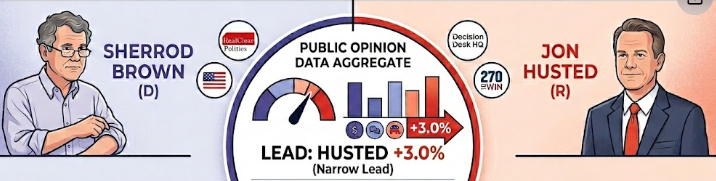
Major political forecasters, including The Cook Political Report and The Economist, currently rate the race as a Toss-up, while others edge it as Lean Republican due to Ohio's recent voting history. With control of the U.S. Senate balanced on a razor's edge, Democrats view Ohio as a rare, golden opportunity to flip a red seat in a midterm cycle. Conversely, national Republicans see holding Ohio as a mandatory firewall to protect their legislative agenda.
What Could Decide the Race?
While fundraising and polling often dominate headlines, Ohio's changing electorate may ultimately determine the outcome of the state's first U.S. Senate special election in more than 70 years. One of the most important groups to watch is Ohio's large population of non-college-educated white voters who decided 2024’s outcome.
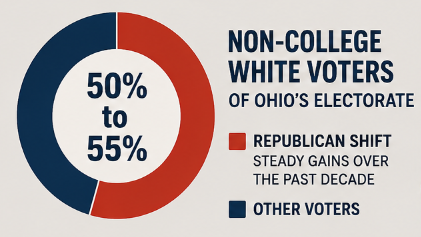
This bloc makes up roughly half of the state's electorate and has shifted steadily toward Republicans over the past decade. Brown's campaign is betting that his long-standing "dignity of work" message can reconnect with enough working-class voters to offset the state's broader Republican trend.
Democrats also face pressure to maximize turnout in Ohio's largest metropolitan areas. Cleveland, Columbus, and Cincinnati have historically provided the foundation of Democratic statewide campaigns, particularly among Black voters and younger voters. Any drop in participation in those population centers could significantly narrow Brown's path to victory.
Meanwhile, independent and unaffiliated voters remain a critical wildcard. Ohio has nearly 8 million registered voters, and many do not formally identify with either major party. In a race expected to be decided by a narrow margin, even small shifts among moderates could prove decisive.
Key Issues on the Campaign Trail
|
Issue |
Jon Husted (R) |
Sherrod Brown (D) |
|
Economy |
Emphasizes tax relief, regulatory reform, and business growth. |
Focuses on economic populism, manufacturing jobs, and consumer affordability. |
|
Energy |
Supports traditional energy development, including oil and natural gas production. |
Promotes energy investment while emphasizing protection of industrial and manufacturing jobs. |
|
Immigration & Security |
Aligns closely with Republican calls for stronger border enforcement and fentanyl interdiction. |
Supports border security measures while highlighting bipartisan legislative solutions. |
Why National Groups Are Spending Millions
The battle for Ohio extends far beyond state lines. With Republicans holding a narrow Senate majority, Democrats view Ohio as one of their most realistic opportunities to flip a Republican-held seat during the 2026 midterms. Republicans, meanwhile, see Ohio as a critical piece of their defensive map.
That national significance helps explain why outside groups have already reserved more than $119 million in advertising. Both parties recognize that what happens in Ohio could influence not only Senate control, but also the political landscape heading into the 2028 presidential election.
Wrap Up
Ohio has become increasingly favorable territory for Republicans in recent election cycles, but Sherrod Brown has built his political career on attracting voters who are willing to cross party lines. That dynamic makes this special election one of the few Senate contests where candidate identity may matter as much as party affiliation.
With more than $119 million in outside spending already committed and national control of the Senate potentially at stake, Ohio is once again positioned at the center of the political map. The outcome will not only determine who completes the remainder of the term, but could also provide an early indication of the political environment heading into the 2028 presidential election.