
Early institutional decisions and election mechanics in both states are shaping the strategic environment for the 2026 battle for control of Congress.
What to Know
- A statewide referendum in Virginia scheduled for April 21 will determine whether a new congressional map moves forward, potentially shifting up to 4 seats toward Democrats.
- Virginia’s Supreme Court must validate the map after the referendum, meaning the final district boundaries remain legally unsettled.
- Several Republican incumbents could become vulnerable under the proposed Virginia map, including Rob Wittman, Jen Kiggans, John McGuire, and Ben Cline.
- Georgia’s 14th District will hold a special election on March 10 using a jungle primary system that could trigger a runoff on April 7.
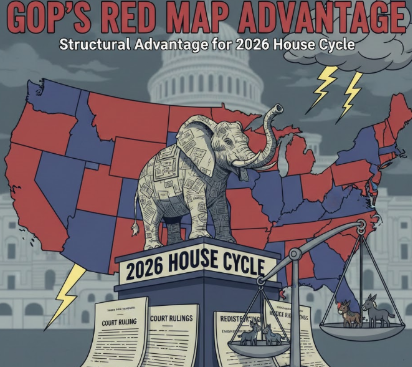
- Structural rules such as redistricting outcomes, runoff elections, and ballot mechanics may shape the 2026 House battlefield as much as traditional campaign messaging.
The opening phase of the 2026 election cycle is already being shaped by decisions made far from campaign rallies and television ads. The real action is unfolding inside courtrooms, legislatures, and election calendars where rules are written and maps are drawn. Virginia and Georgia have quickly emerged as two states where those structural decisions are beginning to influence the national fight for control of Congress.
In Virginia, voters will decide on April 21 whether to approve a new congressional map that could shift up to 4 House seats, with the Virginia Supreme Court still required to validate the lines afterward. At the same time, Georgia’s sudden 14th District vacancy has triggered a special election featuring nearly 24 candidates under the state’s jungle primary system, with a likely runoff scheduled for April 7.
Virginia’s Redistricting Referendum
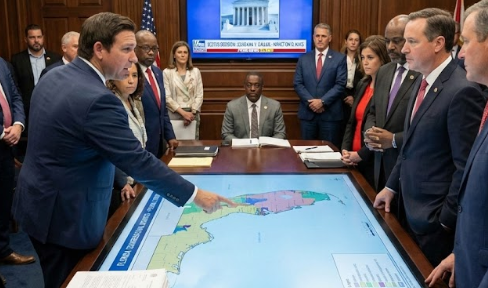
Virginia voters will decide on April 21 whether to approve a new congressional map drawn by Democratic lawmakers. The proposal was developed in response to redistricting actions taken by Republican controlled legislatures in several other states. Supporters argue that the new map would rebalance representation in the commonwealth following those national changes.
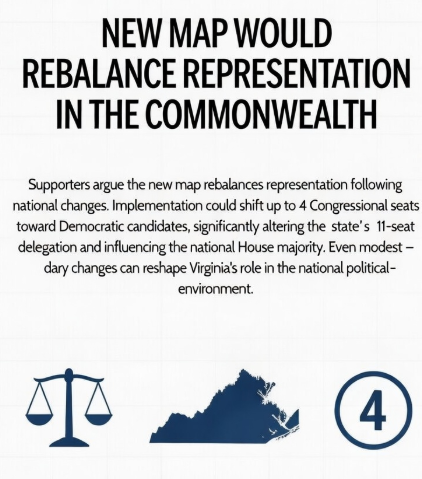
If implemented, the new map could shift as many as 4 congressional seats toward Democratic candidates. That shift would significantly alter the state’s delegation and could influence the national House majority if the overall chamber remains narrowly divided. Virginia currently holds 11 seats in the U.S. House, which means even modest changes in district boundaries can reshape the state’s role in the national political environment.
However, the referendum alone will not finalize the map. After voters weigh in, the Virginia Supreme Court must still review and validate the proposed district lines. That legal pathway means the final outcome remains uncertain and could be influenced by litigation after the vote.
Incumbents Facing Risk Under New District Lines
The proposed map would place several Republican incumbents in more competitive territory. Among the members potentially affected are Representatives Rob Wittman in the 1st District, Jen Kiggans in the 2nd District, John McGuire in the 5th District, and Ben Cline in the 6th District. These changes could transform districts that were previously considered safe into genuine battlegrounds.


Rep. Rob Wittman and Rep. Jen Kiggans
Under the current map, the 2nd District represented by Kiggans is already rated as a toss up. That district has consistently produced narrow margins in recent elections and remains one of the most competitive seats in the state. Even small shifts in district boundaries could increase that vulnerability.
Other districts currently lean more strongly toward one party but could move closer to the political center under the proposed plan. Wittman’s 1st District, for example, is presently rated Lean Republican. If new district lines introduce additional Democratic leaning precincts, the race could become far more competitive in the 2026 cycle.
Current House Ratings in Virginia
Political analysts currently classify several Virginia districts as potential battlegrounds heading into the next election cycle. The 2nd District remains rated Toss Up with Republican incumbent Jen Kiggans defending the seat. That rating reflects a closely divided electorate that has produced competitive results in recent elections.
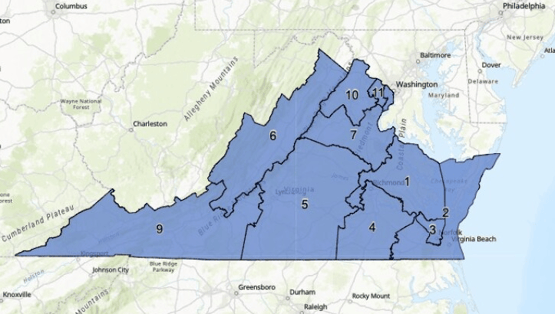
Image from VPM Census Bureau / public domain redistricting data.
The 7th District, represented by Democrat Eugene Vindman, is currently rated Lean Democratic. While the district favors Democrats under present conditions, it remains competitive enough that changes in turnout or district boundaries could affect the outcome. Close races in districts like this often become focal points in the national struggle for the House majority.
Meanwhile, the 1st District represented by Rob Wittman holds a Lean Republican rating. That classification suggests a Republican advantage but not an insurmountable one. If the proposed map proceeds, the district could move closer to parity depending on how boundaries are redrawn.
Georgia’s Special Election in the 14th District
While Virginia’s political focus centers on redistricting, Georgia is facing an immediate electoral contest that highlights the role of election mechanics. The state will hold a special election on March 10 to fill the vacancy created after Representative Marjorie Taylor Greene resigned in early January. The race has already drawn national attention because of its unusual structure.

Image made with Gemini
Georgia will use an all party jungle primary format for this special election. Under this system, every candidate appears on the same ballot regardless of party affiliation. If no candidate receives more than 50% of the vote, the top two finishers advance to a runoff scheduled for April 7.

The field currently includes nearly 24 candidates from across the political spectrum. Among the most prominent are State Senator Colton Moore and former Paulding County Commissioner Brian Stover. President Donald Trump has endorsed Lookout Mountain District Attorney Clayton Fuller, adding another high profile element to the contest.
Runoff Dynamics and Electoral Strategy
Runoff systems often reshape campaigns because candidates must prepare for the possibility of a second election within weeks of the first vote. Turnout in runoff elections is typically lower than in the initial contest. That dynamic often rewards campaigns with highly motivated supporters and strong grassroots networks.
In the case of Georgia’s 14th District, analysts currently rate the seat Solid Republican despite the crowded field. The district’s voting history strongly favors Republican candidates, making it unlikely that a Democrat will ultimately capture the seat. However, the runoff process could still determine which faction of the Republican Party emerges victorious.
These structural mechanics highlight how election rules can shape outcomes before general election campaigns even begin. A candidate who narrowly advances from the jungle primary could benefit from consolidation of support in the runoff stage. That sequence often rewards campaigns with disciplined messaging and strong turnout operations.
Broader Political Context in Georgia
Beyond the special election, Georgia is also preparing for a significant statewide race in 2026. Governor Brian Kemp will leave office due to term limits, creating an open gubernatorial contest that analysts currently rate Tilt Republican. Open seat races often attract competitive candidate fields because neither party benefits from an incumbent advantage.

Governor Brian Kemp; image via official website
Several congressional districts in Georgia remain firmly in Republican hands based on recent election results. Representative Buddy Carter won the 1st District with 62% of the vote in 2024, while Donald Trump carried the district with 58% during the same election cycle. Similar margins exist in other districts that remain safely Republican.

Representative Buddy Carter; image via WikiCommons
Representative Mike Collins captured the 10th District with 63% of the vote while Trump received 60% there in the most recent presidential election.


Rep. Mike Collins and Rep. Barry Loudermilk
Representative Barry Loudermilk recorded an even larger margin of 67% in the 11th District, while Trump received 61% in that area. These results illustrate the strong Republican foundation in several parts of the state even as competitive races emerge elsewhere.
Wrap Up
The developments in Virginia and Georgia highlight a core reality of modern congressional politics. Campaign messaging matters, but the structure of the election itself often shapes the outcome long before voters hear a single campaign argument. District boundaries, ballot formats, and runoff rules can determine who competes, which voters are included, and how candidates reach the general election.
In Virginia, the redistricting debate will decide how communities are grouped into congressional districts ahead of the 2026 cycle. Even small adjustments to district lines can shift the partisan balance of a seat, turning safe districts competitive or removing battlegrounds from the map entirely. The process does not end with map drawing. The Virginia Supreme Court’s validation step adds another layer of review that could influence which district configuration ultimately governs the election.
Georgia offers a different structural example. The special election to replace Representative Marjorie Taylor Greene will be conducted through a jungle primary system, placing all candidates on the same ballot regardless of party affiliation. With nearly two dozen candidates competing, the format itself becomes decisive. If no candidate clears 50 percent, the top two finishers advance to a runoff, meaning a crowded field and vote fragmentation may determine which campaigns survive.