

Stop shouting at voters and start talking to them because the campaigns still treating SMS as a megaphone are already losing to the ones mastering the conversation.
What to Know
- AI has turned the inbox into a two-way persuasion engine where voters expect a conversation rather than a lecture.
- Mass texting is now a strategic dead weight as voters tune out the noise and screen out the spam.
- Live SMS is the new front line for persuasion but it requires a surgical touch to protect trust and tone.
- Data is evolving from static codes into live signals that capture voter movement and intent in real time.
- The winners in 2026 will build infrastructure for dialogue instead of systems for automation.
Campaign texting has been fundamentally rewritten. Most political teams are still operating like it is 2018, treating SMS as a blunt broadcast channel built on mass volume and one-way noise. But industry data is already clear. The Project Broadcast 2026 Benchmark Report and Community.com both show that SMS performs best when it becomes a two-way conversation, not a one-way blast. The old playbook is not just aging. It is losing.

AI-driven conversational systems are turning texting into a real-time, two-way persuasion engine and live intelligence system. Campaigns that continue shouting into the megaphone are not just underperforming. They are training voters to ignore them. The advantage now belongs to teams that treat every message as a conversation that shapes perception and moves votes in real time.
Broadcast Texting Is Giving Way to Conversational Infrastructure
Broadcast texting is losing ground, and most campaigns have not adjusted their operating model to match. The old system was built around output. Send volume, track clicks, move on. Even when voters responded, the experience was slow, fragmented, and often routed through human teams that could not keep pace.
What looked like engagement was often just friction in disguise. Even Project Broadcast’s guide to mass texting still frames the channel around sending “a single SMS message to multiple recipients simultaneously,” reinforcing how deeply the broadcast mindset is embedded.
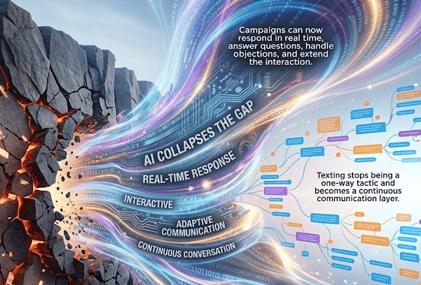
AI collapses that gap instantly. Campaigns can now respond in real time, answer questions, handle objections, and extend the interaction instead of ending it after the first message. Texting stops being a one-way tactic and becomes a continuous communication layer that is active, adaptive, and always on. The shift is not incremental. It is structural. A channel once defined by reach is now defined by responsiveness.
Persuasion does not happen in a single touchpoint. It is built through back-and-forth exchanges that surface concerns, test assumptions, and reinforce trust. A voter asks a question. The campaign responds with clarity. The voter pushes back. The campaign answers with relevance. That loop generates insight while it moves opinion. Campaigns still operating on static send-and-track logic are not just outdated. They are operating outside the way voters now engage.
2026 Campaigns: The Shift from Volume to Conversation
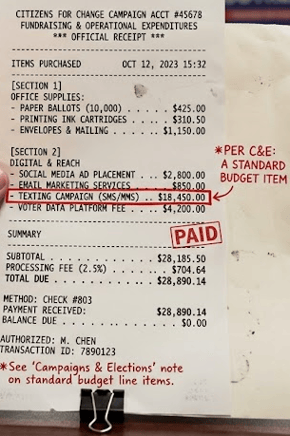
2026 campaigns are entering a different operating environment, and the shift is not subtle. As Campaigns & Elections notes, texting is now a “standard line item in political campaign budgets,” but most teams are still optimized for sending, not responding.
Voters, meanwhile, expect responsiveness everywhere. They interact with conversational systems daily, and that expectation carries into politics. When a campaign sends a text, voters increasingly assume there is a real response on the other end. If that interaction breaks, the message does not just fall flat. It signals the campaign is running a transactional playbook in a conversational world.

At the same time, mass texting is losing its edge as a blunt-force tactic. SMS still delivers reach, but saturation is eroding its advantage. Voters are receiving more messages, filtering more aggressively, and tuning out generic outreach faster than campaigns are adapting. As Campaigns & Elections puts it, “sending messages at scale is no longer the differentiator.” Volume alone is no longer a strategy. It is noise.
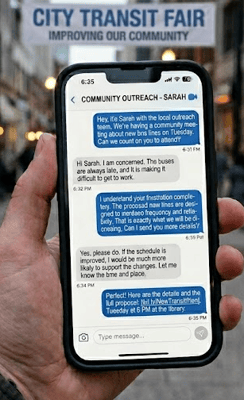
That creates a clear strategic opening. Campaigns that shift toward conversational texting can compete on responsiveness, relevance, and timing instead of sheer scale. The real leverage now comes from what happens after the send. Because as the same analysis makes clear, “engagement is interpretation,” and the campaigns that can listen, adapt, and respond in real time will outperform those still broadcasting into an increasingly ignored channel.
Persuasion Is Becoming Iterative, Not Static
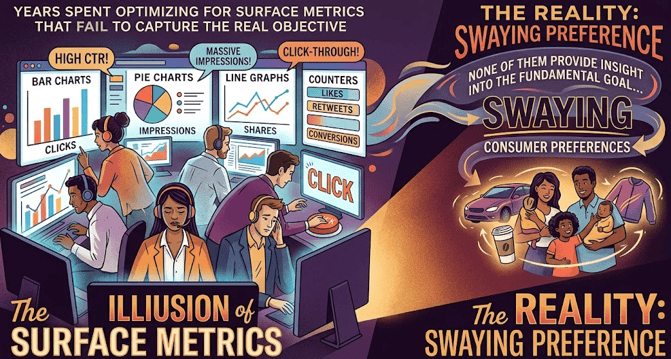
Persuasion is no longer a fixed script that gets pushed out and measured after the fact. It is becoming an active, iterative loop that unfolds in real time. As Swayable argues, marketers have spent years optimizing for surface metrics that fail to capture the real objective, since “none of them provide insight into the fundamental goal… swaying consumer preferences.”
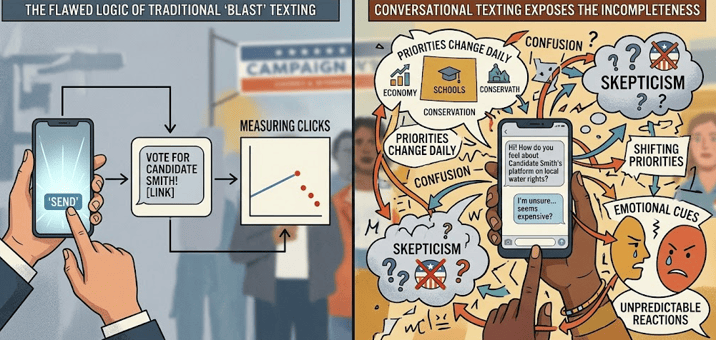
Traditional texting follows that same flawed logic. Define the message, send it, measure clicks. Conversational texting exposes how incomplete that model is. Voters respond with confusion, skepticism, shifting priorities, and emotional cues that cannot be predicted in advance.
That feedback is not noise. It is a signal. A live exchange reveals what actually moves a voter. It shows whether someone is persuadable, which issue framing resonates, what objection is blocking support, and whether the campaign’s message is landing or missing entirely.
Most campaigns are structurally behind this shift. They are still optimizing for delivery rates and click performance while ignoring the richer layer of data happening inside the conversation. As Swayable frames it, the organizations that win are the ones that “make marketing iterative, not linear.” The strategic value of texting is no longer defined by who received the message. It is defined by what the campaign learned, adjusted, and acted on in real time after the voter responded.
The Trust Risk Is Real
The upside of AI texting is real, but so is the downside, and the margin for error is thin. The first risk is tone. If the system feels even slightly synthetic or misaligned, voters will notice immediately. That reaction is not irrational. It reflects a broader environment where trust is already fragile.
As the Journal of Democracy warns, generative AI is already capable of flooding communication channels with content that can “erode social and political trust” at scale. When everything can sound real, anything that feels even slightly off becomes suspect.

The second risk is authenticity. Campaigns are no longer just managing messaging. They are managing perception of reality. If a voter believes they are speaking to a person and later feels misled, the damage compounds quickly. That concern is not theoretical.
Research from USC’s Viterbi School shows AI systems can “autonomously coordinate, amplify each other and push shared narratives online without human control,” making it harder for voters to distinguish real engagement from manufactured interaction. In that environment, transparency is not a compliance choice. It is a credibility requirement.

The third risk is over-automation. Scale can create the illusion of effectiveness while quietly degrading trust. Some conversations require judgment, empathy, and restraint that automated systems cannot consistently replicate. When those moments are mishandled, the interaction does not just fail. It signals that no one is actually there. The goal is not to automate everything. It is to protect the moments where authenticity matters most.
Wrap Up
Campaign texting is being rewritten in real time. AI is shifting SMS away from static broadcast and into a live, adaptive system where persuasion, feedback, and trust are constantly in motion. The campaigns that recognize this are no longer optimizing for volume. They are optimizing for interaction quality, responsiveness, and the ability to learn from every exchange. In this environment, performance is not defined by how many messages are sent, but by how effectively conversations shape perception and move voters.
Most campaigns are still operating on outdated assumptions, treating texting as a distribution channel instead of a relationship layer. That gap is becoming a strategic liability. The advantage now belongs to teams that can design systems combining AI efficiency with human judgment, execute with discipline, and maintain credibility at scale. The winners in 2026 will not be the campaigns that automate the most outreach. They will be the ones that build the most effective, believable, and responsive conversations.