
New data shows a growing group of voters who do not watch live television are the most persuadable, but outdated campaign strategies are failing to reach them.
What to Know:
- 29% of Virginia voters and 20% in New Jersey watch no live TV, leaving a major persuasion gap.
- These non-TV and low-news voters make up about 20% of the electorate and are highly persuadable, yet rarely contacted.
- Media habits are fragmented, with voters using four streaming platforms on average, limiting ad reach on any single channel.
- Campaign spending lags reality: in Virginia’s 2025 governor’s race, Republicans spent more on cable than Google/YouTube and more on radio than Meta.
- Outreach has shifted to texts, but even high-recall texting is failing to reach TV-free voters.
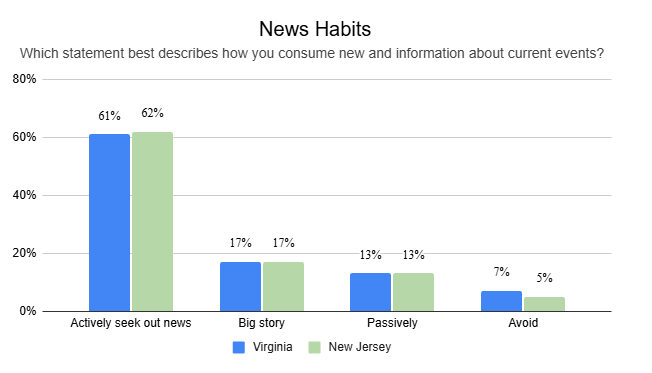
A detailed post-election analysis from the Center for Campaign Innovation has exposed a fundamental flaw in modern campaign strategy, revealing a stark and widening gap between how campaigns spend their money and how a decisive segment of the electorate consumes information. The findings, published in a new report titled “‘Cord Nevers’ and Disengaged Voters Are Key To Winning In 2026,” show that a large, persuadable group of voters has become invisible to traditional campaign outreach.
Screenshot of chart from Center for Campaign Innovation
Based on an extensive survey in Virginia and New Jersey following the 2025 gubernatorial elections, the report paints a clear picture: a significant and growing group of voters has moved almost entirely to streaming services and social media for their content. Because they have completely cut the cord to linear television, they are systematically missed by campaigns that continue to pour massive resources into an outdated media playbook.
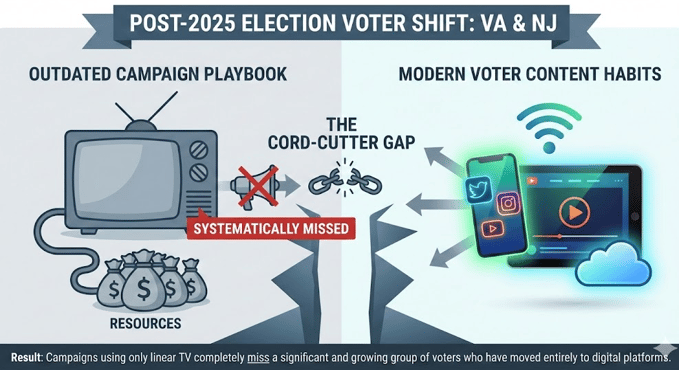
The data demonstrates not a slow transition but a completed transformation of the media landscape. The campaigns that continue to operate as if it were a decade ago are not just being inefficient; they are at risk of being rendered irrelevant. The party that can successfully retool its strategy to find and communicate with this audience will hold a decisive advantage heading into the 2026 midterms and beyond.
The Media Landscape Is Irrevocably Broken
Linear television is no longer the primary way campaigns reach persuadable voters. Post-election research from New Jersey and Virginia shows that many of the voters who decide close races now live in a fragmented, digital-first media environment. These shifts are structural, not temporary, and they disproportionately affect lower-propensity and independent voters.
The data FROM Campaign Innovation makes clear how far viewing habits have moved away from traditional TV:
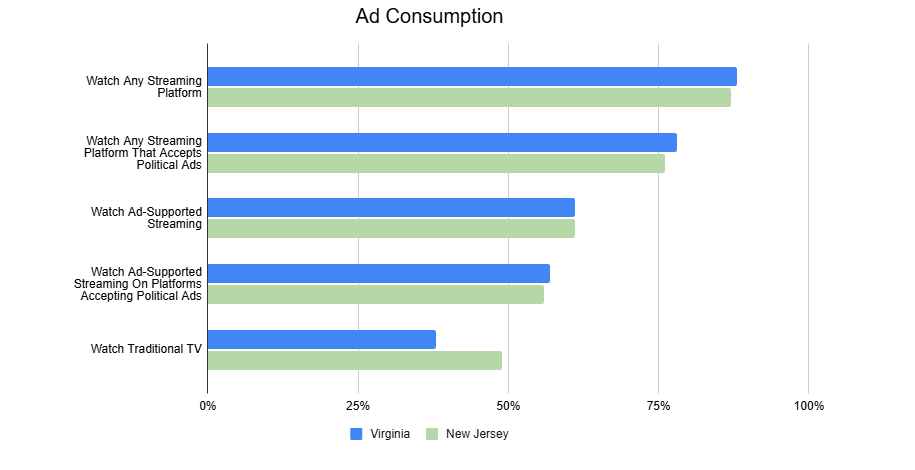
- About 50% of Virginia voters and 40% of New Jersey voters are streaming-only viewers
- Nearly 30% of Virginians and 20% of New Jersey voters do not watch live TV at all
- Passive news consumers and late deciders are heavily concentrated in these off-TV households
This fragmentation has broken the mass-reach assumption that once justified linear-heavy media plans. Prime-time buys no longer guarantee exposure among swing voters, while high-propensity voters who still watch live TV continue to be overserved. The result is a widening gap between where campaigns spend and where persuadable voters actually are.
Screenshot from Center for Campaign Innovation
At the same time, the opportunity is significant. More voters are reachable through streaming platforms than through linear television alone. Most voters use multiple streaming services, many of which include advertising, making streaming the most reliable way to reach disengaged and late-deciding voters at scale. Streaming is no longer an add-on. It is the primary infrastructure for video communication in competitive elections.
The Voters Left Outside the Media Plan
The data shows that linear television now reaches a shrinking share of the electorate. Fewer than one in three voters are only reachable through linear TV advertising, while a growing share are either reachable only through streaming or not reachable through paid advertising at all. This shift matters most for the voters campaigns still need to persuade.
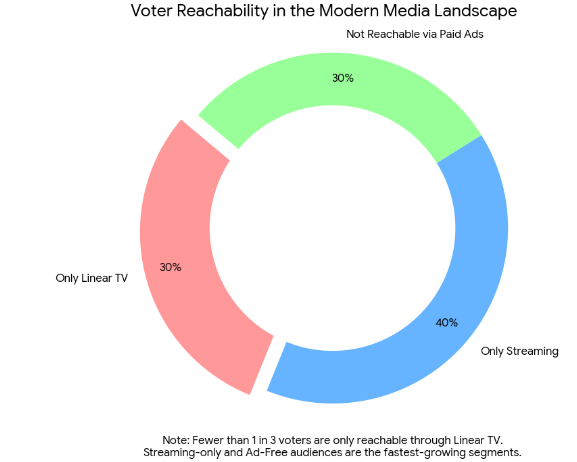
Data from Center for Campaign Innovation
The divide between high-propensity and low-propensity voters makes the problem clearer. High-propensity voters are far more likely to watch live TV and remain reachable through traditional broadcast and cable. Low-propensity voters are much more likely to have no access to linear television at all.
“The voters who campaigns struggled the most to reach share a common profile. They are low-propensity individuals with little or no exposure to linear television… [and] do not watch live TV at all, which means they never encounter traditional TV ads.” – Center for Campaign Innovation
They are not avoiding political information. They are simply absent from the media environments where campaigns continue to spend most of their budgets. Several patterns stand out:
- Lower-history voters are far more likely to be “no live TV” households
- Unaffiliated and independent voters are more likely to be reachable via streaming only or unreachable entirely
- High-propensity voters skew strongly toward live-TV reachability, while low-propensity voters skew away from it
Spending patterns in the Virginia governor’s race illustrate how budget decisions reinforce this gap. Republicans invested more in cable than in Google, which includes YouTube, and spent more on radio than on Meta, which includes Facebook and Instagram. These choices directed resources toward traditional media channels rather than the digital and streaming platforms where many unaffiliated, independent, and low-propensity voters are actually reachable.
A Strategic Failure in Resource Allocation
The evidence of a transformed media landscape is overwhelming, yet campaign spending has been slow to adjust. Spending patterns from the Virginia governor’s race illustrate the disconnect. Republican campaigns invested more in traditional cable television than in Google, which includes YouTube, and spent more on radio than on Meta, which owns Facebook and Instagram. These choices prioritized legacy media over the platforms where large portions of the electorate now spend their time.
This allocation is a miscalculation. Linear-heavy spending concentrates resources on an aging, shrinking audience of high-propensity voters who are often already decided. Meanwhile, younger, more diverse, and independent voters remain largely untouched. Investments intended to persuade instead reinforce existing preferences, leaving the most movable voters outside the campaign’s reach.
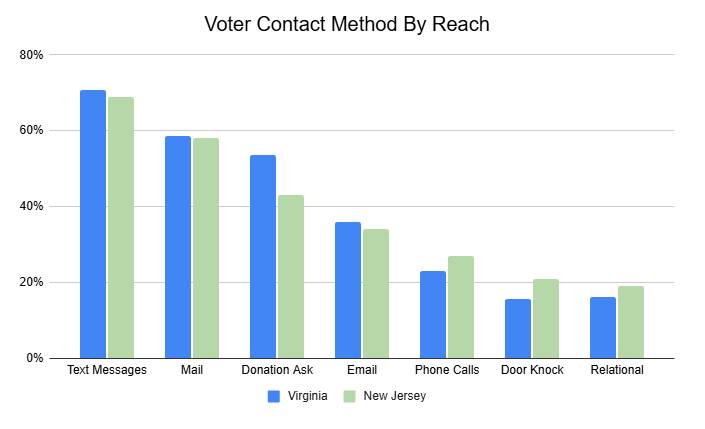
Screenshot from Center for Campaign Innovation
The same imbalance appears in direct outreach. Text messaging has overtaken phone calls as the dominant method of voter contact. More than two thirds of voters recall receiving political texts, compared with fewer than one quarter who recall receiving calls. Fundraising messages across mail, text, email, and digital ads are widely remembered, particularly among high-engagement voters.
Yet even with this shift, the core problem remains unresolved. Voters who do not watch live TV and voters with low participation histories are the least likely to recall any form of campaign contact. Outreach tools have changed, but targeting strategies have not. Campaigns are largely sending texts to the same high-propensity voters they once called, while the voters most open to persuasion remain unseen.
The Real Persuasion Gap
The data points to a bifurcated electorate. High-engagement voters decide early, follow news closely, and encounter campaign messaging frequently. Disengaged and low-propensity voters follow a different timeline. They decide later, consume less political content, and are far more likely to live in streaming-only or no-live-TV households.
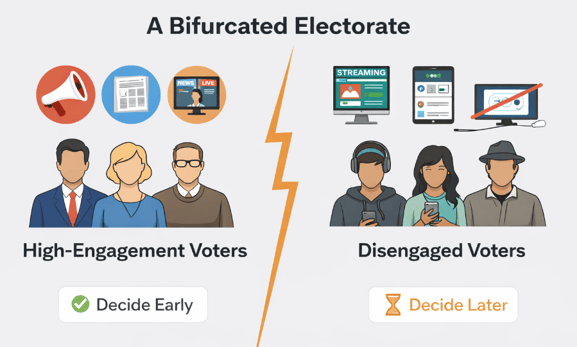
These voters rely on social platforms, streaming video, and personal networks rather than traditional media. They are not unreachable, but they are invisible to campaigns built around linear television and legacy outreach models. When persuasion matters most, late in the cycle, these voters are the least likely to have encountered meaningful campaign contact.
Wrap Up
Campaigns are built to reach high-engagement voters who decide early, follow political news closely, and are already easy to contact. These voters continue to receive the majority of campaign messaging despite being the least persuadable. Linear television still dominates budgets even though it increasingly serves an audience that is already decided.
The voters who decide close elections behave differently. They decide later, consume less political content, and are far more likely to live in streaming-only or no-live-TV households. They are more open to persuasion but least likely to encounter campaign advertising or outreach under current strategies. Winning in 2026 requires reallocating resources away from linear television and toward streaming, social, and targeted outreach designed specifically to reach late-deciding, low-propensity voters.