-Sep-27-2026-01-50-05-4343-PM.jpg)

An early House departure shields vulnerable incumbents from difficult votes while giving challengers an argument about congressional avoidance.
What to Know
- House leaders canceled the final scheduled voting day and sent members home more than 6 weeks before the midterms.
- An impeachment resolution against Defense Secretary Pete Hegseth will not receive House action until after the election.
- Early departure gives vulnerable incumbents more district campaign time while protecting them from politically difficult recorded votes.
- House members had already lost 24 legislative days through cancellations and extended absences during the current Congress.
- Challengers can now connect congressional inaction to unresolved voter concerns about prices, war powers and government accountability.
House leaders did more than shorten the legislative calendar when they sent members home early on September 16, 2026. They transferred the final weeks of congressional decision making from the House floor to the campaign trail. That choice protects incumbents from difficult votes, gives them more time in their districts and allows political risk to determine when Congress conducts public business.
Senate Releases 2026 Calendar, via thewellnews.
Associated Press reported that Speaker Mike Johnson closed the House after Wednesday’s session so members could campaign before the midterms. Axios reported that the decision left the chamber away for more than 6 weeks and delayed a privileged impeachment resolution that would have forced lawmakers to address the conduct of Defense Secretary Pete Hegseth. Incumbents gained valuable campaign time, but challengers received an equally valuable argument that congressional leaders preferred avoiding votes to completing the work voters sent them to Washington to perform.
Canceled Votes Turned Campaign Protection Into Legislative Policy
Speaker Mike Johnson presented the early departure as the conclusion of a productive session. Yet the cancellation removed the final scheduled voting day and postponed matters that would have required members to take public positions before the election. Leadership therefore gained more than calendar flexibility because it prevented difficult issues from producing campaign advertisements, opposition mail and damaging recorded votes.
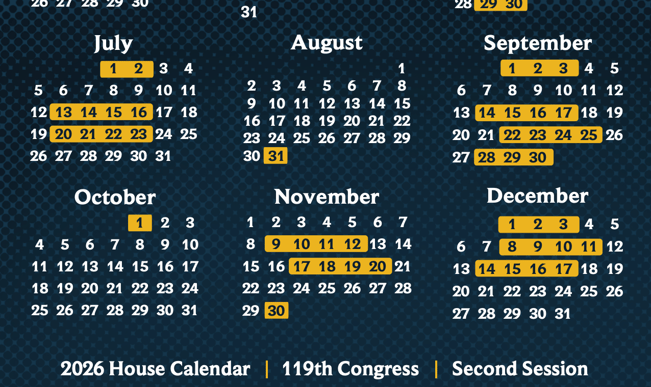
Canceled voting days shortened an already limited final congressional session, via Office of the House Majority Leader.
Republican Representative Thomas Massie introduced 8 articles of impeachment against Hegseth as a privileged resolution on September 15. That procedural status gave House leaders 2 legislative days to respond, but Johnson canceled the Thursday session before the deadline could produce a vote. House action will now wait until members return after the election, when the immediate electoral danger has passed.
Massie also said the shortened schedule obstructed his bipartisan effort to force the release of additional government records related to the Jeffrey Epstein investigation. Neither initiative was likely to succeed easily in the Republican controlled House. Their political importance came from forcing members to choose between supporting leadership, challenging the Trump administration or explaining a procedural vote that opponents could portray as avoiding accountability.

Speaker Mike Johnson, via mikejohnson.house.gov
Johnson rejected Massie’s accusation and described the impeachment effort as a publicity stunt. His defense matters because an early election recess is not unusual by itself, and lawmakers routinely leave Washington for extended periods during campaign season. What distinguishes this departure is the combination of canceled days, unresolved privileged business and a public admission that members were leaving to campaign.
Associated Press reported that the House had lost 24 legislative days through cancellations during the current Congress. Those lost days weaken the argument that one final cancellation carried no larger consequence. Campaigns can now frame the September departure as the result of a repeated governing choice rather than an isolated scheduling adjustment.
More District Time Protects Incumbents but Creates a Visible Tradeoff
Returning home gives endangered incumbents several advantages that congressional votes cannot provide. Members can attend local events, raise money, meet editorial boards, support other candidates and present themselves as accessible district representatives. Every additional day outside Washington also reduces the possibility that an unexpected amendment, discharge petition or internal party dispute will force them into a damaging vote.
Vulnerable Republicans benefit most directly because their party controls the chamber and therefore carries responsibility for its schedule. A canceled vote can prevent a challenger from obtaining fresh material connecting an incumbent to an unpopular administration decision. It can also stop Republican divisions from dominating local coverage during the most valuable weeks of the campaign.
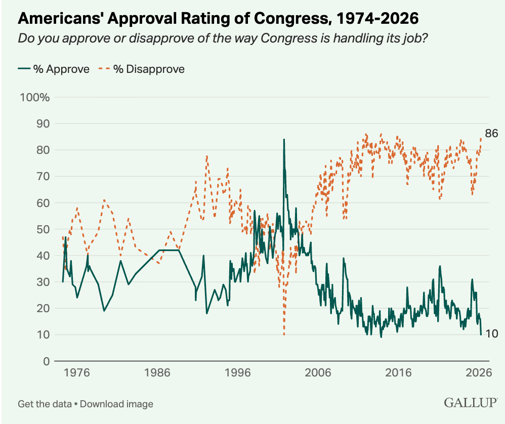
Congressional disapproval reached 86% as voters expressed frustration with gridlock, war powers and unfinished legislation, via Gallup.
Avoiding Washington still carries a political price. Gallup found that congressional approval had fallen to 10% in April, while disapproval reached 86%. Voters already inclined to view Congress as ineffective may interpret a premature departure as confirmation that members protect their jobs more aggressively than they perform them.
District visibility cannot erase that perception on its own. An incumbent attending community events must still explain why the House stopped voting with unresolved questions involving military authority, government transparency and household costs. Local appearances help when they demonstrate responsiveness, but they become liabilities when challengers successfully present them as substitutes for governing.
Campaign teams should therefore treat the recess as both an opportunity and a vulnerability. Incumbents need a specific account of legislation they passed, constituent problems they solved and work they will resume after the election. Generic claims about productivity will struggle against photographs of an empty chamber and a calendar showing canceled days.

U.S. Representative Thomas Massie, via Office of Congressman Thomas Massie.
Massie asked from the House floor:
“We’re calling off Congress? And we’re in the majority?”
His criticism gives challengers a useful advantage because it came from inside the Republican conference. Democratic campaigns can cite the dispute without making their criticism depend entirely on a partisan source. Republican challengers and independent candidates can use the same episode to argue that frustration with the congressional calendar extends beyond one party.
Challengers Can Turn Absence Into an Accountability Message
Early recess does not automatically damage incumbents. Voters may welcome seeing their representative at home, and many will pay little attention to the procedural dispute surrounding the canceled session. Challengers must connect the absence to a specific voter concern before congressional scheduling becomes an electoral issue.
Affordability provides the strongest connection. Massie criticized House leaders for leaving without doing more to lower consumer prices, while Democratic Leader Hakeem Jeffries argued that Republicans had failed to govern effectively. Candidates who use that criticism should identify the particular vote, bill or oversight action Congress postponed instead of treating every unresolved economic problem as the product of one canceled day.
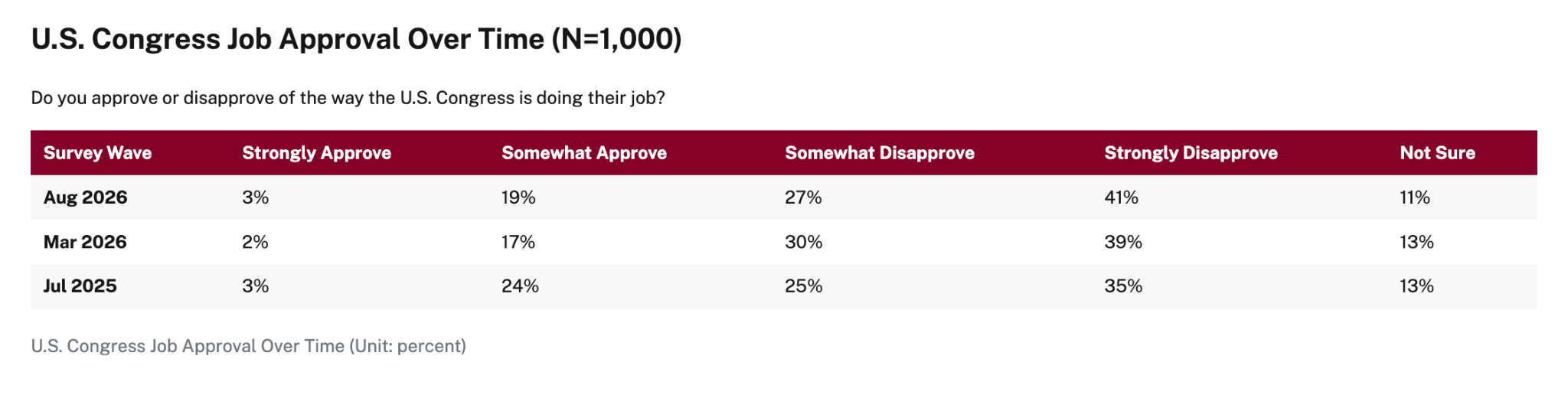
Only 22% of Americans approved of Congress in August, while approval of respondents’ own representatives reached just 28%, via University of Massachusetts Amherst.
War powers and executive accountability create a second line of attack. House leaders avoided immediate action on a resolution challenging Hegseth’s conduct during the Iran conflict, even though the resolution itself faced poor prospects. Challengers can argue that members should still take a position when questions involve military action, civilian oversight and Congress’s constitutional authority.
Government transparency creates a third opening. Delaying the Epstein files effort allows opponents to combine procedural frustration with public suspicion about what Washington refuses to disclose. Incumbents need a direct answer explaining which transparency measures they support because dismissing every effort as political theater may strengthen the claim that leadership used the calendar to escape scrutiny.
Recent polling shows why local explanations matter. An August University of Massachusetts Amherst poll found that only 22% approved of Congress, while just 28% approved of their own House representative. The survey also found that 41% considered representing constituents Congress’s most important responsibility, compared with 18% who selected making laws and 25% who selected checking presidential power.
Those figures create competing interpretations of the recess. Incumbents can argue that returning home fulfills the representative role voters value most. Challengers can answer that district appearances lose meaning when members abandon lawmaking and oversight, the other responsibilities voters expect them to perform.
Effective campaign responses must therefore move beyond accusing members of taking a vacation. Challengers should identify a postponed decision, explain how it affects district voters and demand a clear position from the incumbent. Incumbents should use their additional district time to demonstrate measurable work rather than assume personal visibility will overcome frustration with Congress.
Wrap Up
Campaign pressure took control of the House calendar before voters cast their ballots. Canceling the final voting day spared members from immediate decisions on impeachment, war powers and government records while giving them more than 6 weeks away from Washington. Leadership reduced short term political risk, but it created visible evidence that election strategy influenced when Congress chose to work.
Republican incumbents gained more time to campaign, raise money and reinforce their local identities. They also inherited the burden of defending a chamber that canceled 24 legislative days and left unresolved business behind. Democratic challengers gained a strong accountability argument, but they must connect the recess to prices, oversight or transparency instead of relying on a generic complaint about congressional absence.
Voters will ultimately decide whether district accessibility excuses an unfinished legislative calendar. Candidates who left Washington must prove that the extra campaign time produced meaningful constituent work. Opponents who can turn canceled votes into concrete local consequences will make the early departure part of the reason control of Congress changes.