
An unpopular geographic renaming exposes how symbolic executive power can unite voters who disagree on nearly everything else.
What to Know
- Public opposition reached 63%, showing that symbolic renaming failed to build broad support.
- Only 14% supported the change, leaving the administration without a persuasive public mandate.
- Republicans opposed the order by 43% to 33%, making resistance visibly bipartisan.
- Federal agencies must use the new designation, but state, local, Canadian and private actors may continue using the name Lake Ontario.
- Opposition to Canadian tariffs reached 57%, connecting the naming dispute to wider voter concern about economic costs.
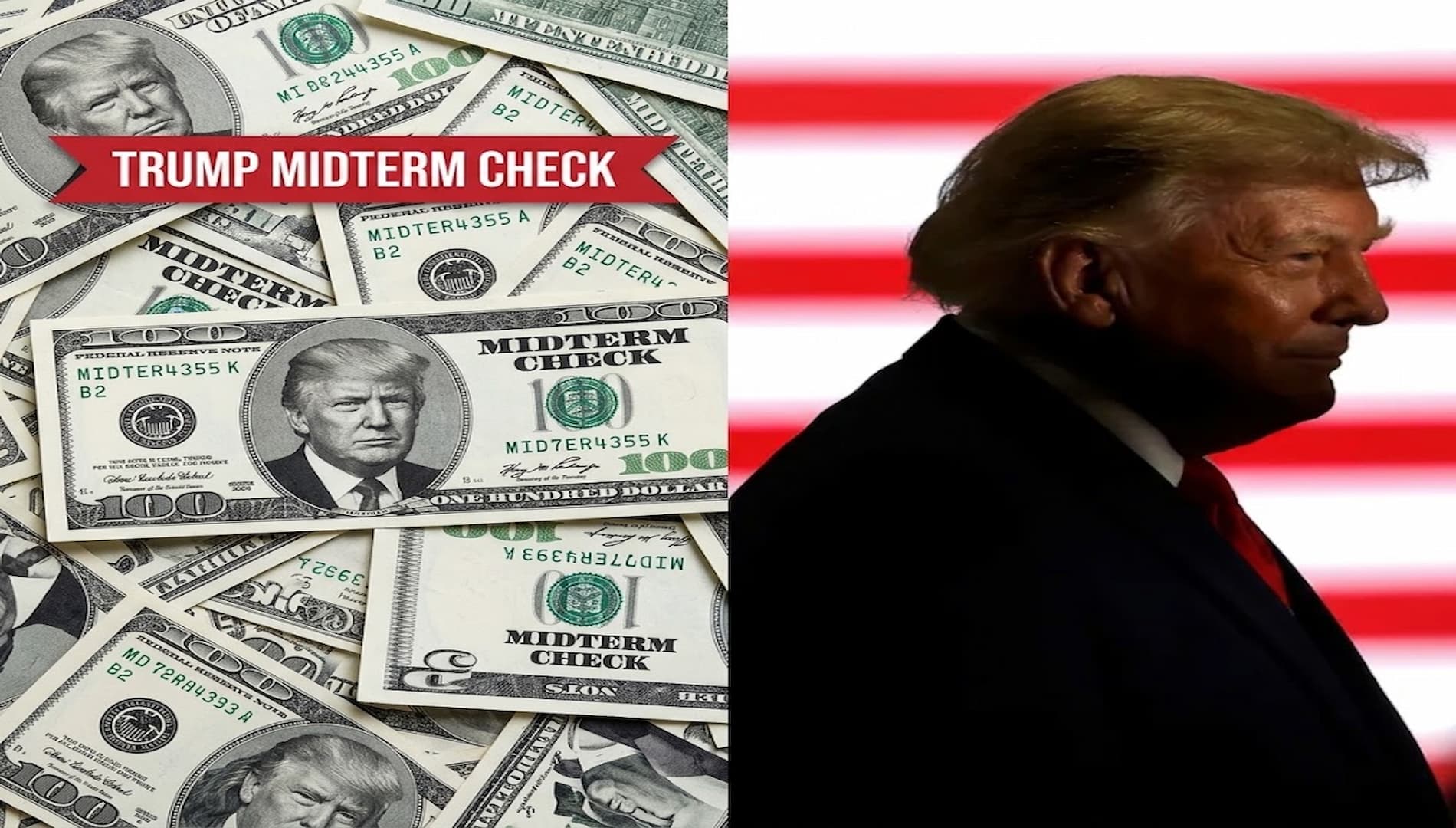
President Donald Trump intended a new federal name for Lake Ontario to project control during a worsening dispute with Canada. Instead, the decision produced an unusually broad rejection that crossed party lines and national borders. Reuters reported that most Americans opposed both the renaming and the tariff escalation surrounding it.
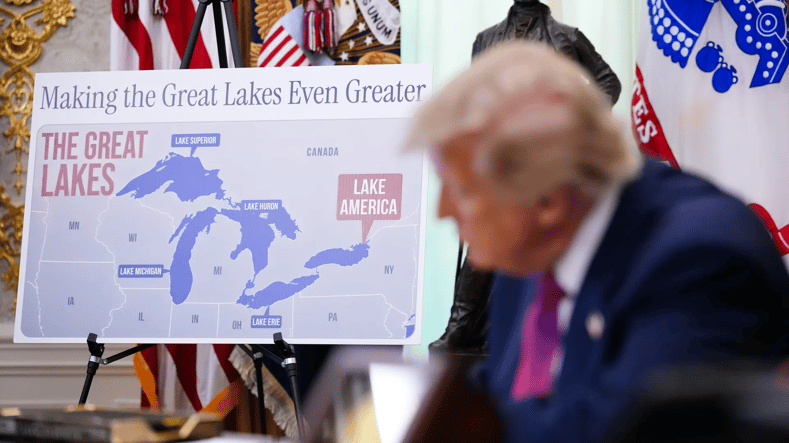
A federal naming order became a cross border political liability, via Axios.
Political symbolism works only when voters accept the symbol and the authority behind it. Federal agencies can change terminology, but they cannot make communities, another country or the public share that choice. That gap between formal power and public adoption turned a naming order into a test of executive reach, local identity and household priorities.
Bipartisan Opposition Breaks the Symbolic Appeal
Public resistance extended well beyond voters already opposed to Trump. An Ipsos national survey conducted from August 28 through August 30, 2026, found 63% opposed the order and only 14% supported it. Opposition included 84% of Democrats, 65% of independents and other respondents, and 43% of Republicans.
Republican opinion is the most politically revealing result. Support among Republicans reached 33%, while opposition stood 10 points higher, meaning the order did not even secure majority backing inside the president’s party. An Economist and YouGov survey summarized by Axios reinforced the pattern, finding 68% national opposition and opposition from 43% of voters who supported Trump in 2024.
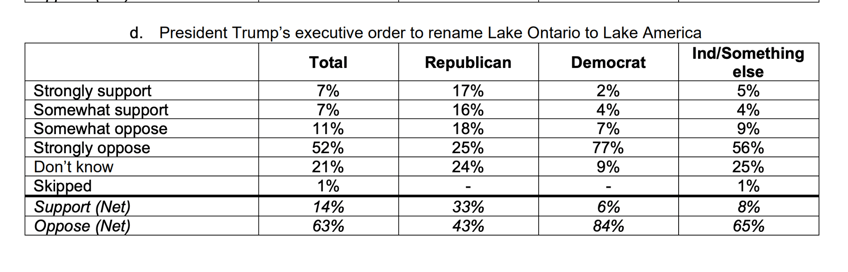
Opposition crossed party lines while support remained a clear minority, via Ipsos.
Campaigns should read that consensus carefully. Voters may disagree over immigration, spending or the appropriate use of executive authority, yet still reject a symbolic action that feels disconnected from their priorities. Broad resistance does not prove that geographic naming will decide congressional races, but it shows how an avoidable controversy can consume attention without expanding a coalition.
Federal Power Stops at Federal Usage
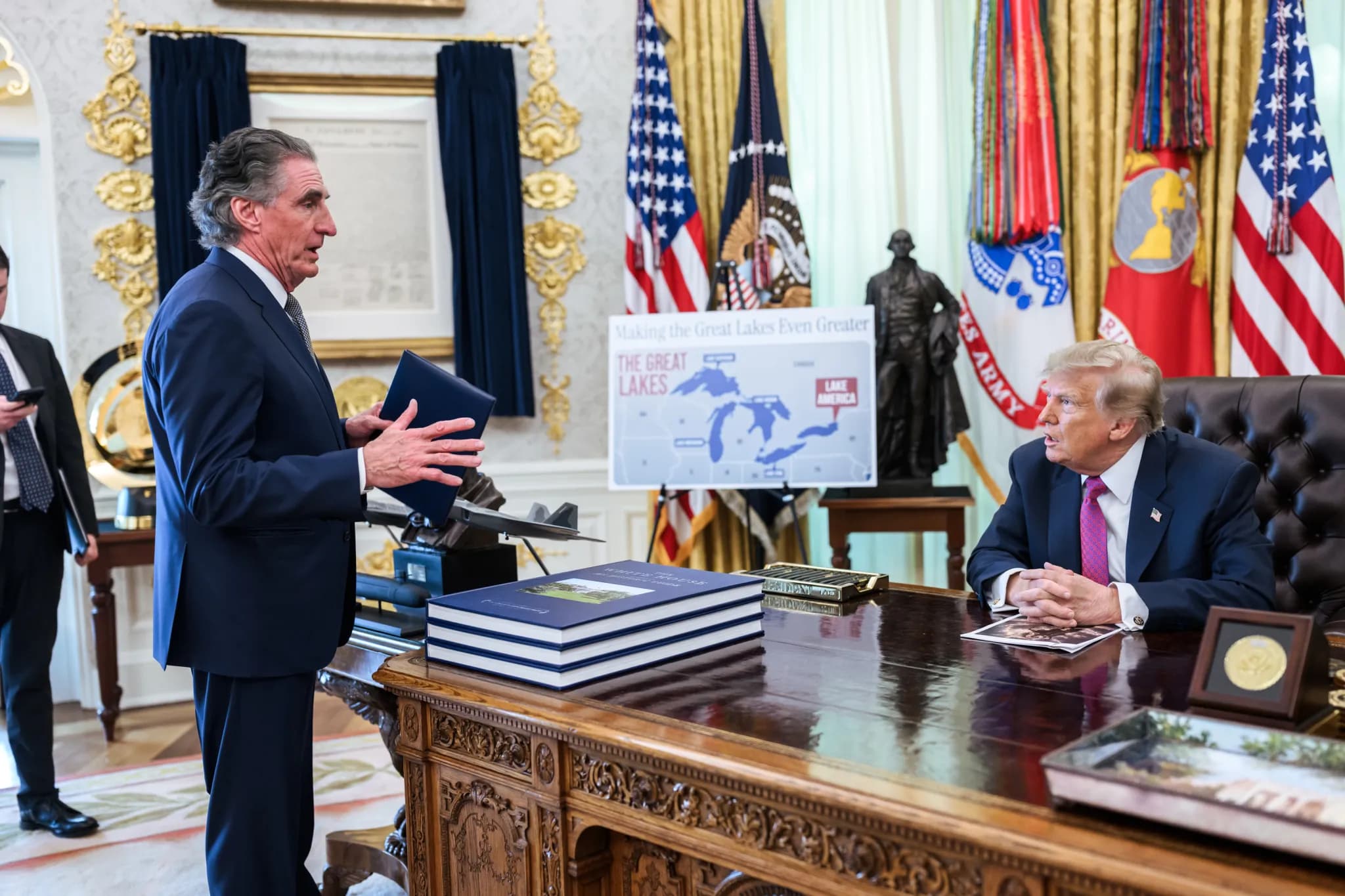
Executive Order 14422 directs the interior secretary and the Board on Geographic Names to update the Geographic Names Information System within 30 days. It also instructs executive departments and agencies to use Lake America on federal maps, contracts, documents and communications. Those instructions are consequential inside the federal government, but they do not create a universal legal name for every institution or user.
Canada remains outside the order’s authority, as do international organizations and private speakers. New York municipalities are not required to replace their signs merely because federal agencies change their terminology. Google and Apple have already updated their maps to display Lake America for U.S. users, but those corporate decisions should not be mistaken for a legal command applying everywhere.
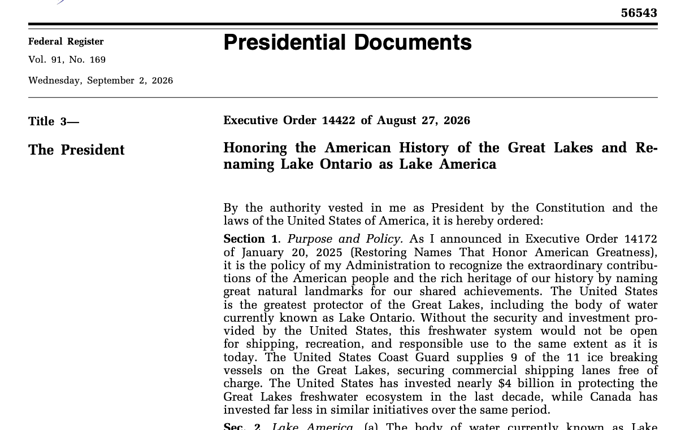
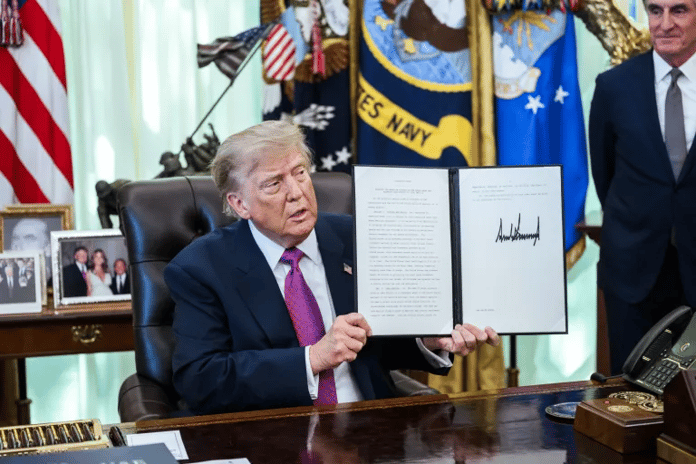
Federal authority changes agency usage without compelling broader public adoption, via White House.
This limited reach changes the political analysis. Trump exercised executive authority over federal naming practice, while opponents demonstrated that compliance outside Washington depends on consent, convention and jurisdiction. Symbolic power can alter a database quickly, but public vocabulary changes only when people decide to use it.
Local Resistance Turns Symbolism Into a Cost Question
Opposition along the southern shoreline translated an abstract naming dispute into practical local concerns. CNY Central reporting carried by WLOS found that Oswego Mayor Robert Corradino had no plan to replace city signs, tourism materials, maps or branding. Corradino, a Republican, said changing every local reference to Lake Ontario would be costly and would cut against the community’s identity and history.
Oswego County backed Trump in the 2016, 2020 and 2024 presidential elections, making the local resistance harder to dismiss as partisan reflex. Residents interviewed along the shoreline included longtime Trump supporters who still wanted the established name preserved. Their response illustrates how place based loyalty can override national party alignment when a federal gesture reaches local memory, tourism and municipal budgets.
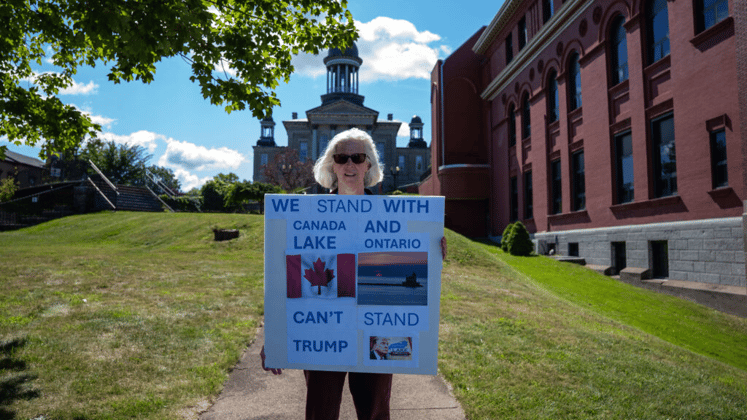
A resident holds a sign in Oswego, via Chadi Tolaimite.
Economic context deepens that resistance. Ipsos found 57% opposed the higher tariffs on Canadian goods, while 20% supported them. Only 4% expected the trade dispute to improve their personal finances, compared with 40% who expected a negative effect, so the symbolic fight arrived beside a policy dispute voters were already evaluating through prices and household risk.
Canadian and Indigenous Responses Defend Continuity
Canadian leaders rejected the new designation immediately because the lake is shared and the order has no authority over Canadian naming. Prime Minister Mark Carney emphasized that Lake Ontario predates both countries, while Ontario Premier Doug Ford turned that argument into a large public display. Associated Press photographs show Ford unveiling a bilingual Lake Ontario sign on the Canadian shoreline.
Indigenous objections added a deeper historical challenge. Associated Press reporting on the Seneca Nation response traced Ontario to the Mohawk word Oniatarí:io, commonly translated as “beautiful lake” or “sparkling water,” while the traditional Seneca name is sga:nyodai:yoh. Seneca Nation President J. Conrad Seneca called for the order to be rescinded and tied the dispute to the 1794 Treaty of Canandaigua.
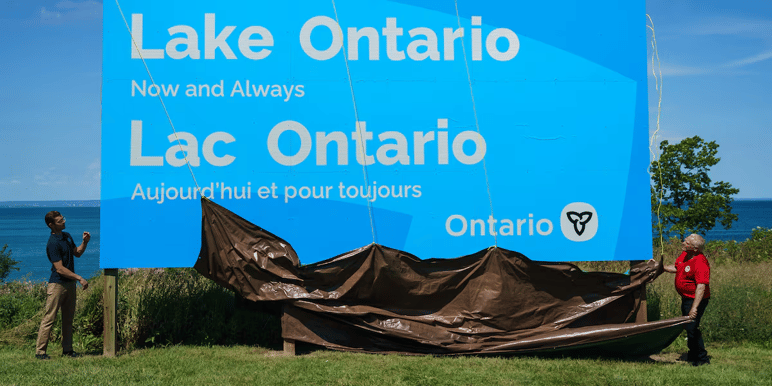
Ontario officials answered federal symbolism with an unmistakable shoreline display, via wtvm.
Such objections matter because they move the dispute beyond branding. Established geographic names carry legal, cultural and commercial continuity, while Indigenous names preserve histories older than either federal government. A campaign that treats those attachments as mere resistance to change risks misunderstanding why the order mobilized such different constituencies.
Wrap Up
Lake America demonstrates the difference between issuing a symbolic directive and persuading the public to accept it. Federal agencies have implemented the order, and Google and Apple have updated their maps for U.S. users. Neither action produces the social consensus required to displace a name used across borders and generations.
Polling shows why this episode became politically costly. Opposition reached Democrats, independents and Republicans, while the parallel tariff dispute kept voters focused on household consequences rather than national branding. Republican candidates gain little from defending a symbolic controversy that divides their own coalition and competes with affordability concerns.
Durable political symbols need more than executive authority. They need public legitimacy, cultural recognition and a practical reason for people to change familiar language. On Lake Ontario, those conditions are absent, leaving the order as a federal designation surrounded by a much broader refusal.