
Political ads must deliver before October 27 to remain eligible through Meta’s final-week restriction on new political ads.
What to Know
- Meta’s U.S. restriction begins at 12:01 a.m. Pacific Time on October 27, 2026, and ends at 11:59 p.m. Pacific Time on November 3, 2026.
- An ad about social issues, elections, or politics needs a valid disclaimer and at least one delivered impression before the cutoff to run during that period.
- Eligible existing ads may continue running. New ads in those categories cannot begin serving in the United States during the restriction.
- Advertisers may change bids, budgets, and scheduled end dates, and may pause or unpause qualified ads. They may not edit creative, placement, targeting, or optimization.
- Advertiser authorization, a “Paid for by” disclaimer, and applicable AI media disclosures must be resolved before the team relies on an ad for final-week delivery.
A finished ad is not necessarily a final-week ad. Meta’s 2026 restriction notice makes delivery, rather than creation or approval alone, the deciding test. Each ad that a campaign wants to run during the restricted period must have delivered at least one impression before the cutoff and carry a valid disclaimer.
That rule affects how campaign managers, consultants, digital directors, and PAC or 527 leaders prepare closing messages on Facebook and Instagram. Meta is not turning off every political ad for the last week. It is allowing qualifying existing ads to continue while preventing new regulated ads from starting in the United States.
The Cutoff Is October 27, Not Election Day
Meta will not allow new U.S. ads about social issues, elections, or politics to run from 12:01 a.m. Pacific Time on Tuesday, October 27, through 11:59 p.m. Pacific Time on Tuesday, November 3. Its election guidance says ads with at least one impression before the period may run during it. The more detailed October notice specifies that they must also have been created with a valid disclaimer.
An ad can therefore be approved before October 27 and still fail the test. If it is scheduled to start later, remains under review, or has not yet delivered, its zero-impression status leaves it unable to begin during the restriction. A rejected ad likewise cannot be repaired after the cutoff and treated as though it had already run.
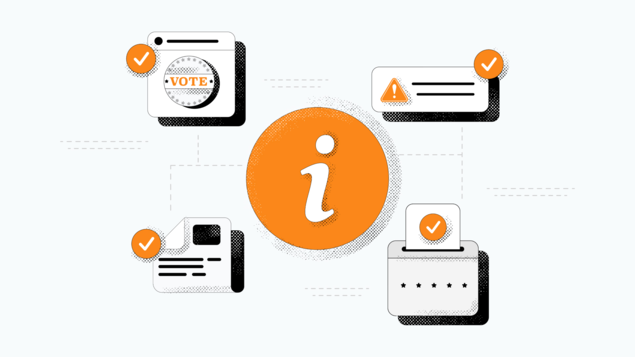
Meta’s 2026 election guidance confirms the final-week restriction, via Meta.
Meta says it maintains the restriction because, in the final days of an election, there may not be enough time to contest claims introduced in new ads. That is its stated rationale, not a claim that every late ad is misleading. For a campaign’s media plan, the immediate question is simpler: which individual ads actually served before the deadline?
Existing Ads Can Run, but Most Edits Cannot
A qualifying ad can keep delivering during the restricted period. Under Meta’s 2026 notice, an advertiser may adjust its bid, budget, or scheduled end date. The advertiser may also pause or unpause that ad if it delivered at least one impression before October 27 at 12:01 a.m. Pacific.
Those permissions do not extend to creative, placement, targeting, or optimization. A campaign cannot turn an existing ad into a new closing argument by replacing the video or rewriting the message. It should not assume that duplicating an eligible ad transfers the original ad’s impression history to the copy. Treat the duplicate as a separate ad and confirm its own eligibility before the cutoff.
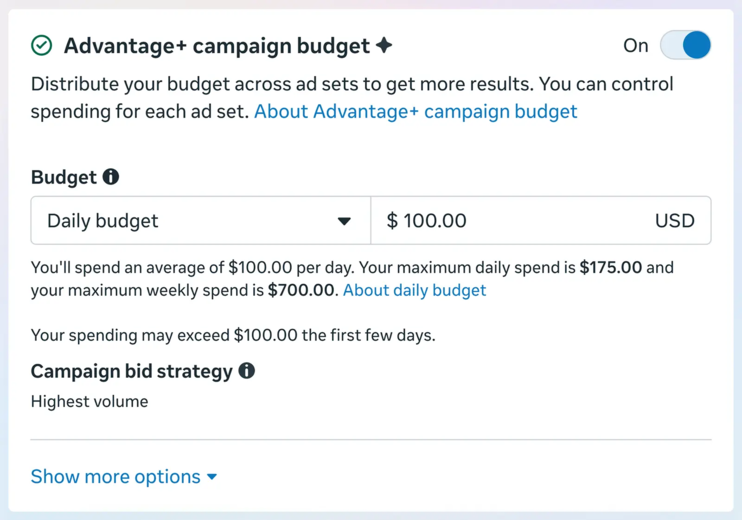
Budget is one permitted adjustment to a qualified ad, via Semrush.
This leaves campaigns with management options, but not unrestricted flexibility. A buyer can increase or reduce spending on an eligible ad, stop it, or resume it. If the team expects to use several creative variations in the final week, each variation needs to be properly disclaimed and to serve an impression before the restriction starts.
Authorization and the Payer Line Come First
Advertisers running ads about social issues, elections, or politics must complete Meta’s authorization process and include a “Paid for by” disclaimer. These are ordinary requirements for qualifying ads, not measures that appear only in the final week. Meta’s restriction notice also makes a valid disclaimer an express condition for an ad to continue during the period.
For teams managing multiple committees, clients, or pages, the review should identify the actual advertiser and payer on each ad. Do not rely on an agency’s general readiness or another client’s authorization. Check that the disclaimer attached to the submitted ad is valid and accurately names the paying organization before spending time trying to establish its first impression.
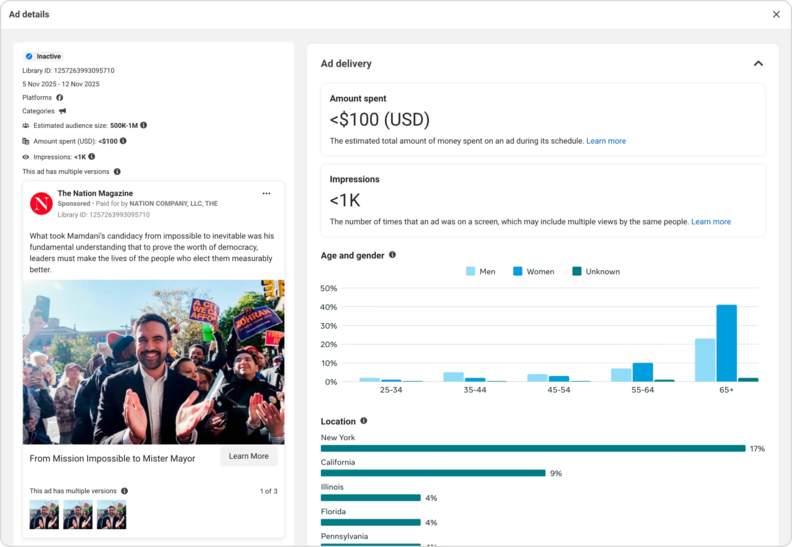
A past political ad illustrates visible sponsorship and delivery details, via Birch.
Meta places ads in these categories in its public Ad Library for seven years. The archive helps readers examine creative and available advertiser information, but its retention period is rolling: the earliest seven-year-old entries began leaving in 2025. For the deadline decision, the campaign should still verify delivery for each ad in its own account rather than infer eligibility from a campaign-level status.
Review AI Media Before the Ad Goes Live
Meta requires disclosure in specified cases when a political or social-issue ad contains a photorealistic image or video, or realistic-sounding audio created or altered using AI or other digital methods. That is more precise than saying every use of AI in production requires a label. Teams should examine the media itself and follow Meta’s current ad standard and disclosure workflow.
The distinction is particularly important for synthetic voices, fabricated scenes, and realistic depictions of people or events. If disclosure is required, complete it on the version that will be submitted and delivered before the cutoff. A material change to the creative after October 27 is not among the edits Meta permits for a continuing ad.
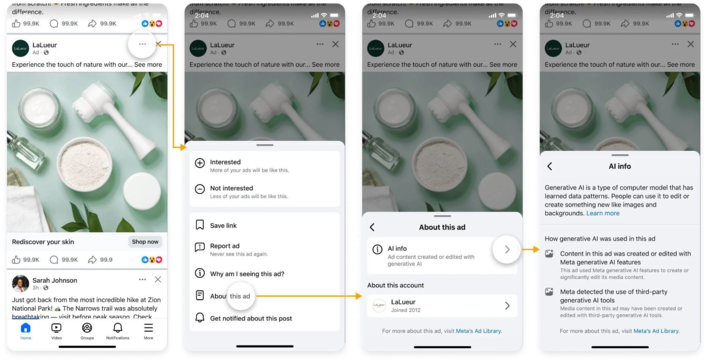
Meta’s ad-information interface can show AI labels, via EmbedSocial.
Meta has also expanded the AI-related information it may display in its “About this ad” tool, including signals associated with third-party AI tools. That platform labeling does not replace an advertiser’s required self-disclosure. Creative and compliance staff should agree on what was generated or altered before the final version enters review.
Treat the Last Check as a Delivery Audit
Before October 27, review the ads that the campaign actually intends to use through Election Day. Confirm the correct advertiser authorization, payer disclaimer, and any applicable AI disclosure. Then check each ad’s review status and delivery record for at least one impression before 12:01 a.m. Pacific Time.
A paused ad with a prior qualifying impression may be unpaused during the restriction. A paused ad that never served cannot gain eligibility merely by being switched on after the cutoff. The same distinction applies to an approved but future-scheduled ad: its schedule is not a substitute for an impression.
Keep the status check at the individual-ad level. If one creative in an ad set served, that does not establish that every other version did. Record which ads qualify, which are still under review, and which cannot be counted on for the restricted period. That gives the team a realistic final-week plan without treating Meta’s rule as a blackout across every advertising channel.
Wrap Up
Meta’s final-week restriction has a precise boundary. It blocks new U.S. ads about social issues, elections, or politics from running between October 27 and November 3, while allowing properly disclaimed ads that served before the cutoff to continue.
The operational threshold is small but consequential: one delivered impression for each ad. Approval, an upload date, or a scheduled start does not by itself meet that threshold.
Campaigns retain limited control over qualifying ads through bids, budgets, end dates, and pausing or unpausing. Before the period begins, the most useful question is not “Is our campaign ready?” It is “Which exact ads have the authorization, disclosures, approval, and delivery record to keep running?”
-Oct-13-2026-10-14-19-6091-AM.jpg)