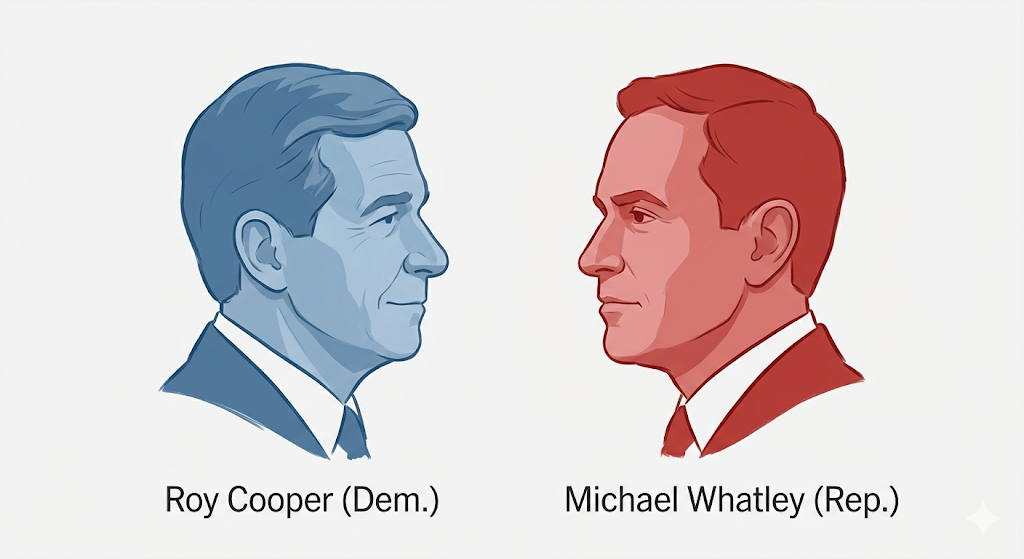

North Carolina's open Senate seat is shaping up as one of the most consequential races of 2026, and Republicans are starting from behind.
What to Know
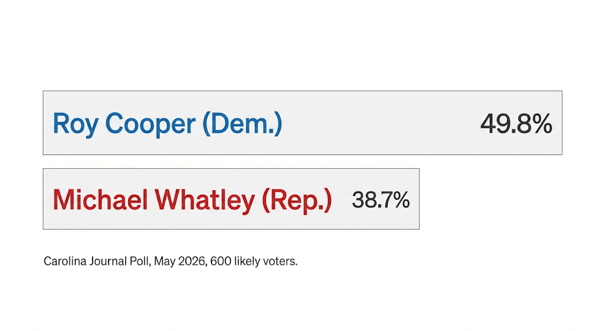
- Roy Cooper leads Michael Whatley by 11 points in the latest Carolina Journal poll of likely North Carolina voters
- A separate Opinion Diagnostics survey commissioned by RightCount shows Cooper ahead by 9 points
- 33% of likely North Carolina voters say they have never heard of Whatley
- Cooper has raised $21.1 million total compared to Whatley's $6.3 million
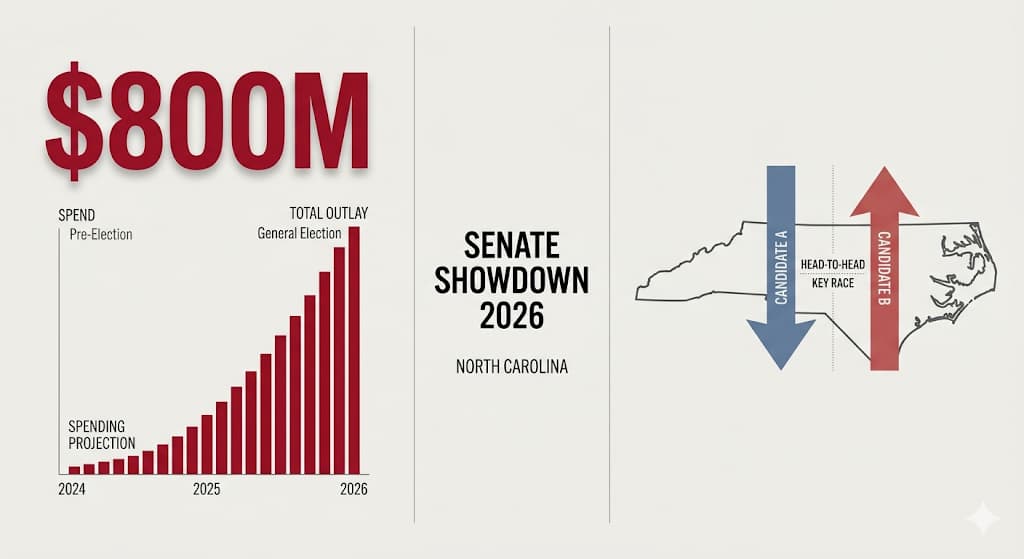
- Private estimates from both parties project the race could cost $650 to $800 million, which would break the $500 million Georgia 2022 Senate record
Republicans have held this Senate seat for all but one term since 2002, but the retirement of Sen. Thom Tillis has handed Democrats their clearest opening in the state in a generation. Former two-term Democratic Gov. Roy Cooper entered the race carrying name recognition that no amount of early spending can quickly replicate, and multiple independent polls now show him holding a consistent double-digit advantage. Republicans are not starting from zero, but they are starting from behind in a state they cannot afford to lose.
Whatley secured the GOP nomination with a Trump endorsement, a proven primary base, and a super PAC already committed to a major advertising investment. But the early data presents a clear and urgent challenge: Cooper is not just leading on numbers, he is leading on the terrain that determines how expensive and difficult it becomes to close a gap.
Cooper Holds a Measurable Lead Across Multiple Polls
Multiple independent surveys have produced consistent findings, and that consistency is the story. Carolina Journal's May 2026 poll found Cooper leading by 11.1 points among likely voters, a lead that has grown from 7.8 points in March, indicating movement in the wrong direction for Republicans.
Forecasters have responded accordingly. Cook Political Report moved the race to Lean Democratic in April, and the University of Virginia's Center for Politics moved it from Toss-up to Lean Democratic on June 10, explicitly citing Cooper's approach to 50% support as the trigger for the upgrade. Sabato's Crystal Ball and Inside Elections still rate it a Toss-up. Analysts across all services agree the race is expected to tighten considerably before November, and the ratings reflect an advantage, not a foregone conclusion.
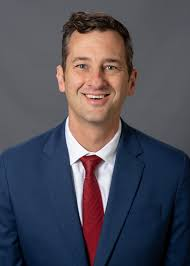
Chris Cooper, Political Scientist, Western Carolina University
Western Carolina University political scientist Chris Cooper, as quoted by the News and Observer, put the floor on Republican optimism in plain terms:
"This may end up as a razor-thin race by Election Day. But it also doesn't have to become that, and Cooper may just ride out the race and win by a clearer margin."
That uncertainty is exactly why both parties are already committed to nine-figure spending in this state.
Campaign Now (Gemini), Cooper leads Whatley across polls
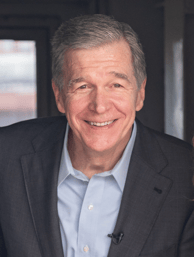
Roy Cooper, Former Governor of North Carolina
Cooper's favorability advantage runs deep across demographic lines. His approval is particularly strong among Black voters and holds up with unaffiliated voters, while his numbers among white men are underwater, per Carolina Journal. That demographic profile reflects exactly how Cooper built two gubernatorial wins: by outperforming national Democrats in the middle of the electorate while holding his base.

Donald Bryson, CEO of the John Locke Foundation
Donald Bryson, CEO of the John Locke Foundation and publisher of Carolina Journal, put the environment in plain terms:
"Roy Cooper's double-digit lead over Michael Whatley is real, but it's not just a generic midterm backlash. Cooper's 24 years of statewide name recognition is a massive advantage that no challenger can easily overcome. At the same time, Republicans are fighting headwinds: President Trump's approval is underwater, while a majority of North Carolinians say the country is on the wrong track."
That combination, a well-known opponent, a difficult national environment, and a widening gap, is the Republican problem in one paragraph.
North Carolina's Split-Ticket Paradox
North Carolina has a documented institutional habit of rewarding candidates over parties, and Cooper's current lead only makes sense in that context. Campbell University research presented in March 2026 found that in 8 of the last 12 presidential elections, North Carolina voters chose a governor of one party and a president of the other, and split differently again for senator and governor in 6 of the last 8 cycles. No other competitive state produces that pattern as consistently.
The most instructive example is the 2020 ballot. On the same day, North Carolina voters gave Cooper a +4.5-point gubernatorial victory, handed the presidential race to Trump by roughly +1.4 points, and returned Tillis to the Senate by +1.8 points. Cooper was the only Democrat in the country to win a gubernatorial race in a state Donald Trump carried that cycle. Republicans are not running against a generic Democrat. They are running against the specific candidate who already proved he can win here when the top of the ticket could not.
That personal brand has never translated to a Senate seat. CNBC reported June 18, 2026 that no Democrat has won a U.S. Senate race in North Carolina since Kay Hagan in 2008.Every favorable environment since has produced a competitive race and a Republican win. Cooper's candidacy tests whether the split-ticket coalition that elected him governor twice can follow him to a chamber where North Carolina voters have never let Democrats go before.
Whatley Faces a Name Recognition Gap He Cannot Ignore
More than half of likely North Carolina voters either have no opinion of Whatley or have never heard of him, according to Carolina Journal. His favorability sits well below Cooper's, with the largest single group of voters saying they simply do not know who he is. That is not a persuasion problem yet, it is an introduction problem, and it has to be solved before persuasion can even begin.
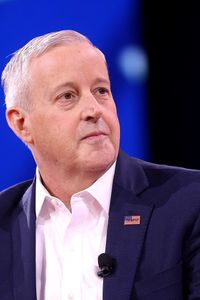
Michael Whatley, Republican Candidate for U.S. Senate
Whatley's campaign message centers on public safety, affordability, and support for President Trump's agenda. As documented by Ballotpedia, he has pledged to "put more cops on the street" and position himself as a conservative champion for North Carolina. Hurricane Helene recovery has also surfaced as one of the race's most volatile issues, with Whatley appointed to a FEMA Review Council by President Trump while Cooper faces scrutiny over his response as sitting governor when the storm hit.
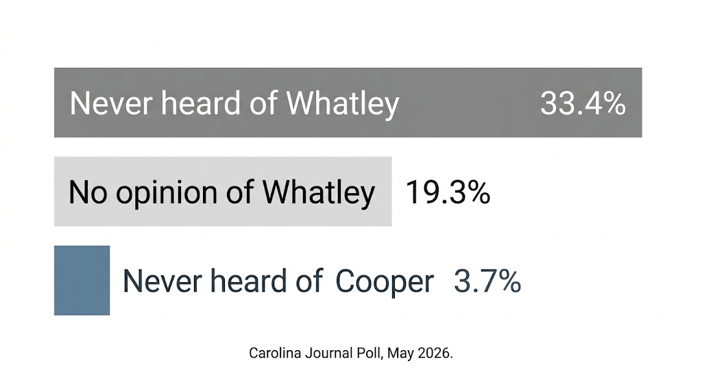
Campaign Now (Gemini), Whatley voter awareness gap

Opinion Diagnostics partner Patrick Sebastian, quoted by WRAL, was direct about what the early numbers actually mean:
"While Cooper begins with a clear advantage, it likely reflects the current political environment and his time in public office, rather than a fully defined contest. A high-intensity campaign for and against both candidates could significantly reshape the race."
Whatley's strongest demographic is voters 65 and older, a high-turnout bloc Republicans depend on in close North Carolina races, and it is a real asset in a state where that cohort shows up.
North Carolina Has Become a National Senate Battleground
Private estimates from both parties, cited by Ballotpedia, project this race could cost between $650 and $800 million, which would shatter the previous national Senate record. Both the Senate Leadership Fund and the Democrat-focused Senate Majority PAC have already committed major resources, and the spending arms race has barely started. North Carolina is not just a battleground; it is shaping up as the most expensive Senate race in American history.
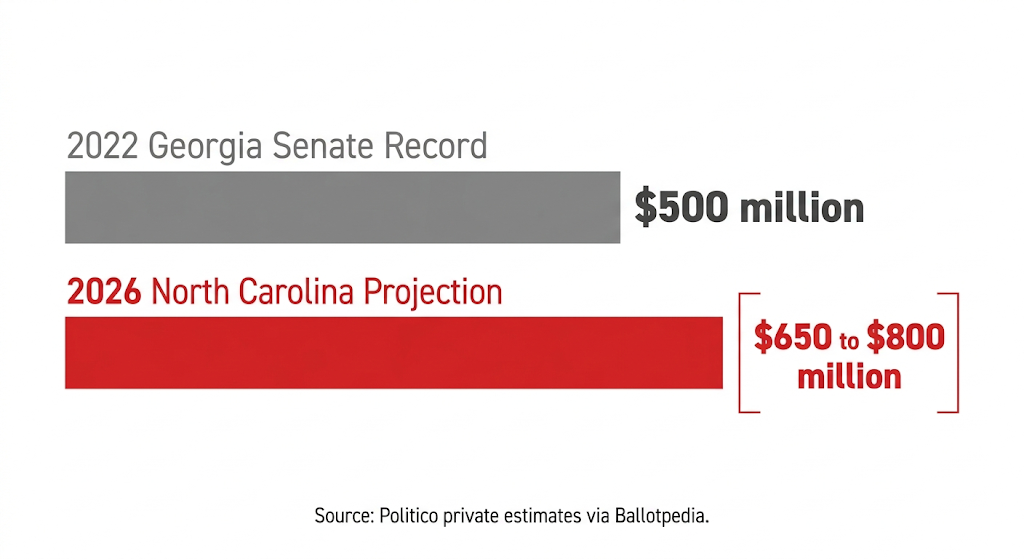
Campaign Now (Gemini),NC Senate race projected spending vs past record
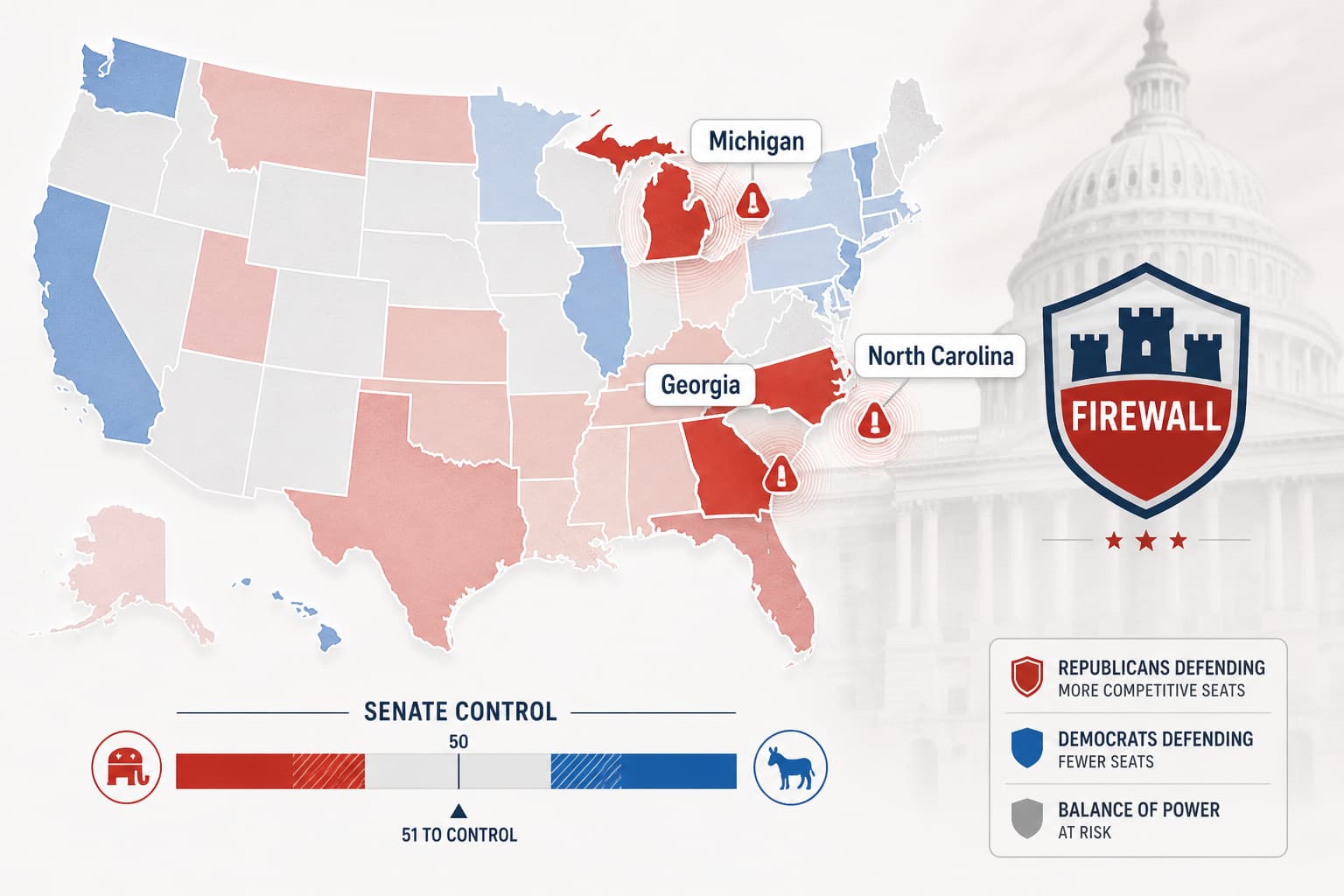
Republicans currently hold a 53-47 Senate majority, and Democrats are targeting North Carolina alongside Maine, Alaska, and Texas as their clearest pickup opportunities, per WRAL. Historical context sharpens the stakes for both sides: a Democrat last won a North Carolina Senate seat in 2008, and a Democrat last won an open seat here in 1974, per Ballotpedia. Every dollar spent here is a bet that this cycle is different.
Patrick Sebastian of Opinion Diagnostics, as quoted by WRAL, captured the central question hanging over this race:
"The big question in this race is simply going to be: what do people care more about?"
Inflation and cost of living top voter priorities in North Carolina by a wide margin, and candidates who own that issue are most likely to be rewarded in November.
Wrap Up
Cooper's lead is real, it is consistent, and it has grown since March. He enters the summer with a commanding fundraising advantage, durable name recognition built over two decades of statewide office, and an environment where the president's approval is underwater in a state he carried in 2024.
None of that closes the door for Republicans. Whatley has a credible campaign message, a loyal senior voter base, and a level of outside spending that will eventually force every North Carolina voter to have an opinion about both candidates. Republicans need to define Cooper early on cost of living and Hurricane Helene, build Whatley's name from the ground up, and trust that a $650 to $800 million race will look very different by October than it does today.