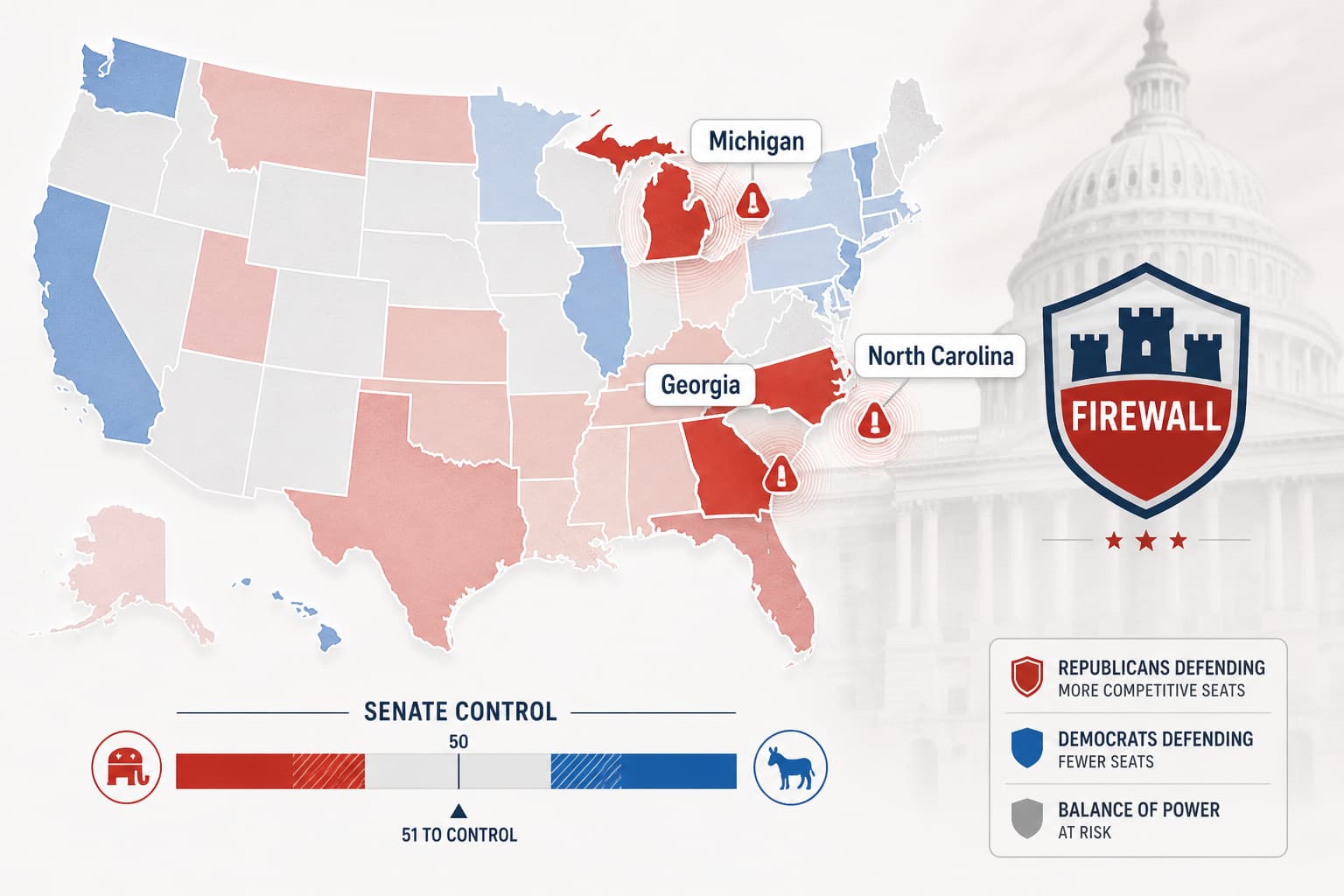


The House fight is consolidating into a few decisive districts where retirements, candidate quality, demographics, and redistricting will determine the path to 218.
What to Know
- 10 House seats are rated Toss-Ups by Inside Elections, making them the concentrated cluster that could decide chamber control.
- Incumbents won with razor-thin margins (49% to 50% of the vote), signaling no built-in cushion heading into 2026.
- Trump carried districts by as little as 49.6% or as much as 10 points, showing wide variation in partisan baseline.
- Primary instability is already exposing real vulnerability, with challengers pulling as much as 44% against incumbents.
- Redistricting could shift margins by up to 5 points in key seats, adding another layer of volatility.
Congress may be decided in only ten places, but each of those ten tells a different story about what kind of election 2026 is becoming. According to Inside Elections, all ten are currently rated Toss-Ups, but that label hides how different the underlying dynamics really are. Some are classic suburban persuasion fights. Some are open-seat scrambles. Others are districts where one party’s coalition has improved on paper, but candidate dynamics still make the race highly unstable.
That is what makes this group so strategically important. These are not just competitive seats identified by Inside Elections. They are the districts where campaigns, outside groups, and national parties are about to learn whether the political environment is strong enough to overpower incumbency, whether recruiting still matters, and whether a district’s presidential baseline still means what operatives think it means.
AZ-1: The Desert Vacuum
David Schweikert’s gubernatorial run turned Arizona’s 1st into a pure open-seat fight, and open seats are where theory gets stress-tested.

Rep. David Schweikert; Former Rep. Amish Shah; Marlene Galan-Woods
Inside Elections notes that the Democratic side remains unsettled, with former state Rep. Amish Shah starting as the polling frontrunner while Marlene Galan-Woods, Jonathan Treble, Mark Robert Gordon, and Rick McCartney crowd the field.

Jonathan Treble, Mark Robert Gordon; Rick McCartney
Republicans look somewhat more consolidated behind former NFL kicker Jay Feely, who has Trump’s endorsement.

The strategic question here is simple: can Republicans hold a district that Trump carried by only a point once Schweikert’s personal brand exits the ballot? If Feely turns the race into a clean partisan contrast, the GOP can survive. If Democrats turn it into a coalition-building suburban contest with a more disciplined nominee, this is exactly the kind of open seat that slips away.
IA-1: The Perennial Weak Spot
Marianette Miller-Meeks is the kind of incumbent who keeps getting classified as durable right up until the numbers say otherwise.

Rep Marianette Miller-Meeks; David Pautsch
Inside Elections calls her a perennial underperformer and notes that she still has to navigate a primary challenge after David Pautsch won 44% against her in the 2024 primary despite spending barely anything.

Former state Rep. Christina Bohannan is the presumptive Democratic nominee, and national Democrats view this as a top target. This district is a warning flare for Republicans. When an incumbent repeatedly runs below where the district should be, that is not background noise. That is a structural liability. If Democrats are going to convert anti-incumbent energy into an actual seat, this is one of the most plausible places to do it.
OH-1: The Map Got Meaner
Greg Landsman now has to defend himself on a more competitive map, and that alone moves this race into the danger zone. Inside Elections notes that Republicans did not recruit a top-tier challenger, but the district’s new lines still create additional pressure.

Rep Greg Landsman; Former CIA Eric Conroy
Former CIA officer and Air Force veteran Eric Conroy and dentist Steven Erbeck were the most notable GOP candidates at the end of 2025, with Holly Adams later entering and saying she loaned her campaign $400,000.

This is one of those districts where candidate quality may temporarily protect Democrats from the full force of the map. But only temporarily. If Republicans eventually consolidate around a credible contrast and successfully nationalize Landsman’s record, the seat becomes a live test of whether the new Ohio lines are doing what they were built to do.
TX-34: South Texas Is Still in Play
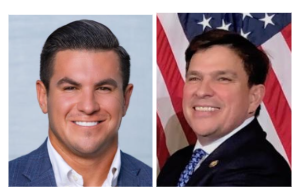
Texas’s 34th is one of the clearest reminders that South Texas is not settled terrain for either party. Inside Elections says Trump carried the district by 10 points, but also notes that Republicans’ hold on Hispanic voters in South Texas appears to have slipped over the last year. Army veteran and former federal prosecutor Eric Flores emerged from the GOP primary to face Vicente Gonzalez in what the publication describes as one of the most competitive House races in the country.
The national significance is bigger than one district. If Republicans cannot convert Trump-era gains into durable congressional wins here, then parts of the South Texas narrative start looking overstated. If they can, Democrats have a deeper coalition problem than they want to admit.
AZ-6: The Borderland Knife Edge
Juan Ciscomani won re-election with 50%, and that number alone tells you why this seat stays on every serious battleground list. Inside Elections highlights Democrat Jo Mendoza as a candidate strategists love on paper, especially with her Marine background and fundraising strength, though Ciscomani still held a major cash advantage at the end of 2025.

Congressman Juan Ciscomani and Rep. Jo Mendoza
This race sits at the intersection of border politics, veteran branding, and suburban persuasion. It is the kind of district where neither party gets to run a lazy national script. Republicans cannot assume border messaging is enough. Democrats cannot assume demographic change will carry them. Someone has to earn the final three points.
MI-7: The Brink Test
Michigan’s 7th may end up being one of the cleanest national proxy fights in the country. Tom Barrett won the seat with 50%, and now Democrats have a serious primary featuring former U.S. Ambassador to Ukraine Bridget Brink and former Navy SEAL Matt Maasdam. Inside Elections notes both have endorsements and money, but also flags a real complication: Brink only recently moved into the district, while Maasdam has never lived there, opening space for attacks from within the primary itself.

Rep. Tom Barrett; former U.S. Ambassador Bridget Brink; former Navy SEAL Matt Maasdam
This is a race where Democrats have no excuse to underperform. The national party has profile, money, and a favorable target. But there is execution risk here. A bruising primary that drains resources and hands Barrett a residency-based contrast could waste one of the best opportunities on the map.
PA-7: Lehigh Valley, National Consequences
Ryan Mackenzie’s seat is the kind of district both parties will pretend is local while treating it like a national strategic asset.

Rep. Ryan Mackenzie; Fire Fighters Pres. Bob Brooks; former prosecutor Ryan Crosswell
Inside Elections identifies Pennsylvania Professional Fire Fighters Association President Bob Brooks and former federal prosecutor Ryan Crosswell as key Democratic contenders, with Crosswell holding the stronger fundraising position at the end of 2025. Lamont McClure and Carol Obando-Derstine were also in the mix, but lagging.

Exec. Lamont McClure; Commissioner Carol Obando-Derstine
The broader point is that Pennsylvania’s swing districts reward candidates who can perform competence, moderation, and strength at the same time. That is a narrow lane. If Democrats nominate someone who can hold labor voters without bleeding persuasion support in the suburbs, this becomes a brutal general-election fight.
VA-2: The Rematch That Could Break the Majority
Virginia’s 2nd is already a Toss-Up, and it could get even more hostile for Republicans if the new map is approved. Inside Elections says the district would get slightly better for Democrats and would have been carried by 5 points under the proposed lines, making Republican Rep. Jen Kiggans an underdog in a rematch with former Rep. Elaine Luria.
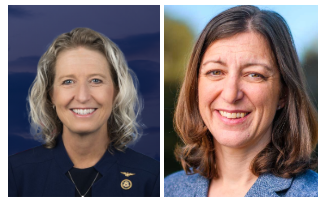
Rep. Jen Kiggans and Rep. Elaine Luria
This is not just another swing-seat rematch. It is a district sitting underneath a redistricting cloud, which means campaigns have to build strategy against two possible electorates at once. That kind of instability favors the party with more enthusiasm and a cleaner message. Right now, Republicans should view this as one of the most dangerous seats on their side of the ledger.
CO-8: The New-Era Bellwether
Colorado’s 8th is what the modern battleground looks like: fast-growing, suburban, demographically fluid, and decided on the margins. Gabe Evans won with 49%, and Inside Elections notes that the Democratic primary is centered on state Rep. Manny Rutinel and state Sen. Shannon Bird, with Marine veteran Evan Munsing also in the field.

Rep. Gabe Evans; Rep. Manny Rutinel; Rep. Shannon Bird; Marine veteran Evan Munsing
This district has bellwether energy written all over it. If Republicans can hold CO-8 in a bad national climate, they probably have more resilience than expected. If Democrats flip it cleanly, it signals that the suburban drift against the GOP remains a live and potent force.
NY-17: The Lawler Firewall
Mike Lawler has built a reputation as the kind of Republican who can survive where other Republicans cannot.
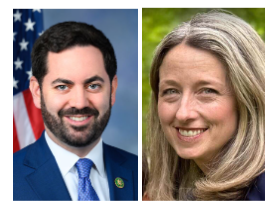
Rep. Mike Lawler; legislator Beth Davidson
But survival in the Hudson Valley is never permanent. Inside Elections points to Rockland County legislator Beth Davidson and former Biden administration official and special forces veteran Cait Conley as the leading Democrats, while also noting Conley’s fundraising edge and a series of unforced errors that have kept her from fully separating. Peter Chatzky’s self-funding adds another unpredictable element.

Veteran Cait Conley; investor Peter Chatzky
If Republicans lose the House, NY-17 is one of the places they will look back on first. Lawler’s value to the GOP is not just that he wins a tough district. It is that he symbolizes the kind of candidate the party needs more of and rarely produces. If Democrats can take him down anyway, that says a lot about the ceiling on candidate insulation in a hostile cycle.
Wrap Up
The path to 218 is not running through dozens of equally important seats. It is compressing into a smaller set of districts where candidate discipline, district fundamentals, and national mood collide. These ten seats matter because they capture nearly every major pressure point in the 2026 House fight: open-seat volatility, suburban erosion, South Texas uncertainty, redistricting disruption, and first-term incumbents trying to prove they belong.
If Democrats are truly favored to win the House, this is where they will prove it. If Republicans are going to hold the chamber, this is where they will have to outperform the climate. Either way, the majority is likely to be decided one district at a time, and these are the ten most likely to deliver the verdict.