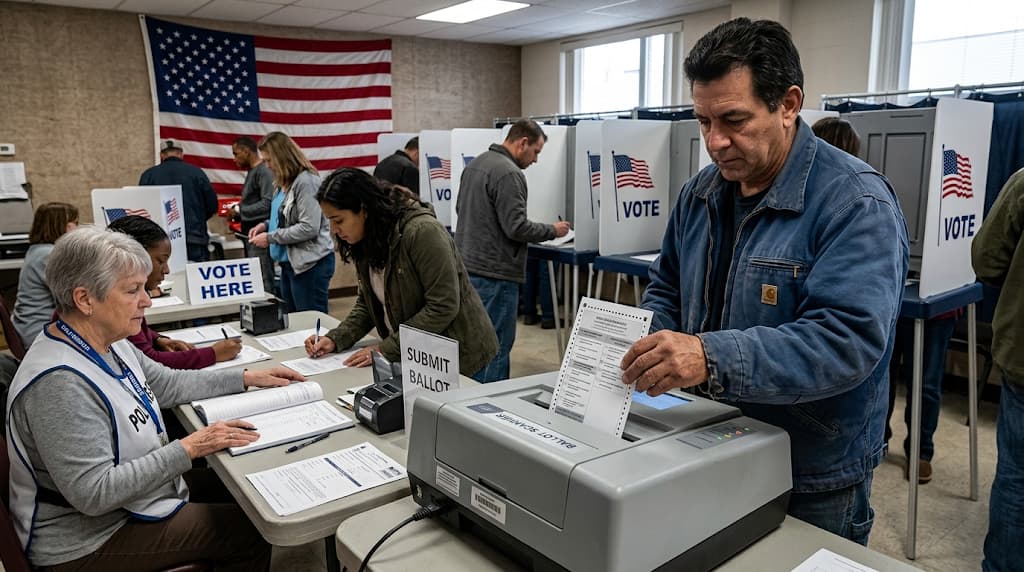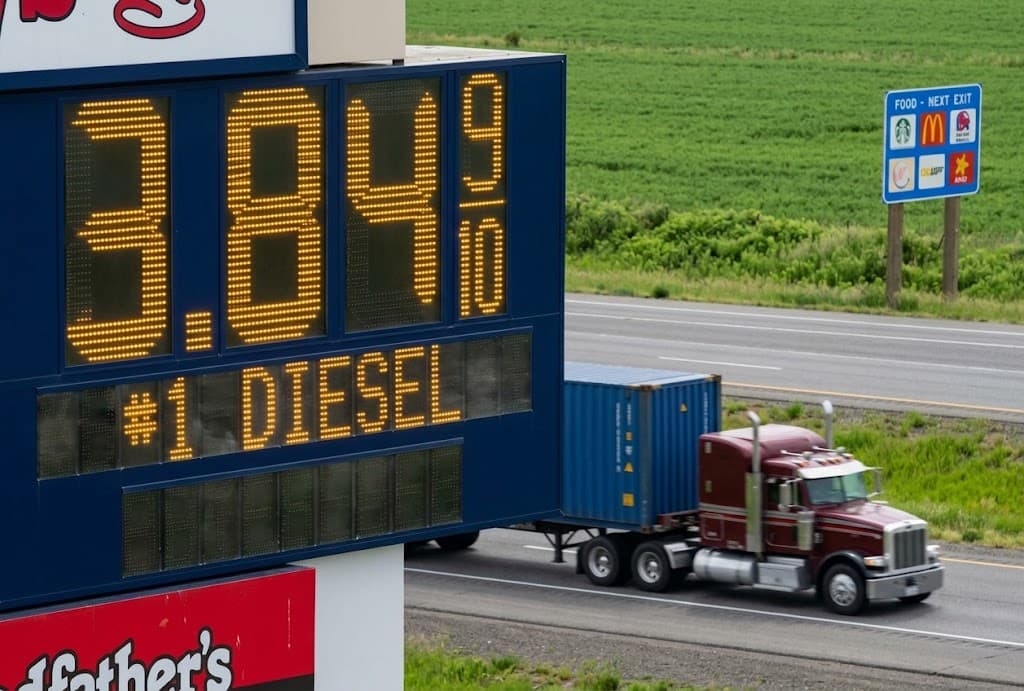
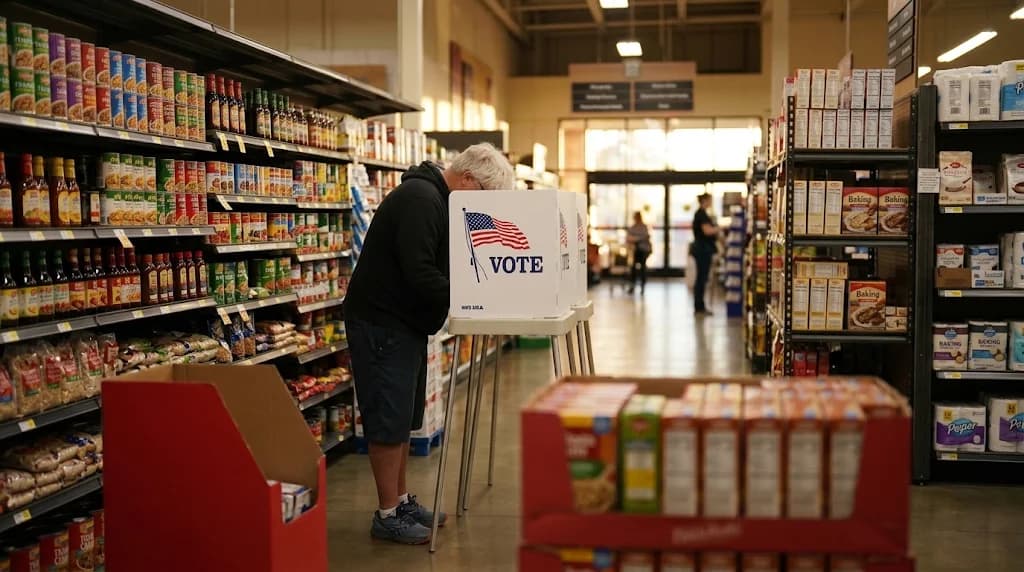

As Democrats won Congress, voters who called living costs crucial backed Democratic House candidates by a wide margin.
What to Know
- Grocery prices fell 0.1% in September but remained 1.8% higher than a year earlier.
- Regular gasoline averaged $4.284 a gallon on October 19, nearly 42% above the comparable week in 2025.
- The S&P 500 closed on Election Day 3.2% below its record but 10.6% above its 2025 year-end close.
- 49% of voters called the cost of living crucial to their congressional vote. Among those voters, 66% backed Democrats for the House.
- About six in ten voters in households earning under $50,000 called living costs crucial, compared with about half in households earning at least that much.
The Associated Press called Senate control for Democrats on November 3 and House control early November 4. Voters who called the cost of living crucial to their congressional vote backed Democratic House candidates by more than two to one, even as the S&P 500 finished Election Day well above where it began the year. The results raise a question that a stock chart alone cannot answer: Which parts of the economy mattered most to voters?
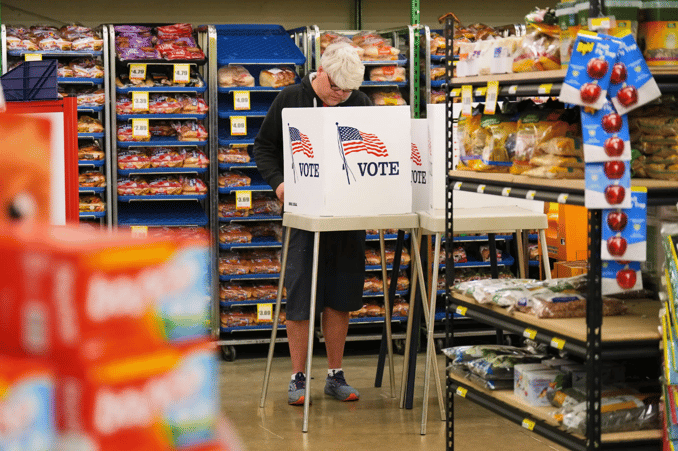
A Kansas voter casts a ballot inside a grocery store, via Associated Press.
The price data tell two different stories. Grocery prices dipped in September without returning to the previous year’s level, while regular gasoline eased from its late-September high but still cost considerably more than it did the previous fall. The voter survey helps connect those pressures to the election by showing who worried most about everyday costs, how they voted, and which other issues competed for their attention. It cannot tell us what those voters would have done if prices had been lower.
Grocery prices dipped without undoing the previous year’s increases
The Bureau of Labor Statistics’ September Consumer Price Index, released October 14, showed that food-at-home prices fell 0.1% from August after seasonal adjustment. Compared with September 2025, however, the index was 1.8% higher before seasonal adjustment. The two figures answer different questions: The first measures the latest monthly change; the second shows where grocery prices stood compared with a year earlier.

Grocery prices dipped in September but remained higher annually, via Bureau of Labor Statistics.
The average also masks differences across the grocery aisle. In the same release, prices for fruits and vegetables were 3.7% higher than a year earlier, while prices for dairy and related products were 0.7% lower. A household’s grocery bill depends on what it buys, so neither the monthly dip nor the annual average describes every shopper’s experience. The overall index does, however, show why a small monthly decline and continued concern about grocery bills are compatible.
The survey provides a separate check on whether those costs mattered to voters. In the national AP Voter Poll tables published by ABC News, 59% said they were very concerned about the cost of food and groceries for their own finances. That question measured financial concern, not whether groceries determined their vote. The distinction matters: The price index tells us what happened to prices; the survey tells us how widely voters reported feeling concerned about them.
Gasoline fell from September but stayed well above 2025
The U.S. Energy Information Administration’s weekly national series for regular gasoline puts the October 19, 2026, average at $4.284 per gallon, not $4.12. In the comparable week, October 20, 2025, the average was $3.019. That is a difference of $1.265 per gallon, or 41.9%.
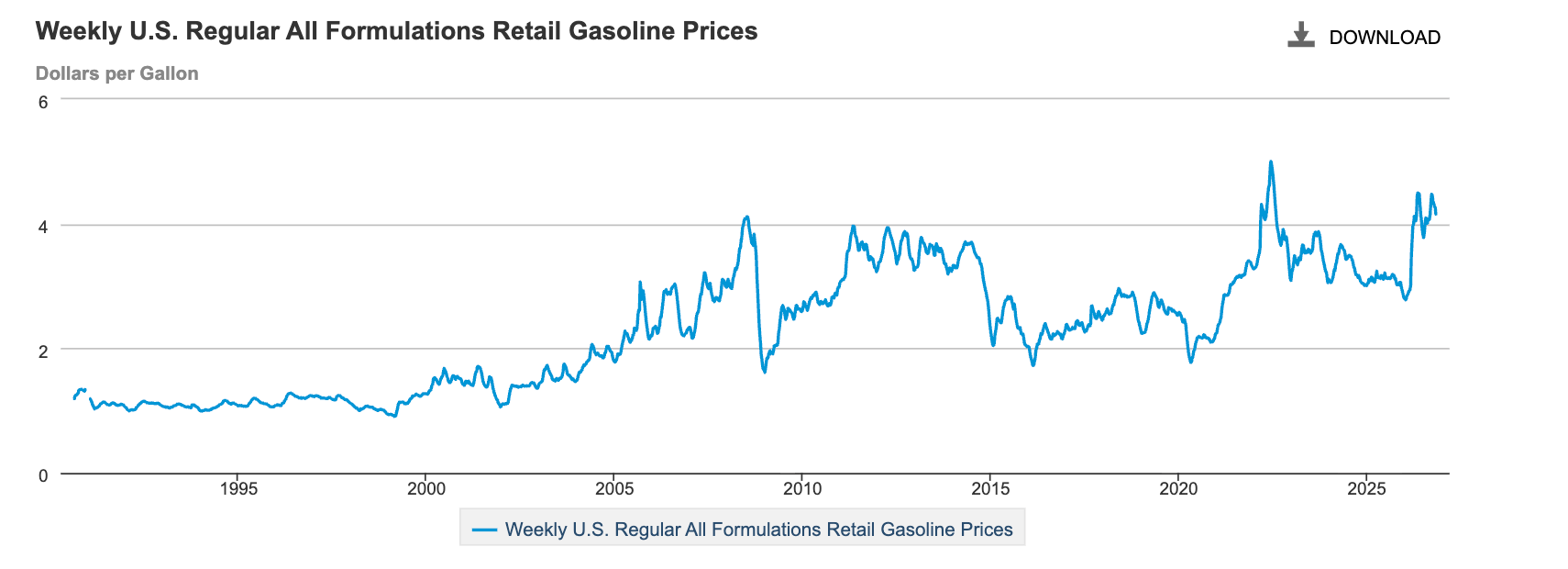
Regular gasoline cost substantially more than a year earlier, via U.S. Energy Information Administration.
Gas prices were easing as the election approached. The national average had reached $4.478 on September 21 and fell to $4.153 on November 2, the day before the election. Even after that decline, regular gasoline still cost $1.134 more per gallon than on November 3, 2025, when it averaged $3.019. The late decline was real, but so was the gap voters faced compared with the previous fall.
The AP Voter Poll also found that 59% of voters were very concerned about the cost of gasoline and diesel. That is the same share that reported being very concerned about food and groceries, but the two answers should not be added together: The same voter could be worried about both. The fuel question also covered diesel, while the weekly price comparison measures regular gasoline only.
The S&P 500 held a strong gain without setting a record
The daily closing series published by the Federal Reserve Bank of St. Louis puts the S&P 500 at 7,568.92 on November 3. That was 250.01 points, or 3.2%, below its October 6 record close of 7,818.93. It was also 10.6% above the December 31, 2025, close of 6,845.50. The market had posted a substantial gain for the year through Election Day, but Election Day itself was not a record.
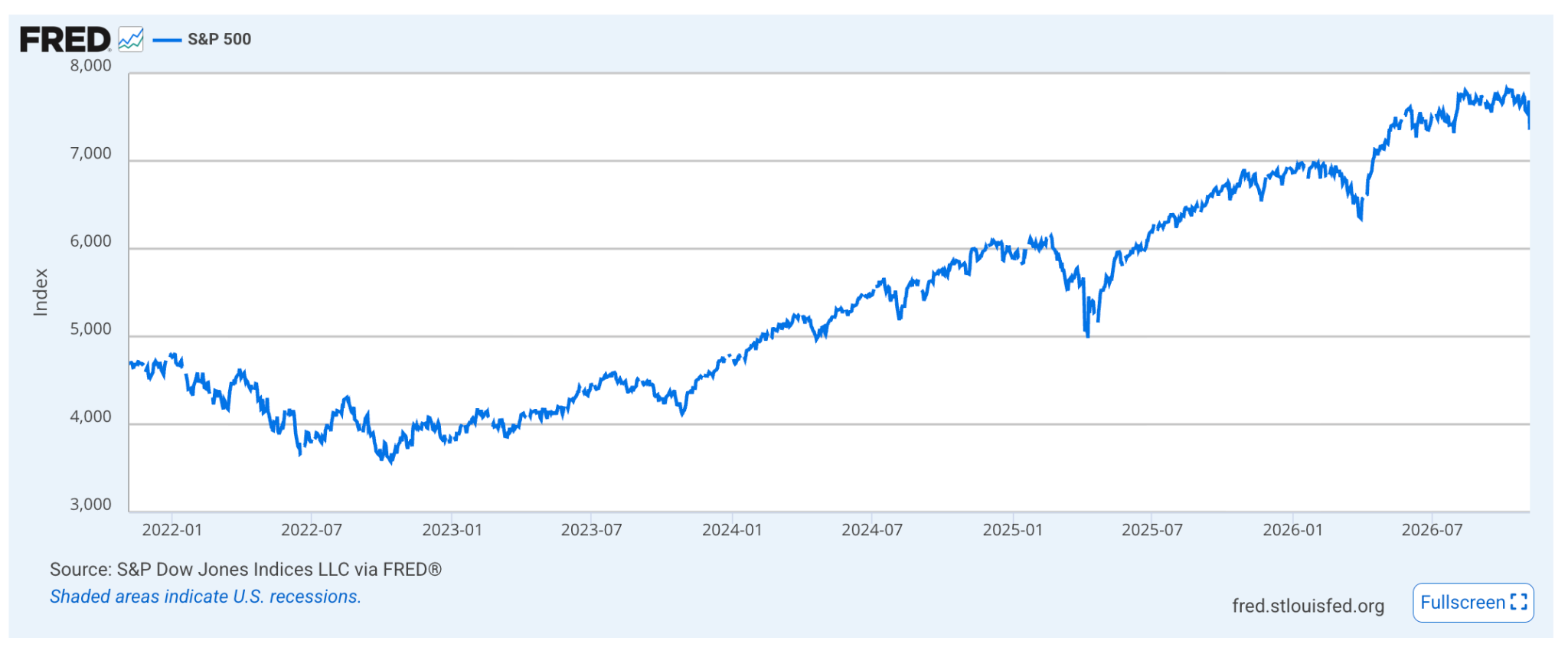
Stocks remained above their prior year’s close on Election Day, via Federal Reserve Bank of St. Louis.
A stock index and a household budget measure different things. The S&P 500’s gain shows how the index performed; it does not measure changes in a family’s income or the share of its budget spent on food and fuel. In the AP Voter Poll’s household-finance question, 44% said their family’s finances were worse than two years earlier, compared with 18% who said they were better. Those answers are self-reported assessments over a different period, not a direct comparison with the index’s year-to-date return. They do help explain why strong market performance and a sour view of personal finances could coexist.
Affordability mattered most to voters with lower household incomes
In the national congressional-vote tables published by ABC News, 49% rated the cost of living crucial to their vote and another 40% called it a major factor. Affordability outranked immigration enforcement (36% crucial) and the war in Iran (34%), but trailed government corruption (55%). Voters could rate more than one issue as crucial, so the figures show the relative importance of the issues asked about, not a single issue chosen by each voter.
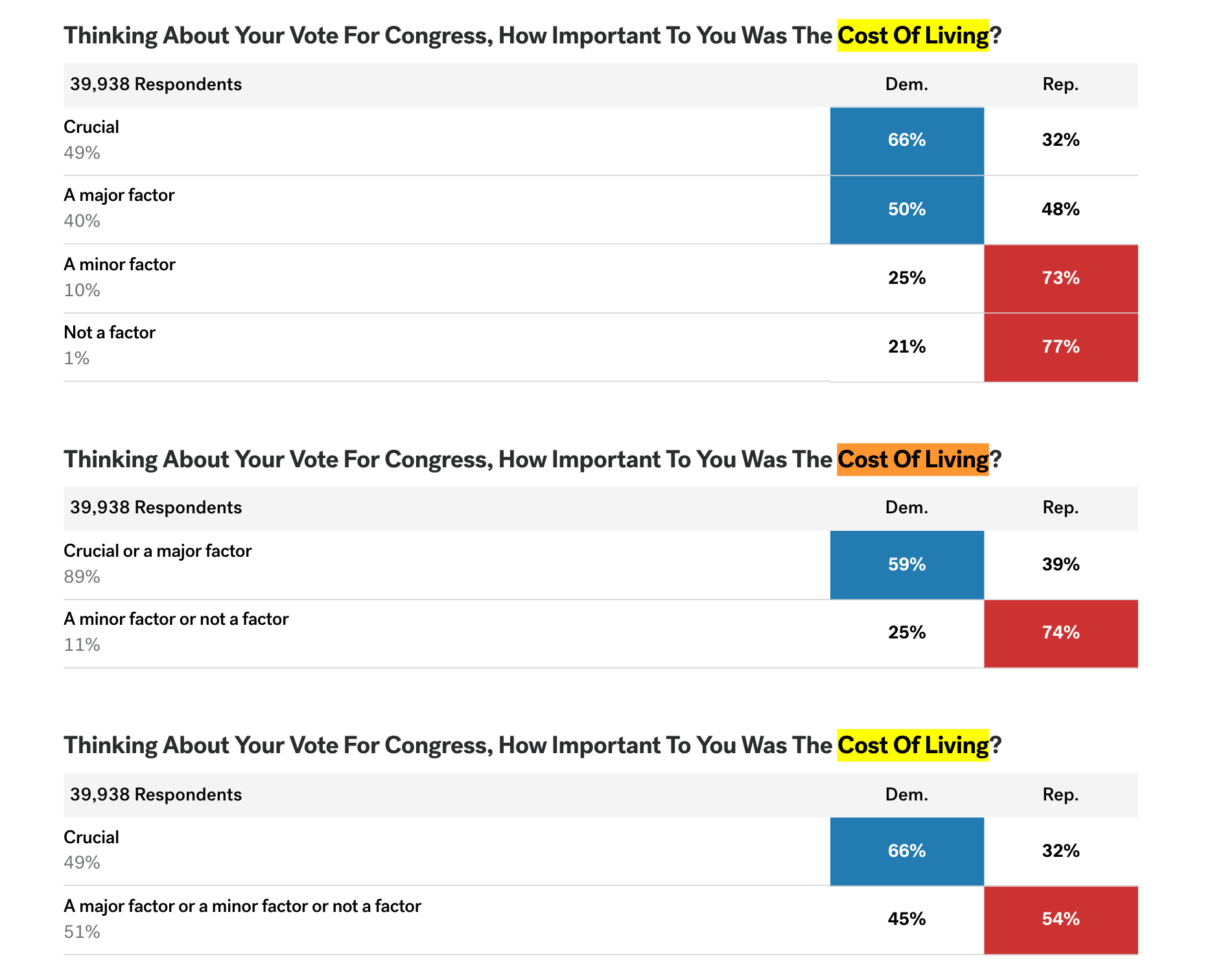
Nearly half called living costs crucial to their vote, via ABC News.
The AP Voter Poll, which ended November 3, also showed a difference by income. In its November 4 analysis, AP reported that about six in ten voters with household incomes under $50,000 called the cost of living crucial, compared with about half of voters at or above that threshold. More than half of voters in the lower-income group reported backing the Democratic candidate in their local House race.
Across income groups, voters who called affordability crucial favored Democrats for the House 66% to 32%, a 34-point margin. Among voters who called it a major factor but stopped short of calling it crucial, the split was 50% Democratic to 48% Republican. That contrast is more revealing than the overall share who cared about prices: The Democratic advantage was much larger among those who attached the most importance to living costs. The survey does not establish whether those concerns changed their vote or reinforced a preference they already held.
Wrap Up
The economic backdrop was not uniformly good or bad. Stocks remained well above their prior year-end close, groceries cost more than a year earlier despite a small monthly dip, and gasoline stayed substantially more expensive than the previous fall even after prices eased. For voters judging the economy by recurring bills, the market’s gains did not answer the affordability question.
The clearest electoral finding is that voters who called living costs crucial favored Democratic House candidates by a wide margin. Lower-income voters were also more likely to call those costs crucial. But government corruption drew a higher crucial rating nationally, underscoring that voters could weigh economic pressure alongside concerns about how the country was governed.
Household costs help explain the midterm vote, but the evidence does not show that grocery or gas prices alone flipped either chamber. What it does show is why a strong stock market was an incomplete guide to the electorate: Many voters said the costs they faced at home were central to their choice for Congress.