
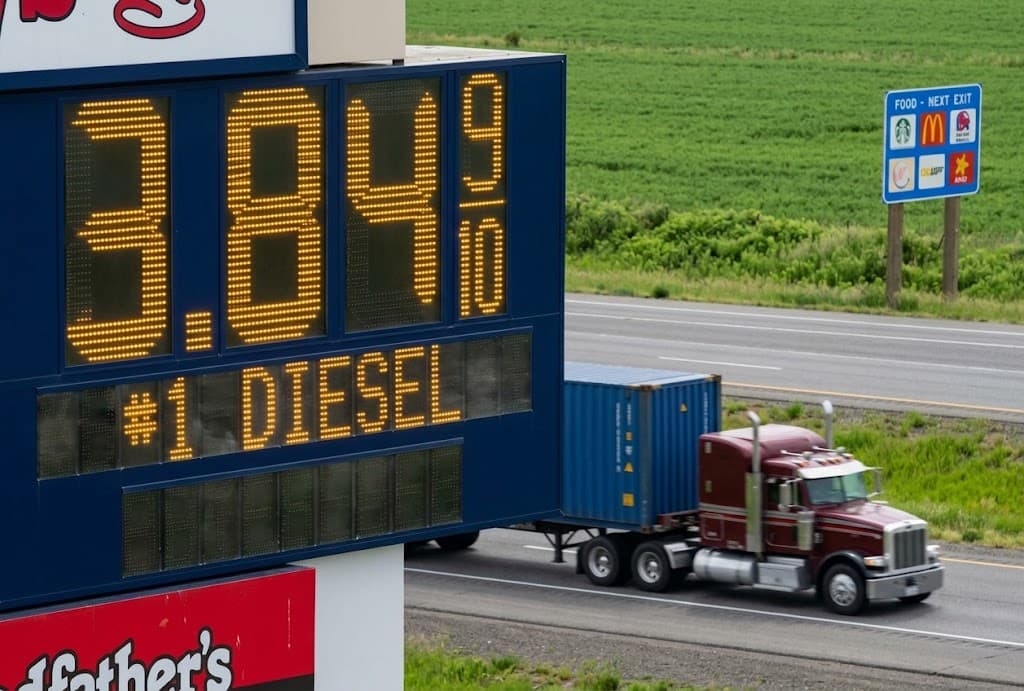

Rising fuel costs are tying overseas conflict to household strain and pushing independent voters toward Democratic congressional candidates.
What to Know
- 81% of Americans reported that gasoline prices placed either major or minor strain on their household budgets.
- Independent voters favor Democrats on gasoline prices by 26 percentage points, creating a serious Republican persuasion problem.
- Democrats hold a 22 point independent advantage on foreign policy as overseas conflict produces visible costs at home.
- Registered voters favor Democratic congressional candidates by 53% to 41% in one national survey.
- Competing generic ballot polls differ in scale but consistently place Democrats ahead of Republicans.
Rising gasoline prices have erased the political distance between foreign policy and household economics. Reuters reported that energy prices increased after Iran restricted access to the Strait of Hormuz, a route that normally carries approximately one fifth of global oil supplies. Ukraine’s attacks on Russian energy infrastructure and domestic refinery constraints added further pressure, preventing campaigns from attributing the increase to one cause alone.
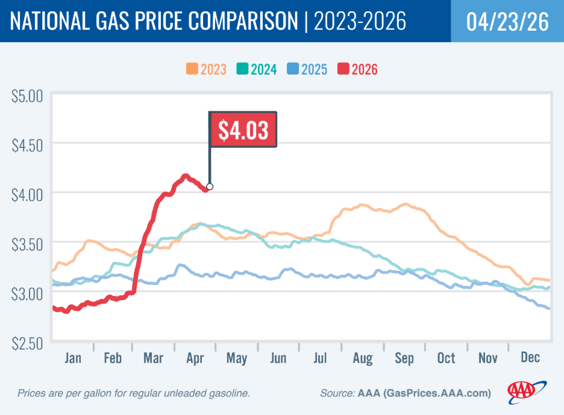
gas price pump national average charts graph oil prices via AAA
Voters experience those competing forces through a single number displayed at the pump. Public opinion now connects the cost of overseas conflict with evaluations of President Donald Trump’s economic leadership and Republican congressional control. Independent voters are moving most sharply, giving Democratic campaigns an opportunity that depends on converting national dissatisfaction into credible local economic contrasts.
Gasoline Prices Put Foreign Policy on the Household Ledger
Gasoline costs have become the most visible household consequence of international instability. A national survey conducted by NPR, PBS News, and Marist found that 33% of Americans experienced major budget strain because of gasoline prices, while another 48% reported minor strain. Combined household pressure reached 81%, leaving only 19% who reported no strain.
Public blame also reached the White House. Marist found that 63% assigned President Trump either a great deal or a good amount of responsibility for higher gasoline prices. That judgment included 63% of independents, identifying the voters most likely to determine competitive House districts.
President Donald Trump, President of the United States, via The White House.
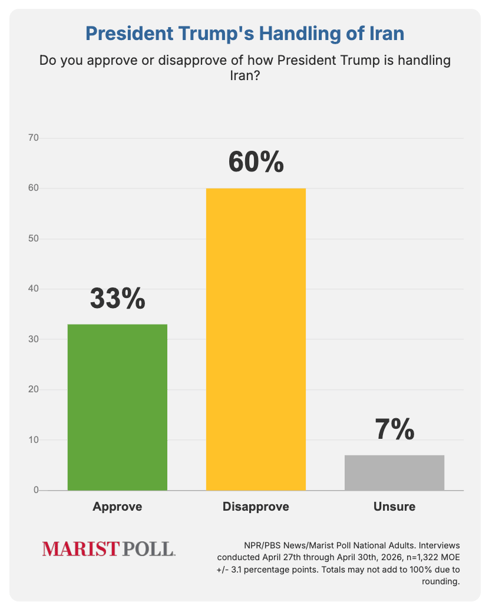
Most Americans disapprove of Trump's Iran policy., via Marist Poll.
Current market pressure reinforces the polling. Reuters reported that Iran’s restrictions around the Strait of Hormuz disrupted a route responsible for approximately 20% of global oil shipments. Additional pressure came from attacks on Russian energy infrastructure, lower refining activity, transportation constraints, and shrinking gasoline and distillate inventories.
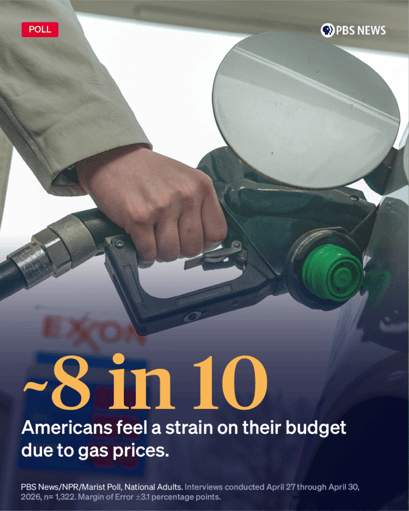
Gasoline costs strain budgets for most American households. via PBS
Those causes matter for economic analysis, but campaigns face a simpler political reality. Voters do not separate crude supply, refining capacity, shipping access, and military strategy when paying for fuel. They evaluate whether elected leaders understand the expense and can explain what they will do about it.
Republican candidates therefore face a difficult balance. Defending the administration’s foreign policy may reassure loyal Republican voters, but denying the financial consequences risks alienating households experiencing them. Democratic candidates gain an opening when they connect military decisions to fuel costs, but criticism becomes more persuasive when paired with a credible explanation of how Congress could reduce household exposure.
Independent Voters Connect Economic and Foreign Policy Dissatisfaction
Independent voters are not separating economic performance from international leadership. A September NPR, PBS News, and Marist survey found that independents preferred Democrats over Republicans on the economy by 41% to 22%. That 19 point advantage represents a direct reversal of the traditional Republican argument that economic management provides the party’s safest electoral ground.
Gasoline prices produced an even wider divide. Independents favored Democrats by 41% to 15% on which party would handle gasoline prices better, creating a 26 point advantage. Foreign policy generated a similar result, with Democrats leading Republicans by 47% to 25%, a difference of 22 points.
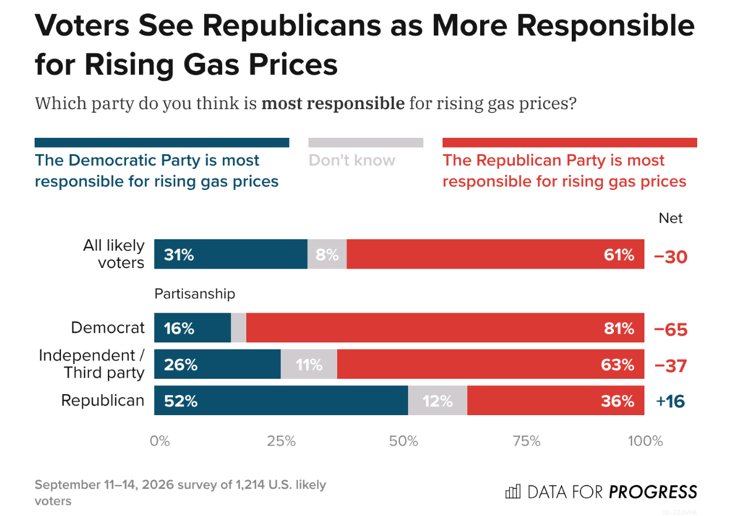
Voters hold Republicans largely responsible for rising fuel costs. via dataforprogress
Immigration remained more competitive than the other issues. Independent voters still favored Democrats by 41% to 27%, a 14 point margin, while 18% said neither party would manage the issue well. Immigration therefore remains more competitive than the economy, gasoline prices, or foreign policy, despite the Democratic advantage.
Those issue preferences now influence congressional choice. Marist found that independents supported the Democratic candidate by 57% to 32%, giving Democrats a 25 point generic ballot advantage within the group. A majority of independents, 54%, also described their congressional vote as primarily a vote against Trump.
Personal finances explain part of that movement. Among independents, 41% said their financial position had worsened during the previous year, while only 16% reported improvement. Another 41% saw little change, leaving Democratic campaigns with an opportunity but not a universal mandate.
Local candidates must translate those numbers into district consequences. Gasoline costs affect commuters, farmers, freight operators, small businesses, and rural households differently. Messages tied to a district’s travel distances, agricultural economy, or transportation workforce will carry more weight than a generic national criticism of energy policy.
Polling Measures Agree on Direction but Not Magnitude
National surveys consistently favor Democrats, but they do not produce a single settled margin. Marist found registered voters supporting Democratic congressional candidates over Republicans by 53% to 41%, a 12 point advantage. Reuters and Ipsos subsequently measured a 44% to 37% Democratic lead among registered voters, while independents favored Democrats by 37% to 21%.
ActiVote’s latest generic ballot survey produced a narrower result among likely midterm voters. Democrats led by 52.2% to 47.8%, a margin of 4.4 points, in polling conducted from September 22 through October 2. An earlier ActiVote poll published on September 22 placed Democrats ahead 52.8% to 47.2%, before their advantage narrowed to 4.4 points in the latest survey.
ActiVote also found Democrats leading independent voters by 58% to 42%. That result supports the broader direction measured by Reuters, Ipsos, and Marist, although the size of the advantage differs. ActiVote cautioned that subgroup estimates carry substantially more uncertainty than the survey’s overall 3.1 point expected error.
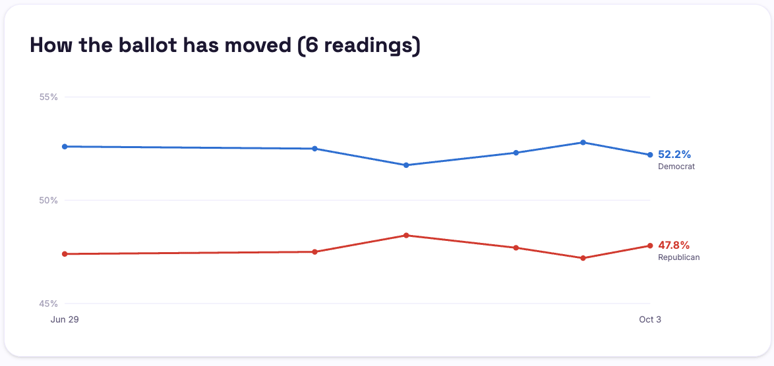
Democratic congressional support remains ahead across successive national readings, via ActiVote.
Differences between the surveys reflect more than random movement. ActiVote surveyed 1,000 likely midterm voters, Marist surveyed 1,280 registered voters, and Reuters and Ipsos surveyed 4,506 adults while reporting congressional preference among registered voters. Field dates, sampling methods, turnout assumptions, and undecided response options can all change the published margin.
Campaigns should therefore track the shared signal instead of selecting the most favorable number. Democrats lead in each measure, independent voters are moving against Republicans, and cost of living remains the strongest explanation for that movement. Exact margins matter for forecasting, but their common direction matters more for resource decisions.
Media teams should reserve their most expensive placements for districts where local polling confirms the national movement. Field operations can identify persuadable independents through canvassing, phone conversations, and early voting data. Campaign managers should monitor whether economic messages move support before shifting limited funds from turnout communication into broader persuasion.
Executive Approval Turns Congressional Races Into a Referendum
Trump’s standing gives congressional Democrats a national target for local races. Marist measured his overall approval among registered voters at 39%, while 59% disapproved. Strong disapproval reached 53%, compared with 27% who strongly approved, showing that opposition held greater intensity.
More recent Reuters and Ipsos polling placed Trump’s approval at 32%, matching the lowest measurement of his political career. Registered voters favored Democrats for Congress by 44% to 37%, while living costs ranked as the leading election issue. Reuters connected that pressure to inflation following the rise in gasoline and diesel prices associated with the Iran conflict.
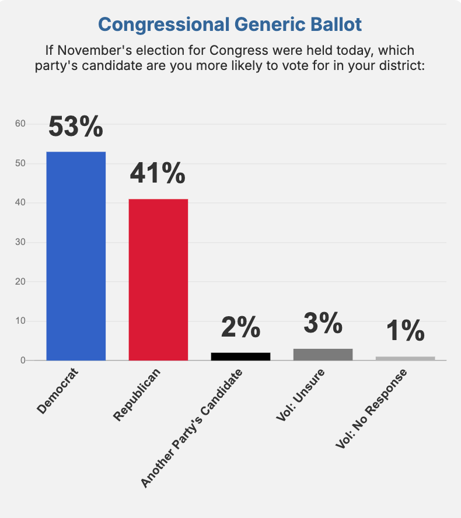
Independent voters favor Democrats across leading economic and foreign policy concerns, via Marist Poll.
A national referendum still does not eliminate local candidate differences. Some Republican candidates can separate themselves through constituent service, personal credibility, or visible disagreement with the administration. Democratic challengers must prove that replacing an incumbent would produce more than another vote against Trump.
House campaigns therefore need evidence that connects presidential decisions with district outcomes. Fuel costs provide that connection because they reach voters repeatedly and require little explanation. Each trip to a gas station can reinforce the argument that foreign policy choices carry direct economic consequences.
Wrap Up
Higher gasoline prices have turned foreign engagement into a household affordability issue. Most Americans report financial strain from fuel costs, and large shares assign responsibility to the president. That connection weakens the boundary between overseas policy and domestic campaign messaging.
Independent voters present the clearest electoral consequence. They favor Democrats on gasoline prices, foreign policy, and the economy while also moving toward Democratic congressional candidates. Their dissatisfaction expands the number of districts where Republican incumbents must defend both their local records and the administration’s decisions.
Polling margins still vary considerably, and no national survey can determine an individual congressional race. Consistent Democratic leads nevertheless establish the strategic environment facing both parties. Campaigns that explain the connection between international decisions and local household costs will have the strongest opportunity to convert voter frustration into congressional support.