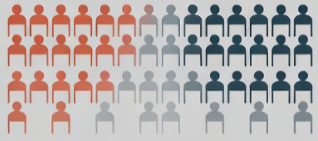

Census undercounts disproportionately miss Democratic-leaning populations, shifting representation, federal funding, and political leverage over the next decade.
What to Know
- The Census Bureau consistently finds that some populations are counted less accurately than others, creating a measurable participation gap in the national count.
- In 2020, Hispanic, Black, and Native American populations were undercounted while non-Hispanic White Americans were overcounted, according to the Census Bureau’s post-enumeration survey.
- Many of the groups most likely to be missed live in urban areas, rent their homes, or move frequently, which makes them harder for census operations to capture
- Census totals determine congressional seats, Electoral College votes, and the formulas used to distribute hundreds of billions in federal spending.
- When Democratic-leaning populations are undercounted, the result can shift political influence and federal resources toward states and regions with higher response rates.
The census determines how political power and federal funding are distributed across the country. Every ten years it is supposed to count everyone once and allocate congressional seats, Electoral College votes, and federal dollars based on that count.
But the count is not perfect. The Census Bureau’s own analysis shows that some populations are consistently undercounted while others are slightly overcounted. In 2020, several minority populations that tend to lean Democratic were missed at significantly higher rates, while non-Hispanic White Americans were slightly overcounted.

That pattern has real political consequences. When populations that lean Democratic are undercounted, it can reduce representation and federal funding flowing into the communities where those voters live. The obvious question is why this happens at all. The census is mandatory, yet millions of people are still missed in each count. Understanding why these gaps persist, and which party ultimately benefits from them, is central to understanding how census data shapes political power for the next decade.
A Tale of Two Counts: The Architecture of the Differential Undercount
A key issue in the census is what statisticians call a differential undercount. The term simply means that some groups are missed in the census more often than others. The count is not evenly distributed across the population. Some groups are counted with high accuracy, while others are missed at higher rates.
The Census Bureau’s analysis of the 2020 Census shows clear differences in how populations were counted. Hispanic Americans were undercounted by 4.99%. Black Americans were undercounted by 3.30%. American Indian and Alaska Native populations living on reservations were undercounted by 5.60%, the highest rate measured in the census. At the same time, non-Hispanic White Americans were slightly overcounted by 1.64%.
These differences matter because the census determines how political power and federal funding are distributed. Many of the populations that experience higher undercount rates are concentrated in urban areas and tend to lean Democratic in elections. When those populations are missed in the census, the communities where they live can lose representation and federal resources tied to population counts.
Even small percentage differences can have real political consequences. Congressional seats, Electoral College votes, and federal funding formulas all rely on census population totals. When the count misses certain groups more often than others, the political impact can last for the entire decade between censuses.
|
Population Group |
Status |
% |
Notes |
|
Hispanic |
Undercount |
4.99% |
Three-fold increase from 2010 |
|
Black |
Undercount |
3.30% |
|
|
American Indian and Alaska Native (on reservations) |
Undercount |
5.60% |
|
|
Non-Hispanic White |
Overcount |
1.64% |
As the Brookings Institution has analyzed, this is a direct, zero-sum transfer of power and resources. The undercounted communities do not just lose their fair share in a vacuum; their share is actively, if unintentionally, reallocated to the overcounted communities. This baked-in statistical bias functions as a form of systemic disenfranchisement, perpetuating a cycle of invisibility and underrepresentation for a full decade.
Decoding the 'Hard-to-Count' Labyrinth
Why does this happen? The census depends heavily on voluntary response and accurate address records, and those conditions are not the same everywhere. People who move frequently, rent their homes, live in multi-family housing, or share residences with extended family are harder for census operations to track. These patterns are more common in dense urban areas and lower-income communities, which increases the likelihood that some households are missed during the count.
Participation can also be affected by public debate and confusion about how census data is used. During the 2020 census cycle, the national fight over adding a citizenship question created uncertainty about whether personal information could be tied to immigration enforcement. Even though the question was never added, the controversy raised concerns in some communities and may have discouraged participation among certain households.

The result is that census participation is uneven across the country. Some populations respond at very high rates and are counted with precision. Others respond at lower rates and require follow-up efforts that do not always close the gap. Over time, those differences accumulate into measurable undercounts that affect the final population totals used for representation and federal funding.
Understand the Traditional Census Model
The census relies on a basic operational model: households are linked to a physical address and residents respond through mail, phone, or online forms. In practice, that model works best for stable households in single-family homes. It becomes more difficult when people move frequently, share housing with extended family, or live in temporary arrangements.
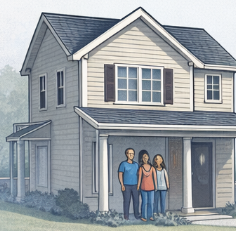
Renters who change addresses often, workers who move seasonally, and people living in multi-generational households can be harder for census operations to capture accurately. In some cases, residents assume someone else in the household has already included them on the form. In other cases, complex living arrangements make it unclear who should report which household members. These situations increase the likelihood that some individuals are missed in the final count.
The shift toward an online-first response model in 2020 also created new challenges. While digital responses improved efficiency for many households, participation depends on reliable internet access and familiarity with online systems.

Rural areas with limited broadband coverage, older residents who are less comfortable using digital forms, and households without consistent internet access may be less likely to respond online. When response rates fall in certain areas, census workers must rely more heavily on follow-up visits, which do not always close the gap completely.
The Phantom Population
One of the more consistent gaps in the census involves young children, especially those under the age of five. Census research has repeatedly found that young children are undercounted at higher rates than most other age groups. In many cases the issue is not intentional. It often comes down to confusion inside households about who should include the child on the census form.

This tends to happen in households where multiple adults share responsibility for children. A child living with grandparents, relatives, or in a multi-family household may be assumed to have already been listed by someone else. When that assumption is wrong, the child can be missed in the final count.
These gaps matter because census population totals are used to determine funding formulas for a number of federal programs tied to children and schools. Programs such as the Children’s Health Insurance Program, Head Start, school funding programs, and nutrition assistance rely in part on census data to allocate resources across states and communities. When young children are undercounted, those funding formulas can underestimate the number of children living in certain areas for the entire decade between censuses.
A Decade of Distorted Democracy
One of the clearest consequences of census inaccuracies appears during congressional apportionment. After each census, the 435 seats in the House of Representatives are distributed among the states based strictly on population totals. Even small errors in those totals can influence which states gain or lose representation in Congress and the Electoral College.

Illustration of House Chamber
Because apportionment margins are often extremely narrow, relatively small shifts in population counts can affect the outcome. Analysts reviewing the 2020 census results noted that several seat allocations were decided by very small population differences between states. When certain populations are undercounted more frequently than others, those gaps can influence which states fall just above or below the cutoff for gaining or losing a seat.
In practical terms, that means census participation can shape political representation for the next decade. Population totals from the census determine not only congressional seats but also Electoral College votes and many federal funding formulas, making accurate participation in the census a significant factor in how political power and resources are distributed across states.
The Economic Price
Census data does more than determine political representation. It is also used to guide the distribution of federal funding across the country. More than $1.5 trillion in federal spending each year is allocated through programs whose formulas rely in part on census population counts.
Because those formulas depend on population totals, even small undercounts can affect how funding is distributed across states and communities. A population difference of just one percent can translate into large funding changes over a ten-year period, particularly in states with fast-growing populations or close population margins.

These funding formulas influence programs that support healthcare, education, transportation, and nutrition assistance. Medicaid reimbursements, Pell Grants, highway and transit funding, and programs such as SNAP all use population data as part of their allocation process. When census counts underestimate the number of residents in certain areas, the funding tied to those populations can also fall short for the remainder of the decade between censuses; even 1% can tip the scales.
From Enumeration to Empowerment
The debate over the 2030 Census is unfolding in the shadow of 2020. Republicans such as Jim Banks have argued that methodological choices, including differential privacy, produced significant errors that shifted representation toward Democratic-leaning states.

Senator Jim Banks; image via Instagram
James Comer has similarly stated that the 2020 Census was flawed in ways not seen in prior counts, pointing to post-enumeration findings of overcounts and undercounts. Others, including Jake Hoffman, have objected to counting non-citizens for apportionment purposes, arguing that it dilutes the voting power of citizens.


Congressman James Comer and Representative Jake Hoffman
Democrats have framed the issue differently. Carolyn Maloney warned during the 2020 cycle that rushed operational changes could lead to an inaccurate and incomplete count. Analise Ortiz and other Democratic leaders have opposed adding a citizenship question, arguing that it could suppress participation in immigrant communities and deepen existing undercounts among minority populations.

Former U.S. Representative Carolyn Maloney; Arizona State Senator Analise Ortiz
Despite these disagreements, both parties agree that census accuracy determines congressional representation, Electoral College votes, and the distribution of federal resources. For 2030 to avoid repeating the same cycle of dispute, the approach must shift from simple enumeration to community empowerment.
Wrap Up
The 2020 census showed that participation often improves when outreach comes from local institutions that people already trust. Faith organizations, tribal governments, community groups, and local clinics have frequently played a role in encouraging residents to complete census forms and explaining how the process works. These kinds of efforts can help close response gaps that appear in certain communities.
At the same time, the participation gap remains a practical political issue. When some populations respond at lower rates than others, the final census count can shift representation and federal funding in ways that shape political influence for the next decade. Because congressional seats, Electoral College votes, and funding formulas all rely on census population totals, participation levels carry long-term consequences.
Looking ahead to the 2030 census, the central question is whether those participation gaps will narrow or persist. If the same patterns continue, the political effects will continue as well. The census is designed to measure population as accurately as possible, but when participation varies across communities, the results can influence how political power and federal resources are distributed across the country for years to come.