

Democratic challengers now hold credible paths across several Republican seats, turning one difficult route into multiple majority options.
What to Know
- Republicans hold 53 Senate seats, leaving Democrats needing a net gain of 4 for an outright majority.
- RealClearPolling currently places 9 Senate contests in its Toss Up category.
- Roy Cooper leads Michael Whatley by 9.0 percentage points in North Carolina.
- James Talarico leads Ken Paxton by 2.8 points in Republican leaning Texas.
- Democratic candidates also lead current polling averages in Michigan and Ohio.
Republicans entered the 2026 cycle with the stronger Senate map. Democrats had to defend open seats in Michigan, Minnesota, New Hampshire, and Illinois while attempting to gain ground in states Donald Trump carried during the previous presidential election. That difficult route has not disappeared, but Republican vulnerabilities have created more ways for Democrats to reach a majority.
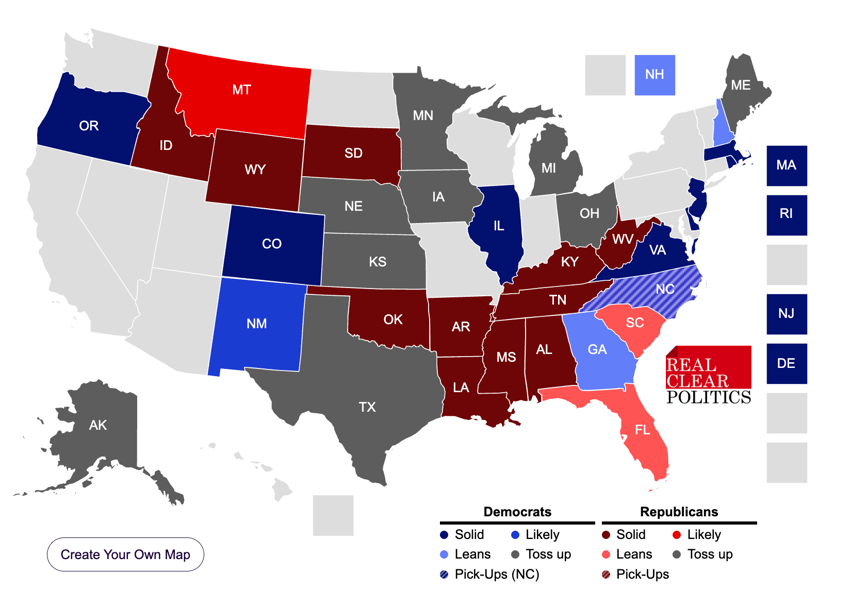
Polling leads now place several Republican seats within Democratic reach, via RealClearPolling.
RealClearPolling’s Senate map now assigns 46 seats to Democrats, 45 to Republicans, and 9 to the Toss Up category. That distribution is a race rating, not a prediction that Democrats will win every close contest. It nevertheless shows how North Carolina, Texas, Ohio, Alaska, Iowa, Maine, Kansas, Nebraska, and Michigan have prevented either party from securing a dependable path to 51 seats.
North Carolina and Texas Create Two Southern Paths
North Carolina gives Democrats their clearest Republican held opportunity. Former Democratic Governor Roy Cooper leads former Republican National Committee chairman Michael Whatley by 49.8% to 40.8% in the current RealClearPolling average. His 9.0 point advantage has moved the contest into the aggregator’s Likely Democratic category.
Cooper’s position reflects more than a favorable national environment. He won 6 previous statewide elections and carried the governorship in 2020 even as Trump won North Carolina. Whatley brings national party experience but entered the contest without Cooper’s record of winning statewide campaigns.
North Carolina therefore provides Democrats with a possible first pickup rather than a speculative expansion target. Losing the seat would immediately reduce the Republican majority from 53 seats to 52, assuming every other seat remained with its current party. Democratic strategists can then evaluate Texas, Ohio, Maine, Alaska, or another Republican held contest as part of the remaining route.
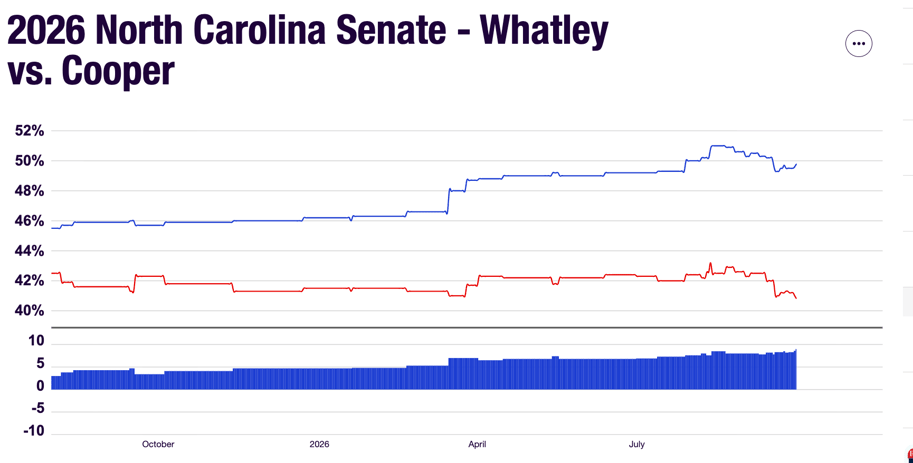
Cooper’s polling advantage makes North Carolina the clearest Democratic pickup, via RealClearPolling.
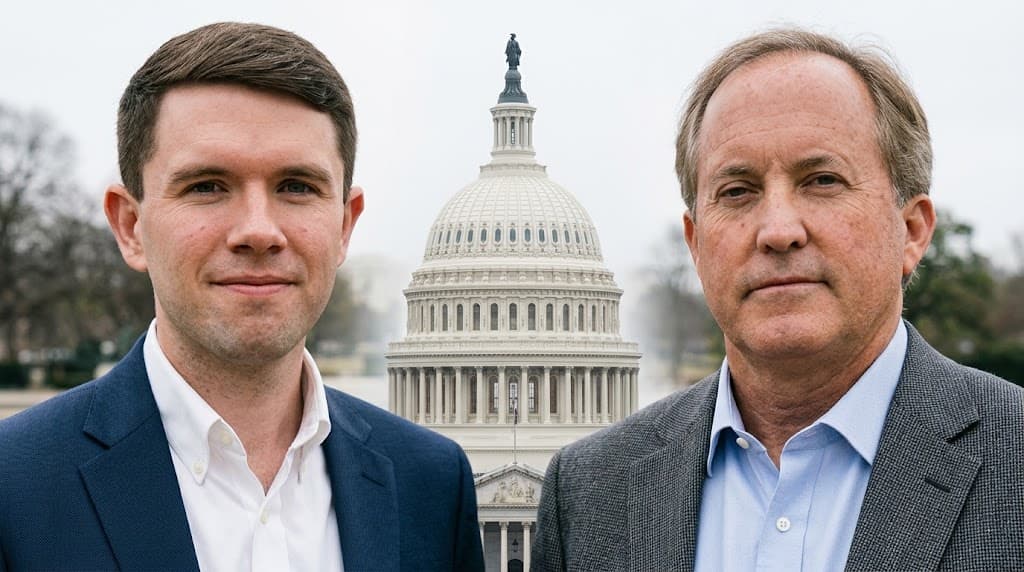
Texas offers a more difficult but potentially transformative opening. Democratic state Representative James Talarico leads Republican Ken Paxton by 48.2% to 45.4% in the current RealClearPolling average. A 2.8 point polling lead does not make Texas reliably Democratic, particularly after Trump carried the state by 13.6 points in 2024, but it makes the race too competitive for Republicans to ignore.
Paxton reached the general election after defeating Senator John Cornyn in the Republican contest. That result denied Republicans the advantages of an incumbent senator and replaced them with a nominee Democrats believe is more vulnerable among suburban and crossover voters. Talarico must still overcome Texas’ Republican lean and prevent undecided conservative voters from consolidating behind Paxton.
Republicans cannot treat Texas as an inexpensive defensive assignment while simultaneously protecting several other seats. Every advertising reservation, field investment, and donor appeal required in Texas consumes resources that cannot reinforce candidates elsewhere. For Democrats, forcing that expenditure can carry strategic value even before the race produces a final winner.
Michigan and Ohio Keep the Midwest at the Center
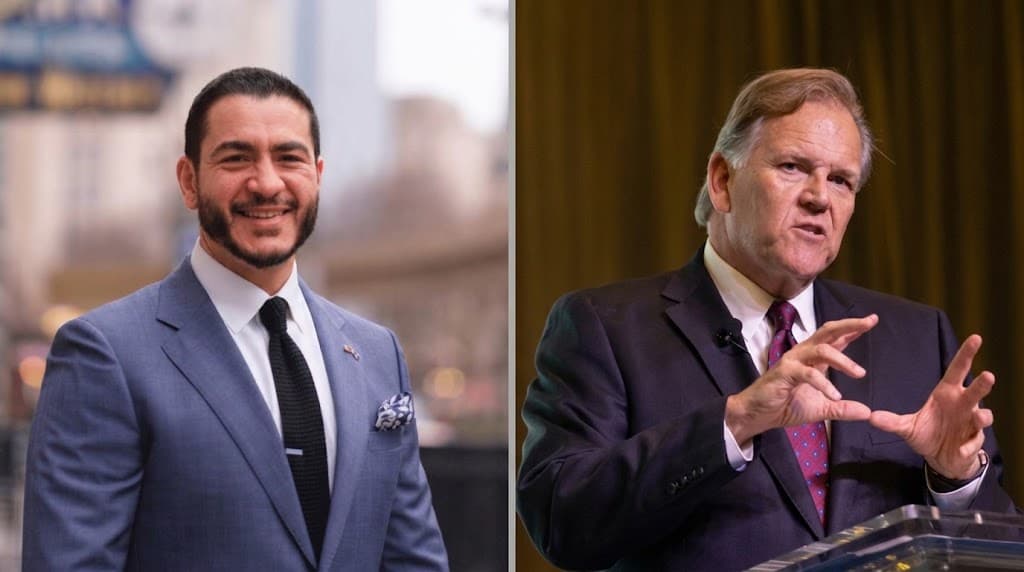
Michigan remains essential because Democrats must first protect their own open seat. Democratic nominee Abdul El-Sayed leads Republican Mike Rogers by 47.8% to 44.2% in the current RealClearPolling average. His 3.6 point advantage gives Democrats a measurable edge, but it falls well short of securing the contest.
Rogers has already demonstrated that he can compete statewide. He lost Michigan’s 2024 Senate election to Elissa Slotkin by roughly one third of a percentage point while Trump carried the state. El-Sayed must therefore assemble a coalition strong enough to survive both the Republican nominee’s familiarity and Michigan’s recent history of narrow statewide results.
Holding Michigan does not increase the Democratic seat total. Losing it would raise the number of Republican held seats Democrats must capture from 4 to 5. That difference makes defensive spending in Michigan inseparable from Democratic investments in offensive states.
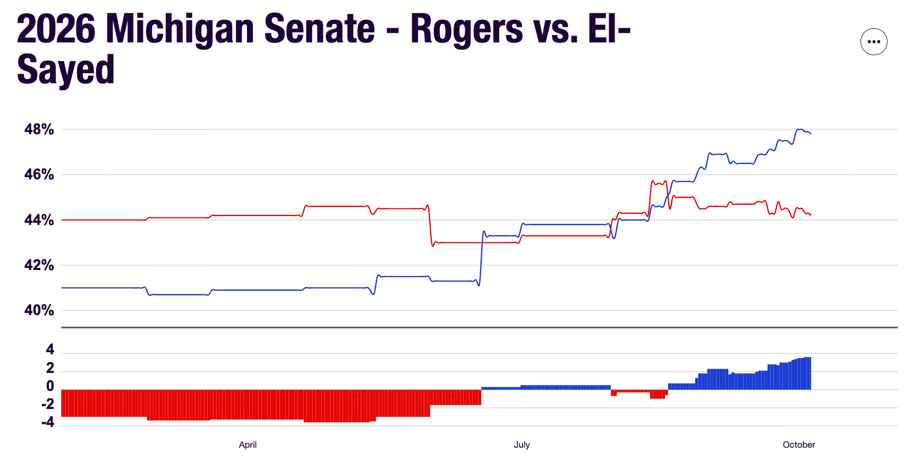
El-Sayed’s narrow advantage keeps Michigan central to every majority route, via RealClearPolling.
Ohio creates the opposite opportunity. Former Democratic Senator Sherrod Brown leads appointed Republican Senator Jon Husted by 47.1% to 44.0% in the current RealClearPolling average. Brown’s 3.1 point advantage has made the special election a genuine Democratic pickup opportunity despite Trump carrying Ohio by 11.2 points in 2024.
Brown’s familiarity and labor oriented political identity make him a stronger challenger than Democrats could easily reproduce in another Republican leaning state. His polling position still contains a warning because he remains below 50% after decades in Ohio politics. Husted can close the gap by consolidating undecided Republican leaning voters who have not yet committed to him.
Ohio and Michigan therefore require different strategic treatments. Democrats must defend Michigan while treating Ohio as one of several possible gains. Republicans need Rogers to convert an open seat into an offensive opportunity while preventing Brown from reclaiming the seat that would sharply weaken their majority.
Race Ratings Show Expansion Beyond Four Headline Contests
Competitive conditions now extend beyond North Carolina, Texas, Michigan, and Ohio. RealClearPolling classifies Republican held seats in Alaska, Iowa, Kansas, Maine, Nebraska, and Texas as Toss Ups, alongside the Republican held Ohio special election. Democratic held Michigan and Minnesota seats also remain in that category.
That map represents a significant change from an election expected to force Democrats through a narrow series of Republican leaning states. RealClearPolling moved Kansas from Likely Republican to Toss Up during September and later moved Nebraska into the same category. Those changes do not guarantee Democratic victories, but they show that Republican defense requirements have spread beyond the races that attracted the earliest national investment.
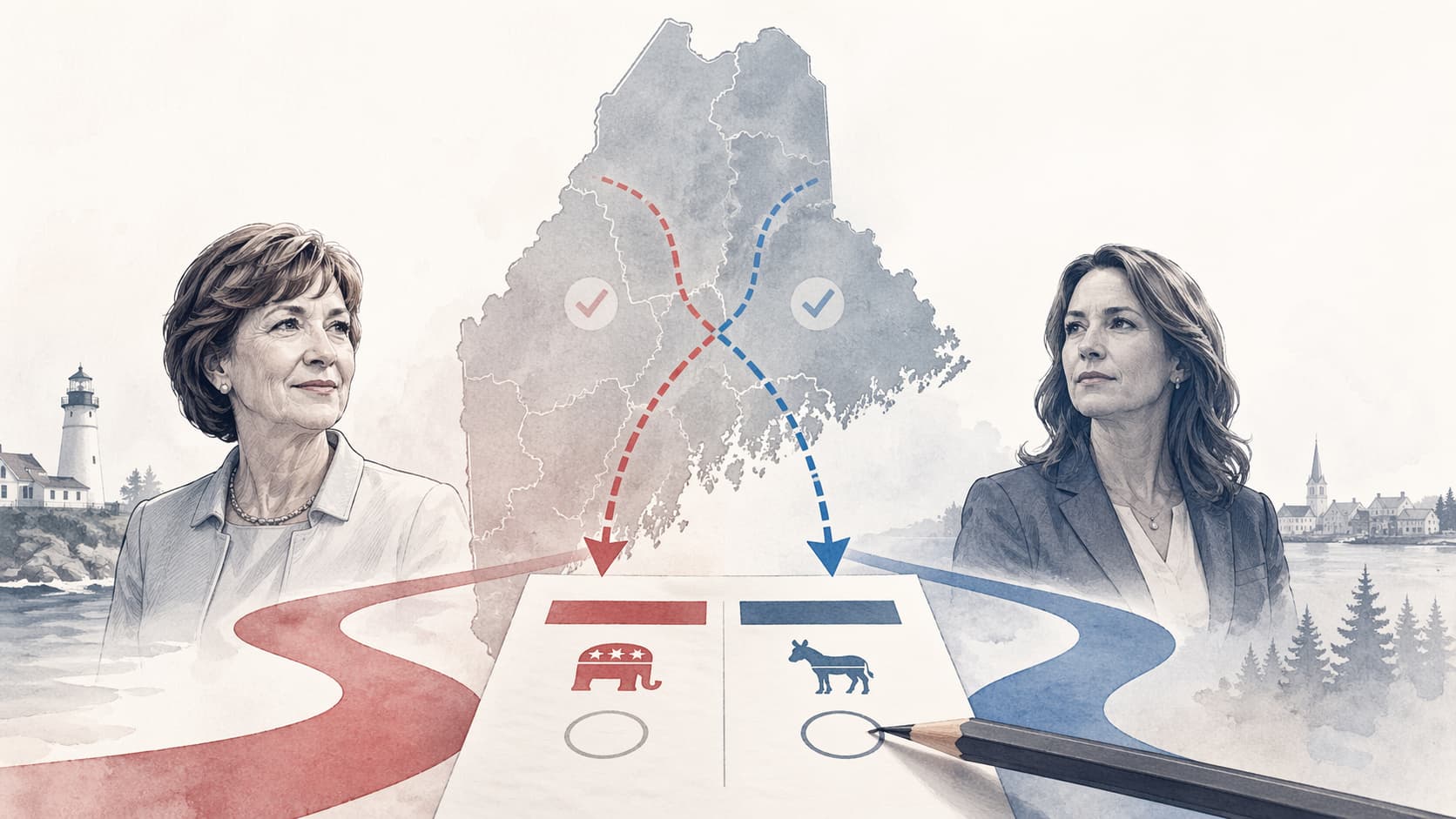
Maine creates another plausible Democratic route. Former state senator Troy Jackson leads Republican Senator Susan Collins by 47.8% to 47.4% in the current average. Collins has repeatedly outperformed expectations, including in 2020, so a 0.4 point polling difference offers no basis for declaring her defeated.
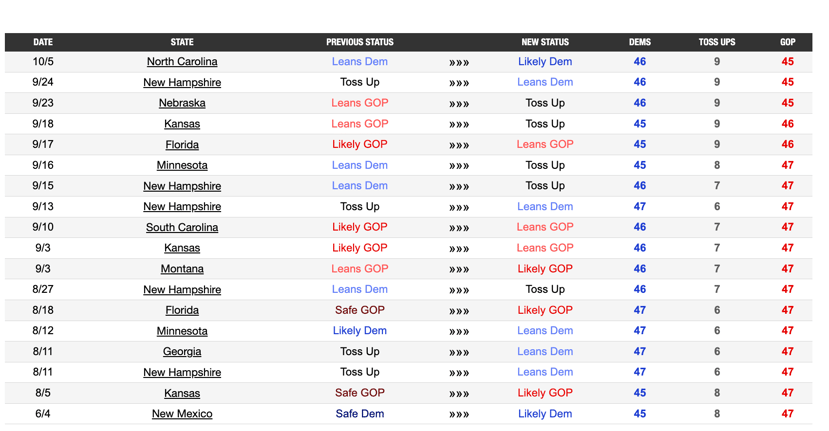
Recent rating changes show the competitive Senate map continuing to expand, via RealClearPolling.
Iowa and Alaska increase Republican uncertainty for different reasons. Iowa combines an open Republican seat with economic pressure in an agricultural state, while former Representative Mary Peltola gives Democrats a recognized statewide candidate against Alaska Senator Dan Sullivan. RealClearPolling rates both contests as Toss Ups, but its Alaska page does not currently publish a numerical polling average, making any precise Peltola lead premature.
Kansas and Nebraska sit farther from a conventional Democratic path. Their Toss Up ratings still matter because competitive races require staff, advertising, and candidate attention. A party defending several marginal seats at once has less capacity to rescue a single campaign after a damaging debate, fundraising shortfall, or late polling decline.
Expanded competition gives Democrats redundancy. They no longer need every gain to come from one predetermined group of states. Republicans retain the structural advantage of defending many seats in places Trump carried, but they must now protect that advantage across a larger and more expensive battlefield.
Multiple Paths Require Disciplined Resource Allocation
Polling averages measure current voter preferences rather than Election Day probability. North Carolina’s 9.0 point Democratic margin carries a different level of confidence from leads of less than 4 points in Texas, Michigan, Ohio, and Maine. Campaigns that treat every Democratic advantage as equally durable risk misallocating money and staff.
Candidate percentages also matter alongside margins. Talarico, El-Sayed, Brown, and Jackson remain below 50% in their respective RealClearPolling averages. Undecided voters, turnout differences, polling error, and late Republican consolidation could reverse several of those leads without producing an unusual result.
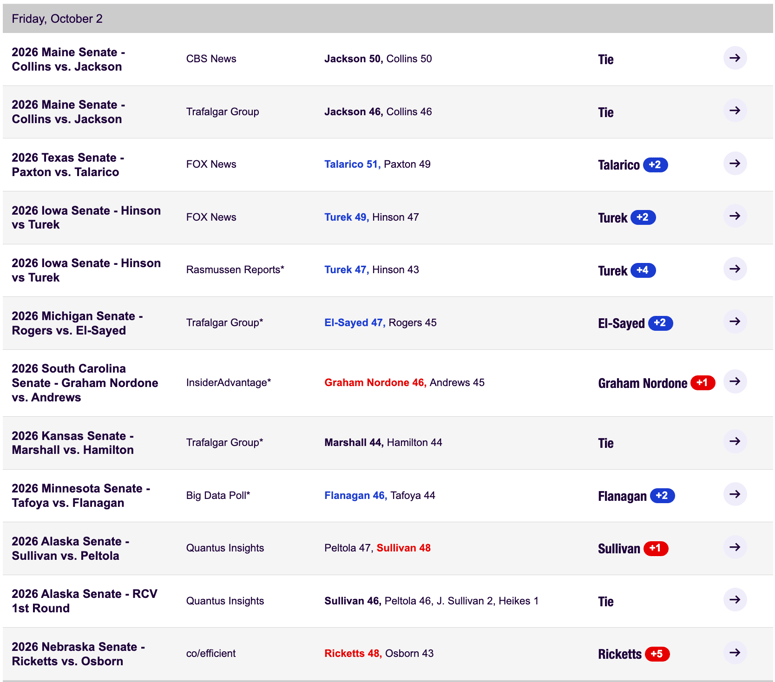
Recent state polling reveals opportunities alongside substantial late campaign uncertainty, via RealClearPolling.
Democratic committees should protect Michigan and other vulnerable Democratic seats before treating every Republican state as an equal investment opportunity. North Carolina belongs in the highest priority tier because its polling margin and open seat structure offer the clearest gain. Texas and Ohio warrant major investment because victories in either would remove a Republican seat while expanding the party’s geographic coalition.
Expansion states require different tests. Kansas, Nebraska, Iowa, and Alaska should receive additional resources when candidate fundraising, private polling, and early vote data demonstrate a credible path. Spending merely because a race acquired a Toss Up label can drain funds from states where the probability and strategic value of victory are higher.
Republicans face the mirror image of that decision. Early reservations can protect candidates from late inventory shortages, but blanket spending across every competitive state can exhaust funds before the most threatened races become clear. Senate campaigns and party committees need priority, expansion, and contingency tiers that respond to both polling movement and the cost of reaching voters in each market.
Downballot campaigns also benefit from an expanded Senate map. Competitive statewide field operations can generate voter contacts, volunteer recruitment, and turnout activity that support House, legislative, and local candidates. Coordination works only when statewide messaging leaves room for the local economic and community issues moving voters in individual districts.
Wrap Up
Republicans still begin with a 53 seat majority and a favorable collection of states. Democrats must hold every seat in their existing coalition while gaining 4 Republican held seats to reach an outright majority. A 50 to 50 division would leave Republicans in control because the Republican vice president can cast tie breaking votes.
Current polling has nevertheless changed the strategic problem. North Carolina offers Democrats their strongest pickup opportunity, while Texas, Ohio, Maine, Alaska, Iowa, Kansas, and Nebraska create additional routes or force Republicans to spend defensively. Michigan remains the Democratic seat Republicans are most likely to use to disrupt those calculations.
Expanded maps reward discipline, not optimism. Campaigns must compare margins, candidate support levels, fundraising, advertising costs, and turnout evidence before shifting resources. Senate control will depend on whether Democrats convert several narrow opportunities into victories or Republicans consolidate voters before a broad defensive map overwhelms their advantage.