
A template for blog creation.
What to Know
- Florida lawmakers are weighing a late-cycle congressional redraw less than 2 months before the state’s June 12 filing deadline.
- Gov. Ron DeSantis says population growth since 2020 and a pending Supreme Court Voting Rights Act ruling justify new district maps.
- Competitive Republicans including Maria Elvira Salazar and Cory Mills could see major changes to their voter base and district boundaries.
- Election officials warn redistricting would require precinct changes, ballot reprints, voter notifications, and additional county-level election costs statewide.
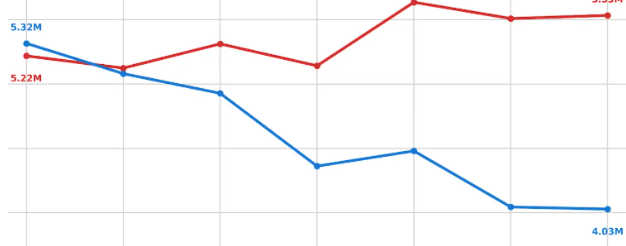
- Democrats currently lead the national generic ballot by roughly +5.6 points, increasing pressure on every competitive House seat ahead of 2026.
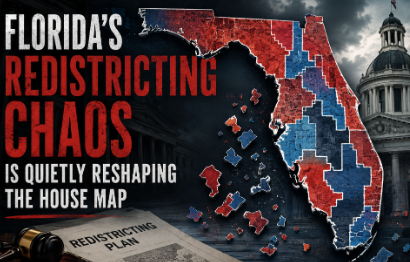
Florida may be the last major Republican-controlled state capable of reshaping the 2026 House battlefield before voters head into the midterms. Proposed district lines have not fully emerged publicly, legal questions remain unresolved, and candidates are already building operations for November.
Reporting from The Hill described Florida candidates and election administrators as operating in political “limbo” as the state weighs potential map changes. The stakes extend far beyond Florida. Republicans see an opportunity to strengthen parts of the map ahead of a difficult national environment, while Democrats argue late-cycle redistricting risks creating voter confusion and legal challenges.
The Battlefield Is Moving Mid-Cycle
With control of the House expected to hinge on only a handful of competitive districts, Florida’s unresolved redistricting fight is rapidly becoming one of the most consequential political battles of the 2026 cycle. Unlike most map disputes that unfold earlier in an election cycle, Florida’s uncertainty is colliding directly with candidate filing deadlines, voter outreach planning, and the most expensive phase of campaign infrastructure building.
Reporting from The Hill noted that proposed district lines still have not fully materialized publicly, even as campaigns continue fundraising and staffing operations ahead of November. Former Congressman Carlos Curbelo described the situation as “extremely unsettling” for incumbents already facing a difficult national environment.
That concern is amplified by broader national polling. Current averages from RealClearPolitics show Democrats leading the generic congressional ballot by roughly 6 points nationally, increasing pressure on vulnerable Republicans defending swing-oriented districts. Modern congressional races rely heavily on voter modeling, donor mapping, precinct-level turnout analysis, and digital targeting systems built months in advance.
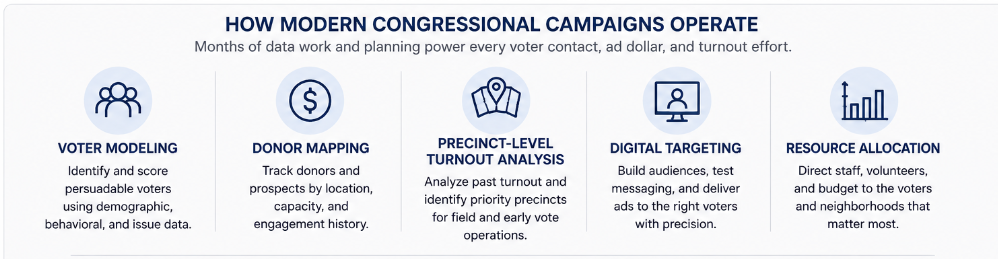
A single redraw can force campaigns to rapidly adjust media markets, rebuild volunteer networks, re-evaluate demographic assumptions, and introduce candidates to entirely new blocs of voters. In competitive districts where elections are often decided by only a few percentage points, even small geographic shifts can dramatically alter the political math heading into November.
Florida Could Affect the National Majority
Republicans enter 2026 defending a narrow House majority while Democrats continue to hold an advantage on the generic congressional ballot. Current averages from RealClearPolitics show Democrats leading nationally by roughly 5 to 6 points, creating a difficult environment for vulnerable Republican incumbents.

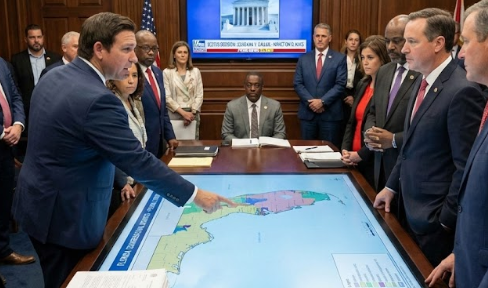
Against that backdrop, Florida Republicans moved aggressively to redraw the congressional map during a rapid special legislative session called by Governor Ron DeSantis. The Legislature approved the new map on April 29, 2026, before DeSantis signed it into law on May 4. Analysis from Ballotpedia suggests the new configuration could shift Florida’s congressional delegation from a 20–8 Republican advantage to a potential 24–4 split.
Republicans argue the redraw reflects Florida’s population growth and an evolving legal landscape surrounding voting rights. DeSantis defended the move by stating, “Our new map for 2026 makes good on my promise to conduct mid-decade redistricting, and it more fairly represents the makeup of Florida today.”

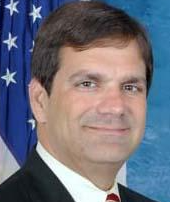
Rep. Jenna Persons-Mulicka; Rep. Gus Bilirakis
State Representative Jenna Persons-Mulicka similarly argued the map was based on a “viable legal theory” adapted to Florida’s changing legal environment. Even Republican incumbents acknowledged the disruption, with Representative Gus Bilirakis admitting his district changed “quite a bit.”


Rep Jenna Persons-Mulicka; House Minority Leader Fentrice Driskel
Democrats and voting rights groups argue the process has injected instability directly into the election cycle. State Representative Michele Rayner accused Republicans of allowing national political pressure to drive the redraw, while House Minority Leader Fentrice Driskell argued the process undermined democratic norms.
The legal backlash arrived almost immediately. Lawsuits seeking injunctions against the map argue the redraw violates Florida’s Fair Districts Amendment, which prohibits drawing districts to favor a political party. Attorney Chris Shenton, representing Common Cause, argued in court that Democratic-held districts were disproportionately disrupted compared to Republican-held districts.

The uncertainty is now colliding directly with campaign reality. Florida’s June 12 filing deadline and August 18 primary calendar leave candidates building turnout operations without knowing whether courts will ultimately uphold the map. Modern campaigns rely heavily on voter modeling, donor mapping, turnout analysis, and digital targeting systems built months in advance. When district lines suddenly shift, campaigns can lose donor networks, volunteer infrastructure, tested messaging, and familiar voter coalitions almost overnight.
The Voter Confusion Problem
One of the least discussed consequences of late-stage redistricting is voter confusion. Election officials across Florida are already warning about the logistical strain caused by rapidly changing district lines, including updating precincts, redesigning ballots, relocating polling places, and notifying voters before critical deadlines arrive.

Supervisor of Elections Mary Jane Arrington
Osceola County Supervisor of Elections Mary Jane Arrington described the challenge bluntly, noting that election administrators must physically move voters into new precinct structures while simultaneously educating the public on where and how they vote.
That matters politically because confusion rarely impacts all voters equally. Highly engaged partisan voters usually adapt quickly. Casual and lower-propensity voters often do not. If voters become uncertain about who represents them, where they vote, which district they live in, or whether they remain eligible in certain primaries, participation rates can quietly decline.
The Supreme Court Factor
Part of the urgency surrounding Florida’s redraw effort stems from a pending Supreme Court decision tied to the Voting Rights Act and the role race can play in congressional district construction. Governor Ron DeSantis has framed Florida’s mid-decade redraw effort as both a population issue and a constitutional issue tied to the future of race-based district construction.

Governor Ron DeSantis; image via Facebook
Defending the push for new maps, DeSantis stated, “Florida got short-changed in the 2020 census, and we've been fighting for fair representation ever since. Our population has since grown dramatically, and we have moved from a Democrat majority to a 1.5 million Republican advantage. Drawing maps based on race, which is reflected in our current congressional districts, is unconstitutional and should be prohibited.”
The administration has leaned heavily on the Supreme Court’s ruling in the Louisiana v. Callais case to justify the redraw, arguing Florida must prepare for a changing legal environment surrounding the Voting Rights Act and race-conscious district design. Voting rights groups immediately challenged the maps in court, arguing they violate Florida’s voter-approved Fair Districts Amendment, which bans partisan gerrymandering.
Wrap Up
The deeper story here is not just Florida. It is the growing normalization of permanent map instability in American politics. Congressional campaigns increasingly operate inside overlapping layers of legal, demographic, coalition, and geographic uncertainty, where district lines can shift even as campaigns are already underway.
States pursuing aggressive redistricting advantages may gain short-term political leverage, but they also risk weakening voter trust and creating less predictable electoral environments. That volatility becomes especially significant in an era where House majorities are often decided by only a handful of seats. Florida’s redistricting fight is therefore more than a state-level battle. It is a preview of a political system where litigation, court timing, and rapidly changing maps increasingly shape the national battlefield alongside fundraising, messaging, and turnout.
The campaigns best positioned for 2026 may not simply be the ones with the strongest candidates or largest war chests. They may be the campaigns capable of adapting fastest when the battlefield itself refuses to stay still.
-May-24-2026-10-00-02-6221-PM.jpg)