

Katie Hobbs leads Andy Biggs in separate Arizona surveys, but divergent estimates leave the Republican challenger’s support uncertain.
What to Know
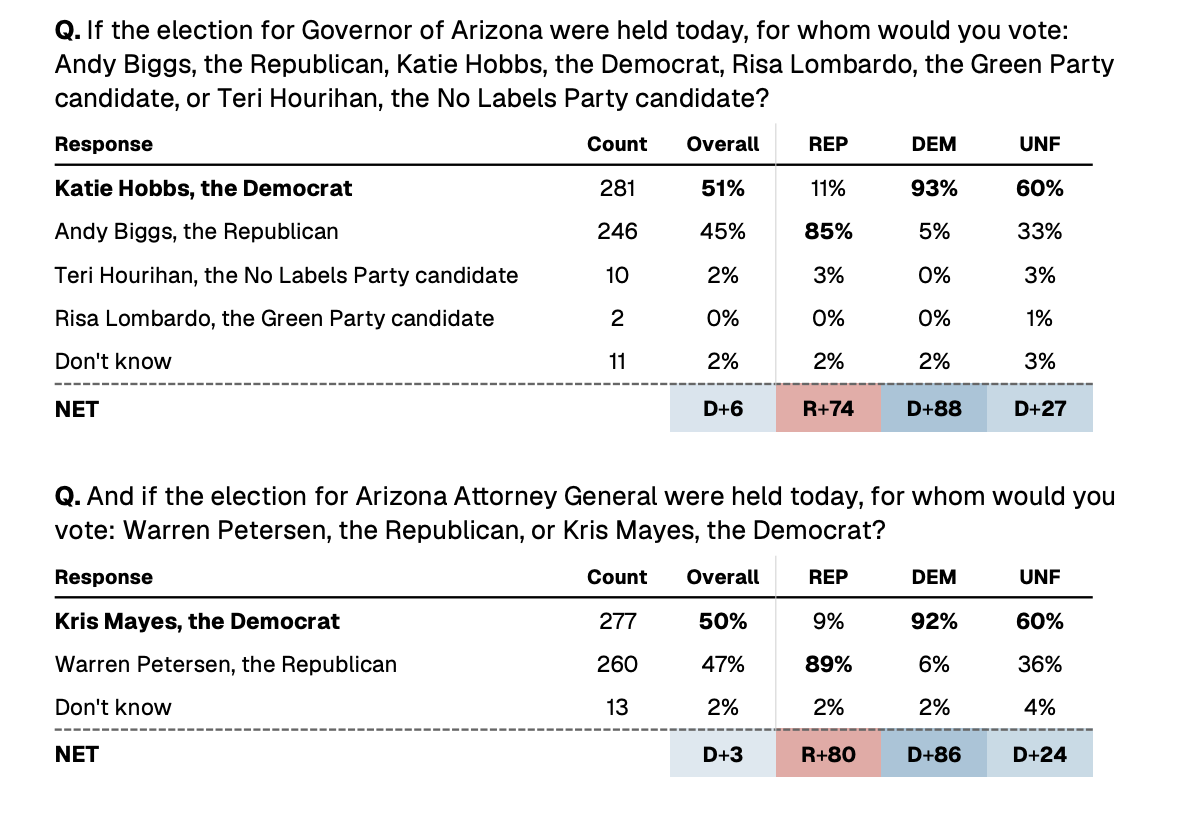
- Katie Hobbs led Andy Biggs by 51% to 45% in GrayHouse’s October survey.
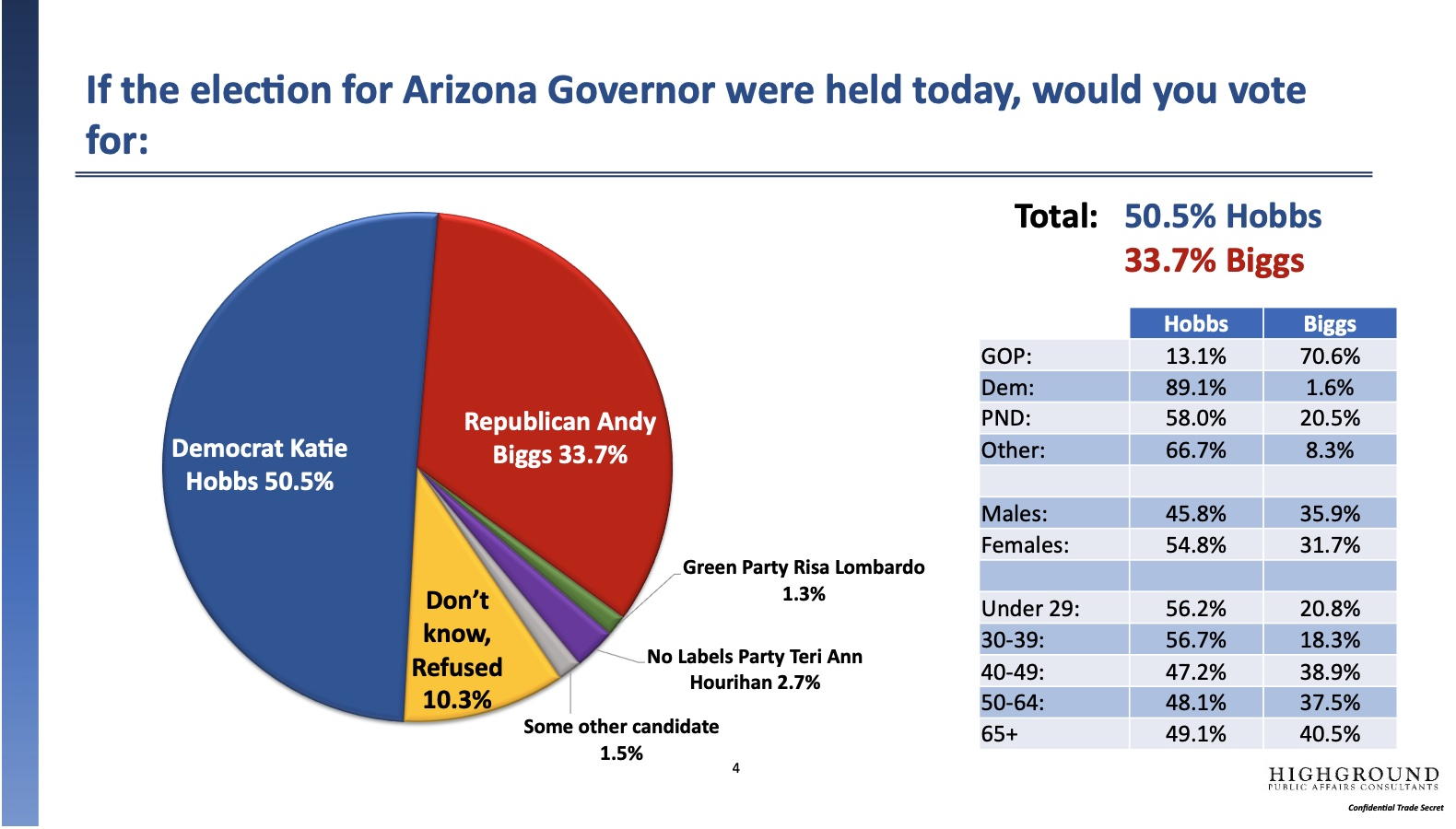
- HighGround’s earlier poll reported Hobbs at 50.5% and Biggs at 33.7%.
- Those results produced Democratic advantages of 6 points and 16.8 points, respectively.
- GrayHouse’s published documentation identifies a Republican candidate committee as its sponsor.
- A newer HighGround survey still showed Hobbs ahead, making its earlier release a dated comparison rather than the latest reading.
Arizona’s governor polls agree that Democratic incumbent Katie Hobbs is ahead of Republican Andy Biggs. They disagree substantially about how much support Biggs has assembled. That distinction matters more than simply choosing the headline margin that appears most politically plausible.
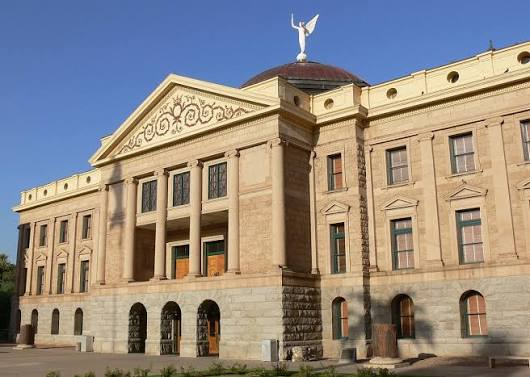
Arizona’s governor polling requires scrutiny beyond agreement on the leader, via Visitor7, Wikimedia Commons.
The GrayHouse survey found a 6-point Hobbs lead, while HighGround’s earlier research reported an advantage approaching 17 points. Both organizations published methodological information that helps explain what they measured. Neither release establishes that the difference between them represents voter movement or that one particular methodological choice caused the gap.
Similar Hobbs Support Conceals a Large Biggs Difference
GrayHouse interviewed 550 likely Arizona voters from October 18 through October 20, 2026. Its governor ballot test placed Hobbs at 51% and Biggs at 45%. HighGround’s October 6–8 survey of 400 likely voters reported 50.5% for Hobbs and 33.7% for Biggs.
Subtracting the candidate shares produces leads of 6 points and 16.8 points. Rounding HighGround’s result to a roughly 17-point lead is reasonable when identified as rounding. Presenting its decimal results as exactly 51% to 34% would sacrifice information available in the original release.
Most of the disagreement concerns Biggs rather than Hobbs. Hobbs’s reported support differed by 0.5 percentage points, while Biggs’s differed by 11.3 points. That observation identifies where the toplines diverge, not why they diverge.
GrayHouse measures a smaller Hobbs advantage with stronger Biggs support, via GrayHouse.
GrayHouse’s question named the Democratic, Republican, Green and No Labels candidates. Its table also explicitly reported respondents who did not know their choice. Those details prevent the remainder after the major-party shares from being casually relabeled as entirely undecided.
HighGround’s smaller combined major-party share raises an important comparison question. It does not establish that every voter outside those candidates’ totals was undecided or available to Biggs. Other candidates, response handling and questionnaire design must be checked before assigning political meaning to that remainder.
The campaign implications remain bounded. Hobbs holds the advantage under both measurements. Biggs’s position looks substantially different depending on which survey’s electorate and response distribution best approximate the final vote.
Methods and Sponsorship Deserve Separate Scrutiny
GrayHouse used a voter-file sample with live telephone interviews and text-to-web responses. Its weighted sample had a 7-point Republican registration advantage, and the firm calibrated weights using political-engagement modeling. The reported margin of sampling error was ±4.2 percentage points.
Its full methodology identifies Friends of Elijah Norton as the sponsor. That disclosure matters because the survey was not simply an unaffiliated media commission. Sponsorship warrants transparency and scrutiny, but it does not independently prove that the governor result was distorted.
HighGround’s original release describes live interviews with voters selected from its voter file and a likely-electorate model based on previous voting behavior. The survey reported sampling error of ±4.9 points. HighGround identified its own financing rather than presenting the research as commissioned by a neutral news organization.
HighGround’s earlier survey shows a substantially larger Democratic gubernatorial margin, via HighGround Public Affairs.
These disclosures support comparison, not a definitive ranking of accuracy. A Republican registration advantage does not automatically produce a Republican candidate advantage because registration and vote choice differ. Nor does a smaller sample automatically make a poll less credible in every respect.
A causal explanation would require more than observing different methods alongside different results. Analysts would need to assess question order, recruitment, weighting and response patterns together. Without that examination, claims that turnout modeling alone explains the gap go beyond the evidence.
Newer Evidence Changes the Comparison’s Context
HighGround subsequently published another survey, covering October 21–25, that placed Hobbs at 51.5% and Biggs at 39.3%. That is a 12.2-point advantage, smaller than the firm’s earlier estimate but still larger than GrayHouse’s. The newer result must be acknowledged when discussing the earlier release near Election Day.
The October 27 publication again describes 400 likely voters interviewed live. Its methodology specifies turnout weighting across party, age, region and gender, with an 8-point Republican partisan advantage. Those details provide a stronger basis for comparing HighGround’s own releases than treating two different firms as a tracking series.
Sample size affects sampling uncertainty but cannot eliminate methodological differences, via AAPOR.
The change in HighGround’s estimates does not establish which campaign activity caused it. Advertising, news and turnout expectations may be relevant, but timing alone cannot isolate their effects. Pollster commentary about those mechanisms should remain interpretation rather than verified causal fact.
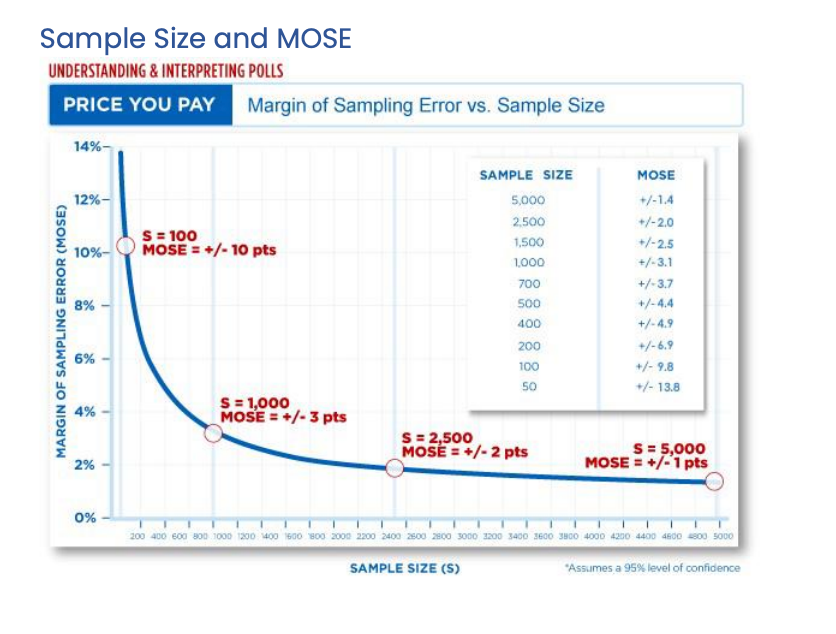
Sampling uncertainty also requires care. A candidate’s reported margin of error is not automatically the uncertainty around the difference between two candidates. Declaring a lead secure merely because it exceeds one published error figure would misuse the statistic.
For both campaigns, the useful conclusion is not that the smallest or largest margin must be correct. Multiple measurements favor Hobbs, while the estimated distance between the candidates remains uncertain. That calls for evidence about the electorate, not selective confidence in a preferred topline.
Wrap Up
Hobbs led in the surveys examined here. The size of that advantage varied substantially. Biggs’s measured support accounts for most of the original comparison’s difference.
Published methods and sponsorship disclosures make the results easier to evaluate. They do not establish a single explanation for the disagreement. Separate surveys remain separate measurements rather than automatic evidence of momentum.
Arizona’s governor contest therefore presents a favorable polling position for Hobbs without a guaranteed result. Biggs’s path cannot be judged from the narrowest estimate alone. The final electorate will determine which survey assumptions held up.