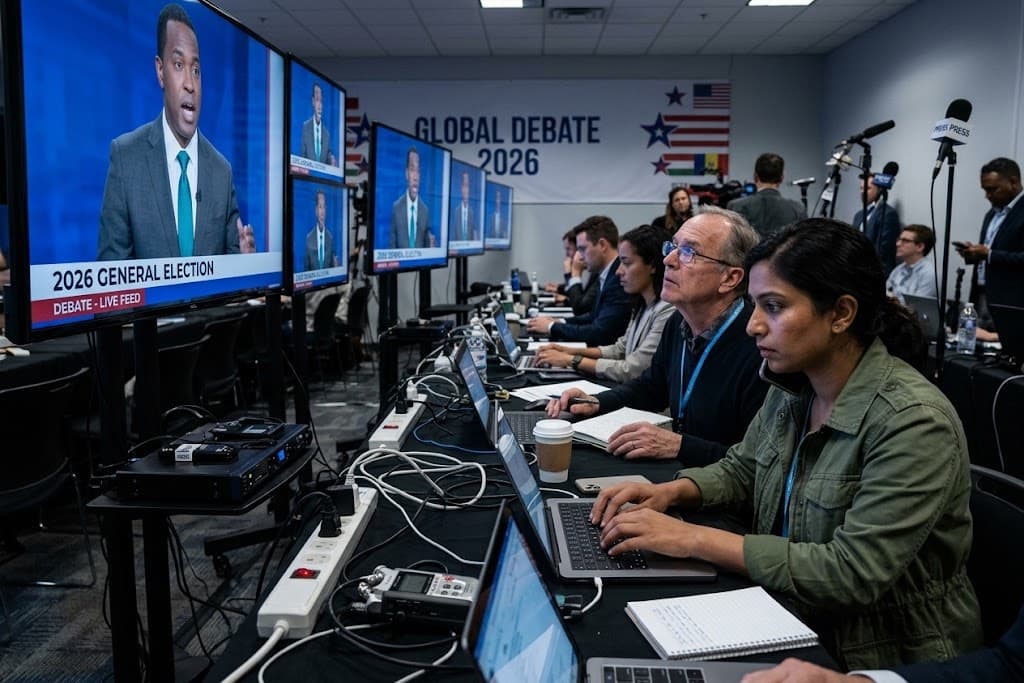

Record advertising forecasts force campaigns to confront tighter inventory, faster decisions and unprecedented competition across every media market.
What to Know
- Political advertising is projected to reach $11.6 billion, making the current cycle the most expensive on record.
- An upward revision of approximately $795 million reflects growing competition in Senate and gubernatorial races.
- Senate advertising is projected to reach $3.4 billion, while House spending is expected to total $2 billion.
- Broadcast television retains 48% of projected spending as connected television rises to $2.7 billion.
- Downballot and state legislative contests are projected to attract a combined $3.7 billion.
Political advertising during the current election cycle is not merely approaching a midterm record. It is now projected to surpass spending from the most recent presidential cycle. Campaigns & Elections reports that AdImpact raised its forecast from $10.8 billion to $11.6 billion, adding approximately $795 million to the expected total as competitive races continue to attract more money.

Political advertising is projected to set a new cycle record, via AdImpact.
Campaigns cannot treat that revision as an abstract industry statistic. More money entering a limited collection of states, media markets and advertising platforms creates immediate competition for inventory, voter attention and qualified vendors. Media directors must now decide where to reserve capacity early, where to protect flexibility and where expensive saturation could produce diminishing returns.
A Midterm Cycle Moves Beyond Presidential Year Spending
AdImpact’s revised projection would make the 2025 through 2026 election cycle the most expensive political advertising cycle it has tracked. Projected spending would exceed the $8.9 billion recorded during the 2022 midterms and the $11.2 billion spent during the 2024 presidential cycle. Reaching that level without a presidential contest reveals how much financial pressure has moved into congressional, gubernatorial and state level races.
Previous comparisons encouraged campaigns to view presidential years as the natural ceiling for political advertising. Current projections overturn that assumption. Competitive Senate races, expensive gubernatorial contests and concentrated spending around fewer genuinely competitive districts can now generate presidential scale pressure without a national candidate occupying the top of every ballot.
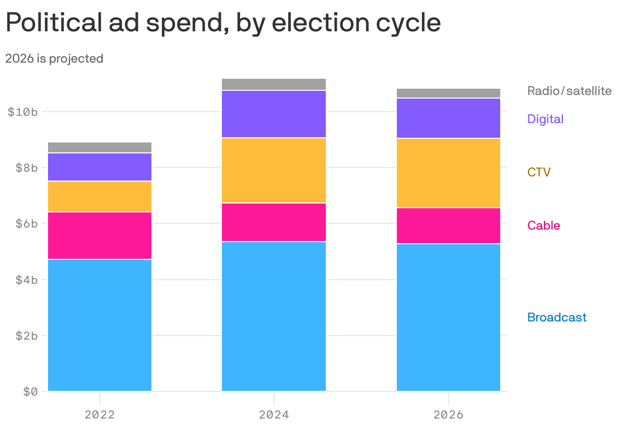
Initial forecasts already placed midterm advertising near presidential cycle spending, via Axios.
Axios published the chart when AdImpact’s projection stood at approximately $10.8 billion. Its value now comes from showing the baseline that AdImpact later revised upward to $11.6 billion. Campaigns should read the chart as evidence of an accelerating market, not as the current final projection.
AdImpact attributes the revision partly to spending that is already running ahead of earlier election years and to advance reservations indicating strong demand through the fall. Those signals matter because campaigns do not purchase every advertising placement at the same price or under the same conditions. Buyers entering a competitive market late may face fewer available programs, less control over timing and higher costs for reaching the same voters.

John Link, AdImpact Senior Vice President of Data, via AAPC.
John Link, Senior Vice President of Data at AdImpact, said:
“Current spending is pacing well ahead of previous years.”
That short assessment carries an operational warning. Campaign managers should establish reservation deadlines and firm spending limits for every priority market before the final advertising surge. Early commitments can protect valuable inventory, but campaigns must preserve a separate flexible reserve. That funding allows them to respond when polling, opponents or outside groups change the competitive map.
AdImpact’s forecast also requires a clear caveat. $11.6 billion remains a projection rather than a completed spending total, and later events could move the final figure in either direction. Campaigns should use the forecast to prepare for market pressure while continuing to monitor actual reservations, cancellations and expenditures in their own states.
Senate and Governor Contests Concentrate the Increase
Senate races account for much of the increase. AdImpact raised its Senate projection from $2.8 billion to $3.4 billion, a gain of $600 million from its earlier estimate. That revised total stands 48% above Senate advertising during 2022 and 27% above the 2024 cycle.
House advertising moves in the opposite direction. AdImpact reduced its House projection from $2.2 billion to $2 billion after redistricting developments made 28 contests less competitive. Spending will not disappear from House races, but outside groups and party committees can concentrate more heavily on a smaller group of districts capable of determining control.
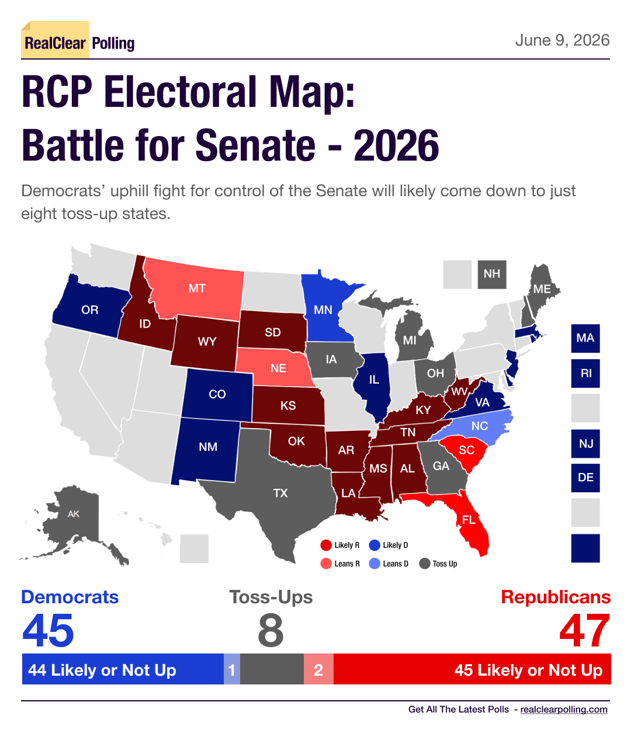
Competitive Senate states concentrate political attention and advertising, via RealClearPolling.
State projections reveal where that pressure is building. Ohio received the largest upward revision, adding $309 million for a projected statewide total of $749 million. Texas rose approximately $288 million to $850 million, while Maine increased $185 million to a projected $491 million.
Those totals cover more than one contest in each state, so campaigns should not treat them as candidate budgets. They indicate the amount of political advertising that could compete across the same media environment. A Senate campaign, gubernatorial campaign, party committee and outside organization may all pursue overlapping audiences through the same broadcast stations, streaming services and digital platforms.
Gubernatorial advertising adds another source of demand. AdImpact raised that category 25%, moving its projection from $1.9 billion to $2.4 billion. California’s gubernatorial race alone is projected to reach $351 million, while Georgia is projected at $197 million.
Media directors in the most expensive states should map the entire advertising environment instead of watching only their immediate opponent. A large gubernatorial purchase can affect inventory available to Senate or House campaigns in the same market. Outside spending can create similar pressure without appearing inside either candidate’s campaign budget.
Media directors should divide markets into priority, expansion and contingency tiers before committing the full advertising budget. Priority markets require early reservations and protected funding because they contain the voters most likely to decide the contest. Expansion spending should depend on new polling or field evidence, while contingency funds should remain available for late changes in the competitive map.
Deep spending does not guarantee efficient persuasion. Media teams should monitor advertising frequency and audience saturation throughout every flight, especially among voters who have already decided. Once repetition stops producing additional reach or persuasion, campaigns should move that money toward persuadable or irregular voters in less saturated markets.
Broadcast Dominates as Downballot Competition Expands
Broadcast television still commands the largest share of projected political advertising. AdImpact expects campaigns and political organizations to spend $5.6 billion on broadcast, representing 48% of the total cycle. That projection increased by $330 million from the firm’s earlier estimate of $5.3 billion.
Connected television is growing faster. AdImpact raised its projection from $2.5 billion to $2.7 billion, giving the channel a 23% share of expected spending. Digital advertising across Facebook, Google, Snapchat and X is projected to reach $1.6 billion after a 9% upward revision, while cable is expected to account for approximately $1.4 billion.
Channel totals should guide planning without dictating identical allocations for every campaign. Broadcast can deliver broad reach quickly, but its geography may extend far beyond a legislative district. Connected television and digital placements can narrow the audience more precisely, although fragmented platforms, inconsistent measurement and limited premium inventory can complicate execution.
Campaigns should assign each advertising channel a specific role. Broadcast can establish a broad contrast, connected television can reinforce that message among selected households and digital advertising can target specific demographic groups with tailored creative. Field teams should report which messages generate voter questions, volunteer activity or movement among undecided voters.
Downballot spending makes that coordination more urgent. AdImpact projects a combined $3.7 billion for downballot and state legislative contests, surpassing the previous $3.2 billion record set during 2022. Downballot contests alone account for a projected $3 billion, while state legislative advertising accounts for approximately $698 million.
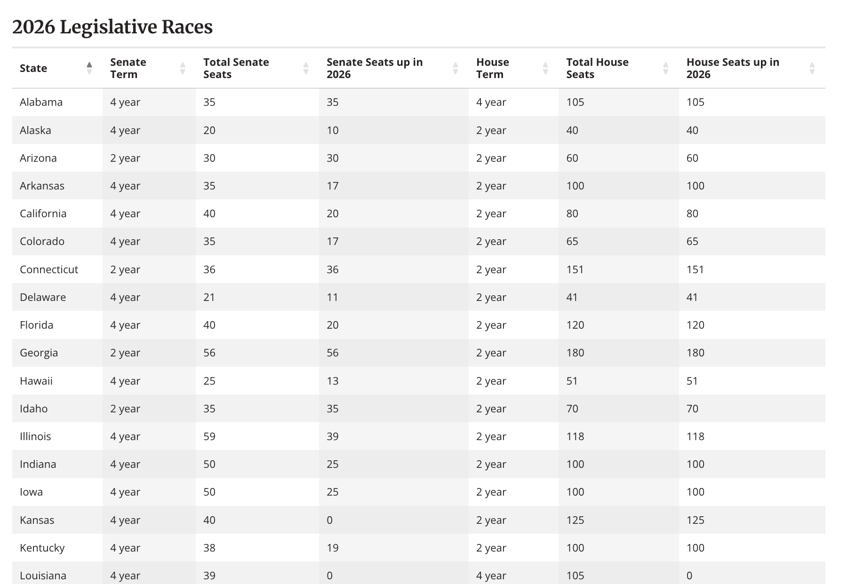
Legislative elections span 88 chambers across 46 states, via NCSL.
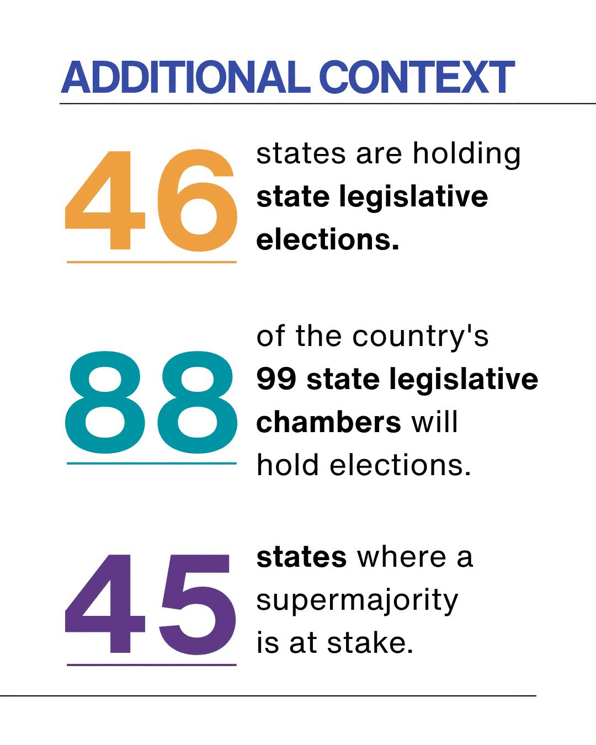
Forty six states hold legislative elections nationwide. Via Ballotpedia
That distinction matters because state legislative races alone are not projected to consume the full $3.7 billion. National Conference of State Legislatures data shows elections taking place across 88 of the nation’s 99 legislative chambers in 46 states. Thousands of legislative contests will therefore compete alongside ballot measures, statewide offices and other downballot campaigns for attention and inventory.
Local campaigns can no longer assume that national races will absorb all major advertising pressure. Downballot campaign managers should coordinate every paid advertising flight with door knocking, direct mail, volunteer phone calls and local earned media. That reinforcement allows smaller campaigns to repeat the same message without trying to match the advertising budgets of statewide organizations.
Resource discipline becomes more important as spending rises. Campaigns should not imitate the media mix of a statewide organization when their own electorate occupies a smaller and more clearly defined voter universe. District campaigns can protect limited budgets by selecting channels that match their geography, voter demographics and turnout plan.
Wrap Up
AdImpact’s $11.6 billion projection changes the scale of the current cycle. Political advertising could surpass both the 2022 midterm record and total spending from the 2024 presidential cycle. Competitive Senate and gubernatorial contests have turned a traditionally smaller election year into a national advertising market with presidential scale demand.
Rising totals create practical consequences before voters see the final wave of ads. Broadcast remains dominant, connected television continues to expand and downballot campaigns must compete for inventory once reserved mainly for larger contests. Campaigns that delay market decisions risk paying more for fewer opportunities to reach the voters who matter.
Bigger budgets will not eliminate the need for disciplined strategy. Campaign managers must connect every reservation to a defined audience, message and campaign objective while preserving resources for late movement. Record spending raises the price of competition, but careful allocation will determine whether that money produces persuasion or merely adds noise.