
Proposition 16 did not change who can vote in Texas, but it reshaped the politics of election integrity heading into 2026.
What to Know
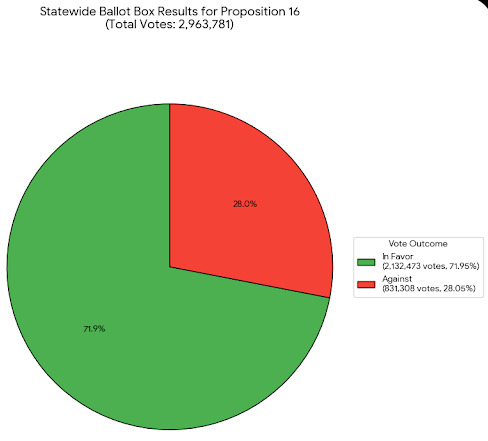
- Texas voters approved Proposition 16% by about 72%, adding a citizenship requirement directly into the state constitution.
- State law already required voters to be citizens, meaning the amendment strengthens symbolism more than policy.
- The measure passed the Legislature with unanimous Republican support and a significant block of Democratic votes.
- Supporters argued the amendment protects election integrity, while opponents said it was unnecessary and fueled unfounded fears.
- Proposition 16 now gives Republicans a high margin turnout message for 2026 and puts pressure on Democrats to navigate an issue that touches immigration and electoral trust.
Texas Proposition 16 stands out, as Ballotpedia notes, as a measure that reshapes political messaging far more than it alters election law. The amendment simply affirms what is already established in Texas law: voting is restricted solely to United States citizens.
But the significance lies in the margin: a 72% yes vote elevates citizenship into a visible political identifier, giving Republicans a streamlined, election-integrity message heading into 2026. For Democrats, the legal landscape is unchanged, yet the political stakes grow more intricate in a state where large, diverse immigrant communities are essential to any durable governing coalition.
A Statutory Rule Becomes a Constitutional Standard
Texas has required voters to confirm their U.S. citizenship for decades, and casting a ballot as a noncitizen has long been a felony. Proposition 16 did not rewrite that framework. It elevated it. By inserting the citizenship requirement directly into Article 6 of the state constitution, lawmakers shifted a routine administrative rule into a permanent governing standard.
Screenshot of Texas Statutes page
That move has real procedural consequences. Any attempt to change voter eligibility now needs a two thirds vote in both chambers and approval from voters statewide. In other words, what used to be a policy choice is now locked behind the highest barrier Texas can create.
Republican strategists see value in that permanence. The amendment gives them a constitutional citation they can point to whenever debates arise about local voting rules or proposals that broaden the franchise. Those debates may be unlikely, but the politics are straightforward. With Proposition 16 in place, Republicans can claim they shut the door before anyone tried to open it, and they can keep returning to that argument heading into 2026.
How Proposition 16 Reached the Ballot
According to Ballotpedia, Proposition 16 originated as Senate Joint Resolution 37, filed on January 22, 2025. To qualify for the ballot, the measure needed at least 21 votes in the Senate and 100 votes in the House. The Senate cleared that threshold with a 28 to 3 vote. All 20 Senate Republicans voted yes, along with 8 of 11 Democrats, giving the chamber a support rate of 90.3%.
|
Metric |
Detail / Value |
|---|---|
|
Originating Measure |
Senate Joint Resolution 37 |
|
Date Filed |
January 22, 2025 |
|
Senate Votes Needed to Qualify |
21 |
|
House Votes Needed to Qualify |
100 |
|
Total Senate Vote (Yes/No) |
28 to 3 |
|
Total Senators |
31 |
|
Overall Senate Support Rate |
90.30% |
|
Republican Votes (Yes/No) |
20 to 0 (All 20 voted Yes) |
|
Democrat Votes (Yes/No) |
8 to 3 (8 of 11 voted Yes) |
|
Category |
Count |
Percentage of Total House Members |
|
Total Yes Votes |
102 |
68.00% |
|
Total No Votes |
14 |
9.3%* |
|
Total Voted to Advance |
102 |
68.00% |
|
Total Vote Count (Yes + No) |
116 |
77.3%* |
|
Present Not Voting (PNV) |
34 |
22.7%* |
|
Total House Members |
150* |
100.00% |
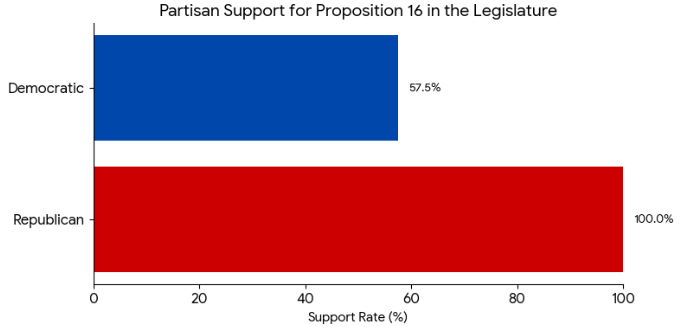
At the ballot box, Proposition 16 received 2,132,473 votes in favor and 831,308 votes against, a statewide margin of 71.95% to 28.05%. That nearly 72% approval rate now functions as a key data point heading into 2026, reinforcing Republican arguments that tightening constitutional language around citizenship aligns with what a commanding share of Texas voters endorsed.
The combined legislative and popular margins suggest the amendment resonated with Texans beyond traditional partisan lines, particularly with voters who prioritize clarity and confidence in election systems.
Supporters and Opponents Framed the Stakes Differently
Republican officials and conservative groups described the amendment as a simple clarification that reinforces electoral integrity. Gov. Greg Abbott said it made the rule “crystal clear.” Organizations like Americans for Citizen Voting and Texas Policy Research argued that it protects state sovereignty and formalizes an existing standard with minimal cost.
Opponents emphasized that Proposition 16 addressed a problem that did not exist. Groups like ACLU of Texas, Every Texan, and Progress Texas argued that noncitizen voting is already illegal and rare, and that the measure risks stigmatizing immigrant communities by implying widespread abuse.

Voting rights scholars noted that previous attempts by Texas officials to investigate noncitizen voting flagged thousands of naturalized citizens in error, leading courts to halt the effort. Their position was that real election administration problems involve access, accuracy, and resource shortages, not citizenship violations.
This split highlights competing political instincts. One side sees clarity and eligibility as the core of election integrity. The other sees the amendment as part of a broader message campaign that elevates fears rather than improving the system.
Why the Amendment Arrived Now
Proposition 16 appeared on a ballot crowded with other high profile measures on parental rights, eminent domain, and border security funding. Its placement among these measures reinforced a broader Republican message about limits, rules, and public safety. Its timing also aligns with national debates over proof of citizenship requirements, federal compliance rules, and lawsuits over list maintenance procedures.
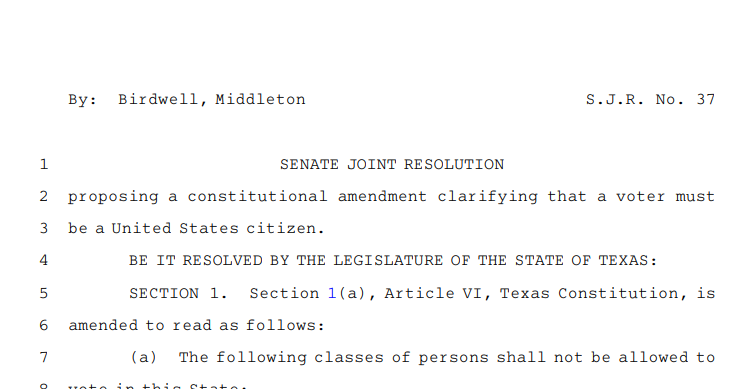
Screenshot of SJR 37
The measure gives Republicans an easy way to fold Texas into a national argument that election rules should be tightened. Even in a state with few competitive statewide races, turnout operations depend on emotional cues and identity signals. Proposition 16 provides exactly that. It allows candidates to tell voters they defended the ballot and protected the definition of the electorate, even if the underlying risk was low.
What Proposition 16 Means for 2026
Heading into the 2026 midterms, Proposition 16 is likely to appear in stump speeches, digital ads, mailers, and voter engagement messaging. Republicans will use the amendment to reinforce arguments about border security, election reliability, and public trust. Candidates can point to a concrete action they took to strengthen the system, and they can cite the large margin of approval when challenged.
Democrats face a different calculation. Many voters who supported Proposition 16 also support legal immigration and naturalization. Others see it as a reasonable safeguard. Democratic candidates will need to explain why they voted for or against the measure without appearing dismissive of voter concerns or alienating communities wary of how the citizenship debate is used. Clear, simple language that distinguishes between illegal voting and legitimate voter participation will be essential.
Wrap Up
Proposition 16 underscores a political truth that will shape Texas elections in 2026. Even when a ballot measure changes little in law, it can change a lot in narrative. By turning an existing rule into a constitutional standard with overwhelming public support, Texas voters handed Republican candidates a reliable talking point for turnout and persuasion. The amendment also forces Democrats to refine their language around election rules and immigrant communities in a state where both issues are deeply interwoven.
The parties that succeed in 2026 will be the ones that understand Proposition 16 not as a technical amendment, but as a signal of what voters want to hear: clarity, consistency, and confidence in who participates in Texas elections.