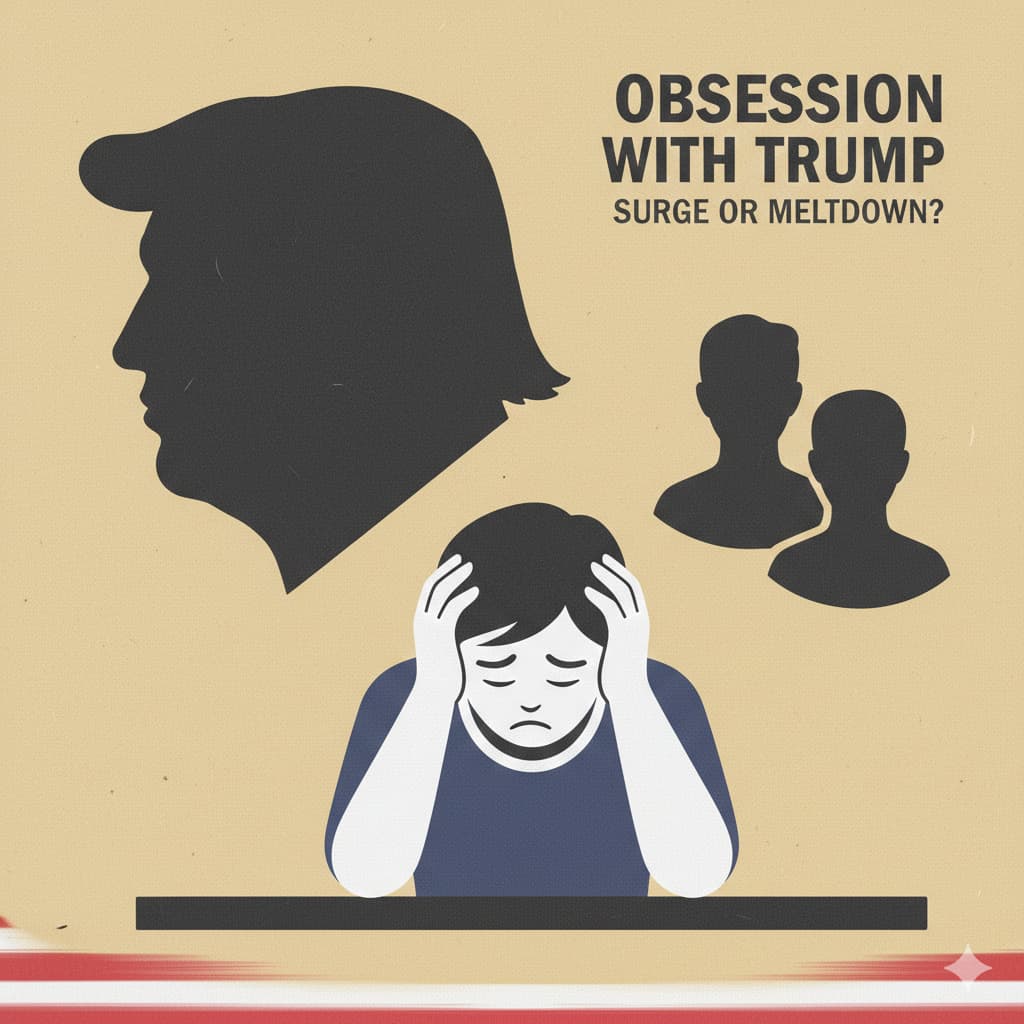

An obsession with Trump could either fuel a Democratic surge or trigger a meltdown heading into the 2026 midterms.
What to Know:
- “Trump Derangement Syndrome” (TDS) has shifted from a conservative talking point to a defining feature of how a sizable slice of the electorate engages with politics.
- TDS is described by critics as a kind of political obsession or impaired judgment rooted in hatred of Donald Trump, and by defenders as a smear against rational opposition.
- The emotional intensity around Trump now motivates both sides: it mobilizes anti-Trump voters through constant alarm, and galvanizes pro-Trump voters who see that alarm as proof they’re winning.
- Heading into the 2026 midterms, Democrats risk being seen as driven more by anti-Trump rage than by a positive governing agenda.
- Republicans have an opening if they can contrast a “meltdown left” with a calm, forward-looking conservative vision focused on stability and normalcy.
A Political Malady Grips the Nation
A political malady is sweeping the nation, an affliction characterized by an all-consuming obsession with one man: Donald J. Trump. Coined “Trump Derangement Syndrome” (TDS), this phenomenon is not a formal medical diagnosis, but a term that has come to define the seemingly irrational and hysterical reactions to Trump’s presidency and political movement.
As the country looks ahead to the 2026 midterm elections, understanding TDS is essential to grasping the motivations of a vocal and energized segment of the electorate. Whether it represents pathological hatred, justified alarm, or a strategic political label, TDS sits at the center of how both the left and right interpret American politics.
What Is Trump Derangement Syndrome?

Trump Derangement Syndrome— Created by Campaign Now with Gemini
Origins of the Term
The term “Trump Derangement Syndrome” was first popularized by the late conservative intellectual and psychiatrist Charles Krauthammer, who defined it as the:
“inability to distinguish between legitimate policy differences and… signs of psychic pathology.” (National Post)
In essence, TDS describes a state where an individual’s intense hatred of Trump impairs their political judgment, leading to what many see as a complete detachment from reality.
Journalist Fareed Zakaria has similarly described TDS as a:
“hatred of President Trump so intense that it impairs people’s judgment.” (Wikipedia)
From this perspective, TDS is less about policy and more about an emotional and psychological fixation.
How the Right Uses the Label
Trump supporters argue that TDS is a strategic tool used by the left to dismiss any and all of Trump’s accomplishments. They see it as an all-purpose explanation for the resistance to Trump, especially in media and elite institutions.
Former White House Press Secretary Sarah Huckabee Sanders once summarized this view on social media:
“Trump Derangement Syndrome is becoming a major epidemic among Democrats. Instead of freaking out about the booming Trump economy why not celebrate it?”
For many conservatives, the telltale signs of TDS include:
- Refusal to acknowledge any positive outcomes from Trump-era policies
- Constant, maximalist rhetoric about Trump as an existential threat
- Media environments where Trump is the dominant frame for every story
In their view, TDS is not only real, but a window into how profoundly disconnected the political and media class has become from ordinary voters.
How the Left Sees It
Those on the left, of course, reject the label. They argue that their opposition to Trump is a rational and measured response to a presidency they believe has:
- Undermined democratic norms
- Inflamed social and racial tensions
- Disregarded constitutional and institutional constraints
From this standpoint, “Trump Derangement Syndrome” is nothing more than an attempt to:
- Pathologize dissent
- Silence legitimate criticism
- Deflect attention from Trump’s actions and rhetoric
Still, the behavior often associated with TDS—the constant outrage, breathless media coverage, and inability to acknowledge any successes under Trump—has led many observers to conclude there is more at work than simple partisan disagreement.
Is TDS a Real Psychological Condition?
Some commentators have gone further, wondering whether TDS might resemble a genuine psychological phenomenon.
Psychotherapist Jonathan Alpert, writing for The Wall Street Journal, described the phenomenon as a form of:
“‘obsessive political preoccupation’ — an obsessive-compulsive spectrum presentation in which a political figure becomes the focal point for intrusive thoughts, heightened arousal and compulsive monitoring.” (Fox News)
Alpert notes that for many of his patients, the mere mention of Trump is a trigger for intense mental distress. In this telling, Trump is no longer just a politician; he is the main character in people’s inner lives, a source of:
- Intrusive thoughts
- Heightened anxiety
- Compulsive consumption of news and social media
Whether or not the term “Trump Derangement Syndrome” ever appears in a diagnostic manual, this kind of obsessive political focus has real emotional and behavioral consequences.
A Double-Edged Sword of Motivation
How TDS Energizes the Anti-Trump Left
The visceral emotions tied to Trump are a potent force in American politics, and TDS appears to be a powerful motivator on both sides of the spectrum. For those in the grip of TDS, political engagement is fueled by a relentless sense of crisis.
Every action taken by Trump is seen as an existential threat to:
- Democracy
- Minority rights
- The rule of law
- America’s global standing
This constant state of alarm drives them to:
- Organize
- Protest
- Donate
- And, most importantly, vote
As one analysis in Psychology Today argues, the paradox of TDS is that it can both mobilize and distort political behavior—channeling energy while narrowing perspective.
How the Backlash Galvanizes Trump’s Base
Conversely, for Trump’s supporters, the existence of TDS is a powerful motivator in its own right. They see the unhinged reactions of the left as confirmation that they are on the right track.
For these voters:
- The more hysterical the opposition becomes, the more resolute they feel.
- Every viral meltdown, extreme headline, or over-the-top protest appears as proof that Trump is exposing a corrupt establishment.
- The label “TDS” becomes a badge of honor—evidence that their champion is disrupting the right people.
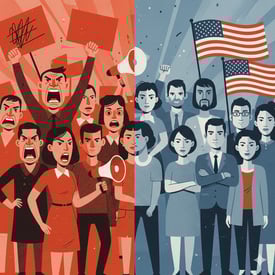
Trump supporters view opposition hysteria as validation they're disrupting the right establishment. — Created by Campaign Now with Gemini.
Fox News personality Sean Hannity has captured this sentiment, referring to the media’s reaction to Trump as:
“a full-blown psychosis... a psychological level of unhingement I have never seen.”

Screenshot from Vanity Fair
In this framing, TDS is less a pathology on the right than on the left. It is a sign that Trump has forced his opponents into such emotional overdrive that they are alienating the very voters they need to win.
The 2026 Midterms: A Coming Storm?
The Democrats’ Bet: Outrage as a Turnout Engine
As we look toward the 2026 midterm elections, the central question is what role Trump Derangement Syndrome will play.
Many on the left are counting on outrage as a turnout engine. Their hope is that:
- Fear of Trump’s return
- Anger over his movement’s continued influence
- And a sense of permanent emergency
will be enough to propel Democrats to victory, especially in key suburban and swing districts.
In this model, TDS—or at least the intense emotional focus on Trump—is not a liability but a feature: a way to keep voters engaged even when Trump is not on the ballot.
The Risk: A Movement Defined by What It Hates
However, there is a growing sense that constant negativity, coupled with a perceived lack of a positive agenda, could be a political liability.
Voters may grow weary of a movement that seems:
- Defined more by what it is against than what it is for
- Incapable of moving beyond Trump as the central reference point
- More focused on punishment and retribution than on policy and governance
In an analysis by Gabriel Hays, If the Democratic brand in 2026 is:
“Still obsessed with Trump, still in perpetual crisis mode,”
then moderates and independents may recoil, even if they dislike Trump personally or oppose his return to power.
The Republican Opportunity: Calm vs. Chaos
For conservatives, the path forward is clearer. To capitalize on TDS, Republicans must:
- Continually highlight the excesses, overreactions, and performative outrage of the left
- Frame Democrats as a party in the throes of a collective emotional breakdown
- Present themselves as the adult alternative: focused on stability, prosperity, and common-sense solutions
If Republicans can successfully present the 2026 midterms as a choice between:
- A party consumed by Trump, defined by rage and resentment, and
- A party offering a forward-looking, solutions-oriented agenda,
they have a real opportunity to make significant gains.
The 2026 elections will test whether the American people are more motivated by:
- Fear and outrage, or
- A desire for stability and a return to political normalcy.
Wrap Up: TDS and the Future of American Politics
Trump Derangement Syndrome, whether deployed as an insult or diagnosed as a broader phenomenon, reflects something deeper than one man or one presidency. It reveals how intensely personalized and emotionally driven American politics has become.
As long as Trump remains a central figure—whether as candidate, movement leader, or symbolic villain—TDS will continue to shape:
- Media coverage
- Voter engagement
- Party strategy
In 2026, Democrats and Republicans alike will confront the costs and benefits of a politics that revolves around a single polarizing figure. The outcome will offer a stark verdict on whether the country is ready to move past Trump—or whether it remains locked in a cycle of mutual obsession and escalating derangement.
Source
- https://en.wikipedia.org/wiki/Trump_derangement_syndrome
- https://nationalpost.com/opinion/charles-krauthammer-trump-derangement-syndrome-is-being-fed-by-the-presidents-own-vainglorious-impulses
- https://www.foxnews.com/media/psychotherapist-says-trump-derangement-syndrome-real-pathology-plaguing-75-percent-his-patients
- https://www.psychologytoday.com/us/blog/the-meaningful-life/202409/the-paradox-of-trump-derangement-syndrome