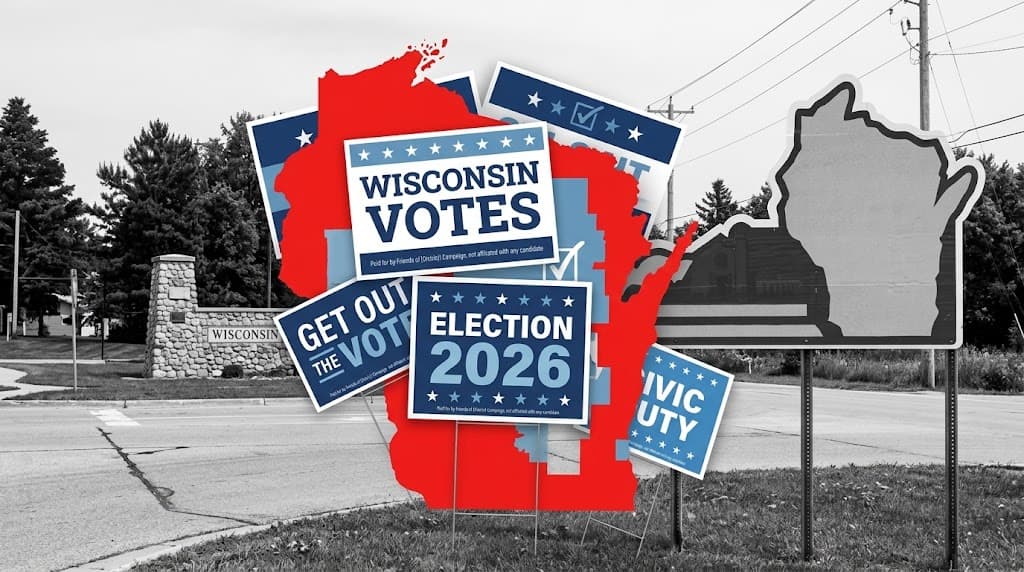

A cooling labor market and manufacturing layoffs are forcing Wisconsin Democrats and Republicans to answer the same question voters ask first: who caused this, and who can fix it?
What to Know
- Wisconsin’s job growth has cooled, with net gains of roughly 6,700 over the last 12 months cited in recent Wisconsin employment tracking.
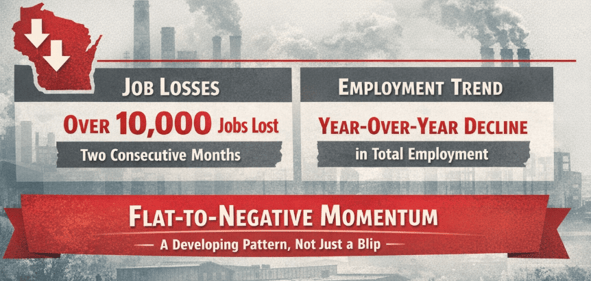
- A January 2026 Wisconsin Department of Revenue economic update notes Wisconsin employment fell by about 2,400 over the year, and that the prior two months each saw drops of more than 10,000 jobs.
- Manufacturing is a political tripwire in Wisconsin, and recent reports point to new softness tied to national conditions and tariff uncertainty.
- Layoffs are landing in real communities, including Air Wisconsin cuts in Appleton and Milwaukee and Oshkosh Defense union job losses starting January 5, 2026.
- The slowdown is colliding with two major 2026 battlegrounds: the open governor’s race and the highly competitive 3rd Congressional District.
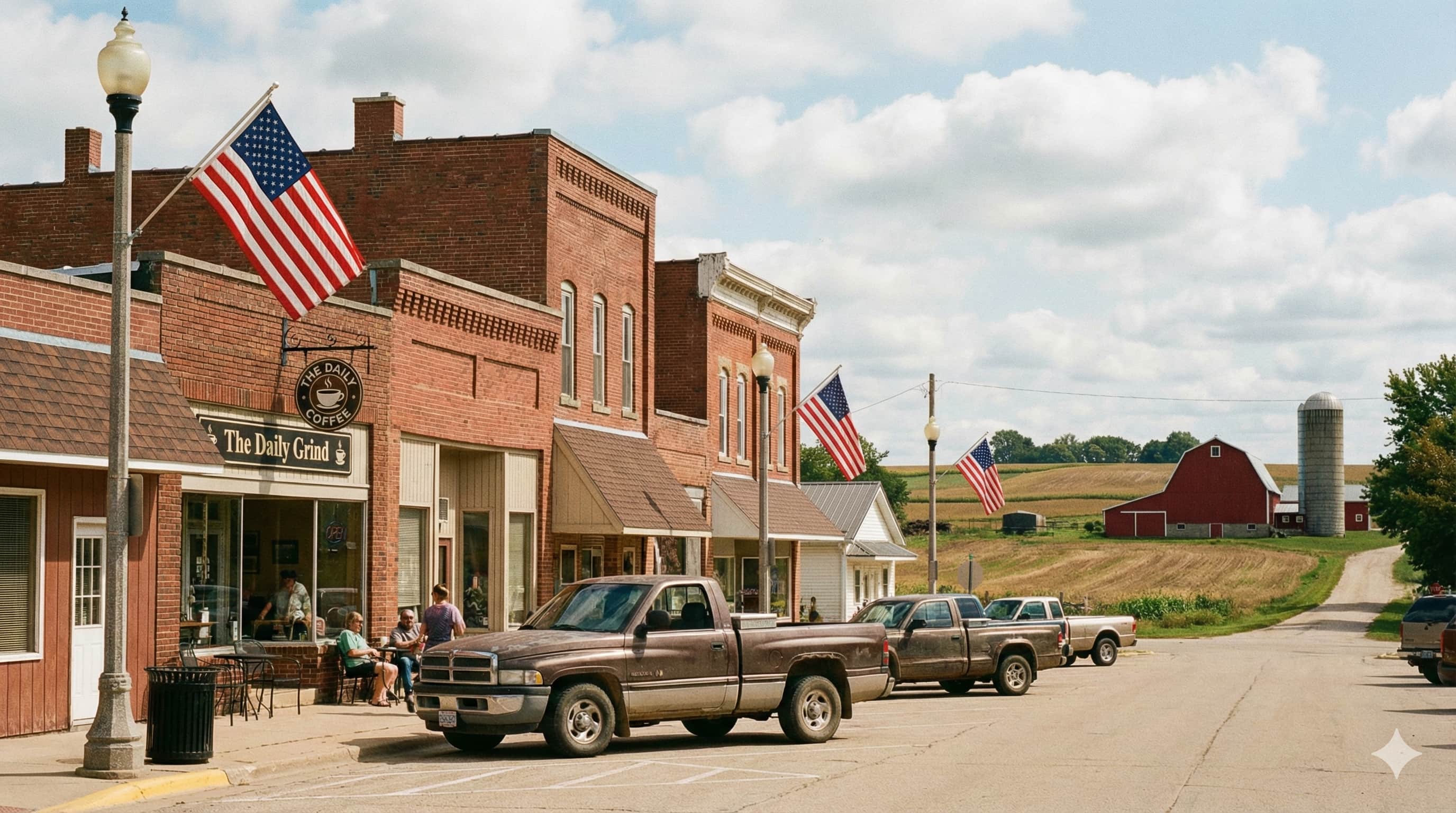
Wisconsin is where economic mood becomes political math. When jobs feel shaky in Green Bay media markets, in the Fox Valley, and across the western driftless counties, campaigns do not treat it like an economic briefing. They treat it like a warning light.
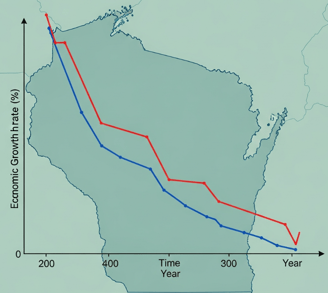
Growth no longer positive, graph created by Gemini
That is why the current slowdown matters. Wisconsin’s growth is no longer reliably positive on a year-over-year basis in key state reporting, and the manufacturing sector is showing strain at the same time layoffs are hitting headline employers. The result is a familiar midterm setup in a state that rarely gives incumbents the benefit of the doubt: anxiety rises, finger-pointing starts, and the party that defines the cause first usually controls the narrative.
Who Gets Blamed
At the state level, Democrats are exposed because they hold the governorship and have for years, even though Gov. Tony Evers is not seeking reelection. If the public story becomes “Wisconsin is stagnating,” the default voter instinct is to blame the party currently running the executive branch in Madison.

Governor Tony Evans, image via official website
At the national level, Republicans are not insulated either, because Donald Trump is back at the center of national economic controversy and policy volatility. A University of Wisconsin–Madison economist told Wisconsin Public Radio that tariff uncertainty is taking a toll on Wisconsin businesses, and the piece also notes Trump fired the head of the Bureau of Labor Statistics after weak national job numbers and revisions.
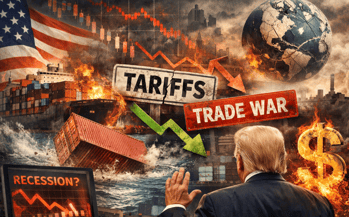
Democrats will argue the job slowdown stems from national instability impacting a manufacturing-heavy state first, not just poor state management. Republicans will try to localize the blame on Madison's leadership, regulation, and business climate, while Democrats will nationalize the blame, citing Trump-era trade disruption and broader economic turbulence.
Businesses Making It Real
The fastest way to turn a “slowdown” into a vote-moving issue is to attach it to names voters recognize and towns they live in. Wisconsin has those names.
Air Wisconsin’s layoffs are not theoretical. Local coverage documents workforce reductions tied to a sale process, including layoffs in Appleton and Milwaukee. That matters politically because the Fox Valley is not just an economic region. It is a persuasion region, full of voters who have moved between parties in recent cycles based largely on economic confidence.
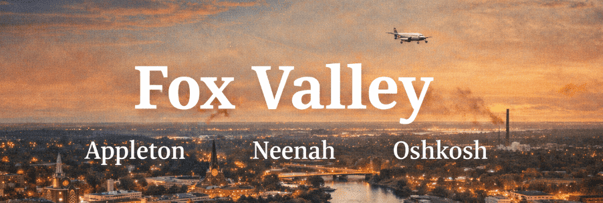
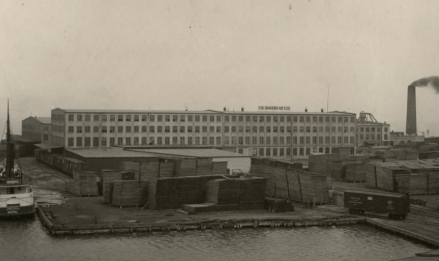
Oshkosh Defense is the other headline example, because it hits the manufacturing identity of Wisconsin directly. Oshkosh Defense confirmed layoffs of about 160 production workers effective January 5, 2026, citing “overstaffing” and a need to align staffing to anticipated business needs. Even more politically useful for campaigns, the union response is emotional, local, and quotable. UAW Local 578 leaders described the timing as devastating for families ahead of the holidays.
Beyond the splashy headlines, Wisconsin’s WARN filings and local reporting show additional closures and layoffs that feed a broader sense of drift. Sheridan Random Lake’s closure eliminates 104 jobs, with layoffs phased in through early 2026. That story has an added political hook because reporting notes the closure followed state grant activity, creating an easy storyline for critics about whether state economic development efforts are delivering durable results.
Political Players Who Matter
As of publication, neither party has issued a direct statement responding specifically to the latest economic slowdown. However, their most recent public comments provide insight into where their messaging currently stands.

Wisconsin GOP Chairman Brian Schimming; image via WisPolitics
On February 11, 2026, following passage of the SAVE Act in the U.S. House, Wisconsin GOP Chairman Brian Schimming released the following statement:
“Every American and Wisconsinite deserves to know that their elections are safe and secure. The SAVE Act is the first step in ensuring voters trust our elections and safeguarding ballot boxes across the nation.”
Similarly, after a December 11, 2025 Senate vote in which Republicans declined to continue Affordable Care Act subsidies, Democratic Party of Wisconsin Chair Devin Remiker issued this response:
“Make no mistake, whether you live in the country or in a city, this was a direct attack on working people across the state. That's why we continue to see voters rejecting Republicans and their devastating, cost-raising, policies."

Democratic Party of Wisconsin Chair Devin Remiker; image via website
Neither statement addresses the current jobs data directly. Still, they demonstrate the thematic priorities each party is emphasizing. Republicans are focusing on election security and institutional trust, while Democrats continue to frame their argument around economic pressure on working families. Whether either side shifts that messaging to confront the latest economic numbers explicitly will likely shape how voters interpret responsibility in the months ahead.
Historical Context Clarifies Significance
Wisconsin’s January 2026 economic update from the Department of Revenue describes a recent period of flat-to-negative momentum, including two consecutive months with job declines over 10,000 and a year-over-year decline in total employment. That is the important context because it frames the current moment as more than a one-month blip. It suggests a pattern.
For a longer lens, Wisconsin’s manufacturing sector has historically been highly sensitive to national trade shocks and national slowdowns. Wisconsin Public Radio’s reporting, including commentary from UW–Madison economist Menzie Chinn, links recent manufacturing softness to the toll of tariff uncertainty and broader national labor market changes. That gives you a defensible “why now” that is not purely partisan.

Minzi Chinn, photo via University of Wisconsin
If you want a sharper historical comparison for Wisconsin specifically, the next reporting step is to pull prior DWD time series on manufacturing employment and identify the last non-recessionary period when Wisconsin posted similar year-over-year stagnation. The article can reference the current pattern now, and then a follow-up can quantify the prior parallel with a chart.
Strategic Implications for the 2026 Election Cycle
For Republicans, the play is straightforward. Tie layoffs and sluggish growth to Democratic stewardship in Madison, argue that regulation and taxes are suppressing competitiveness, and make the governor’s race a management referendum. Trump’s endorsement of Tiffany makes that nationalized too, because Democrats will treat Tiffany as a proxy for Trump economics in a state where swing voters are still persuadable.
For Democrats, the play is to split the blame. Localize the human impact of layoffs, but nationalize the cause. Point to tariff uncertainty, volatility in national economic governance, and the way manufacturing states are hit first when national policy becomes erratic. Then pivot to a protection frame: defending working families, stabilizing costs, and investing in durable sectors.
For House campaigns, especially WI-03, the economics are gasoline. The 3rd District is already treated as one of the most competitive seats in the country, and the broader Wisconsin map remains tight. If layoffs and closures rise in western Wisconsin media markets, campaigns will have an easier time making every incumbent vote and every leadership choice feel like it has pocketbook consequences.
Wrap Up
Wisconsin’s slowdown is no longer just a statistic. It is becoming a fight over responsibility in a state where voters punish drift and reward clarity. The layoffs at Air Wisconsin and Oshkosh Defense, plus closures like Sheridan Random Lake, give campaigns the kind of concrete, local examples that turn economic mood into political behavior.
For 2026 and beyond, this matters because Wisconsin is not only a swing state. It is a narrative setter. If Democrats cannot convincingly argue why a Democratic-led Wisconsin is slowing, they risk owning the pain. If Republicans cannot separate Trump’s national volatility from the state’s economic anxiety, they risk sharing the blame. The party that answers the “who did this” question first, with receipts and local examples, will have the inside track in the governor’s race and in WI-03.