

The fatal shootings of two U.S. citizens by federal agents in Minnesota have ignited a political firestorm, exposing deep White House divisions and threatening the Republican 2026 midterm strategy.
What to Know:
- Federal agents killed two U.S. citizens, Renee Good and Alex Pretti, during an ICE raid in Minnesota.
- The incident has intensified a White House strategy battle between pragmatists like James Blair and purists like Stephen Miller.
- A January 2026 poll shows 57% of voters disapprove of ICE’s methods, while support for abolishing the agency has risen to 42%.
- The controversy energizes Democrats and threatens to alienate suburban and moderate voters crucial to the GOP's midterm chances.
- Senate Democrats are threatening to block government funding without ICE reforms, increasing the likelihood of a partial shutdown.
The fatal shootings of two U.S. citizens, Renee Good and Alex Pretti, by federal agents in Minnesota in January have lit the fuse on a political powder keg, threatening to upend the Republican party's strategy for the 2026 midterm elections. The incidents, which occurred during a sweeping Immigration and Customs Enforcement (ICE) operation dubbed "Operation Metro Surge," have brought the long-simmering debate over the agency's aggressive tactics to a boiling point and exposed deep divisions within the White House itself.
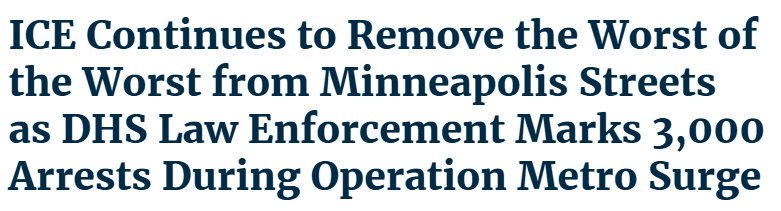
Screenshot of headline from DHS
The political fallout has been swift and severe, with mounting public outrage and a renewed push from Democrats to defund the agency. This has created a precarious situation for the GOP, which has traditionally leaned on a tough-on-crime and border security platform. The recent events in Minnesota, however, are now forcing a difficult conversation within the party and could alienate key voter demographics.
A White House Divided: Purists vs. Pragmatists
The controversy has thrown a harsh spotlight on the central conflict roiling the Trump White House: the battle between ideological purists and political pragmatists. On one side stands Senior Advisor Stephen Miller, the architect of the administration's most aggressive and controversial immigration policies. A political purist, Miller's strategy is to energize the conservative base with a hardline, uncompromising stance on immigration enforcement, regardless of political fallout.

On the other side is James Blair, the White House Deputy Chief of Staff and head of the 2026 midterm strategy. Described as “cerebral” and “relentlessly focused on data,” Blair represents the pragmatist wing of the party. According to a recent POLITICO profile, Blair’s focus is on the cold, hard calculus of electoral victory, often making calculated decisions that are “second-guessed by Republican strategists” but ultimately prove successful.
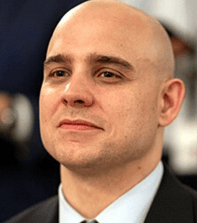
White House Deputy Chief of Staff James Blair
This fundamental disagreement in strategy is now at a breaking point. While Miller pushes for the kind of fringe policies that resulted in the Minnesota tragedy, pragmatists like Blair are reportedly concerned about the electoral consequences. Blair's allies urge focused ICE raids on confirmed criminals and gang members to avoid alienating moderate, midterm-essential voters. The current crisis forces a choice between Miller’s base-pleasing purity and Blair’s data-driven pragmatism, a decision that will define the GOP’s chances in 2026.
Midterm Mayhem
The timing of the Minnesota shootings could not be worse for the Republican party. With the 2026 midterm elections on the horizon, the GOP is facing the prospect of a "blue wave" fueled by public discontent with the Trump administration's policies. The ICE controversy is a "double-edged sword" that could further energize the Democratic base and the burgeoning "Abolish ICE" movement.
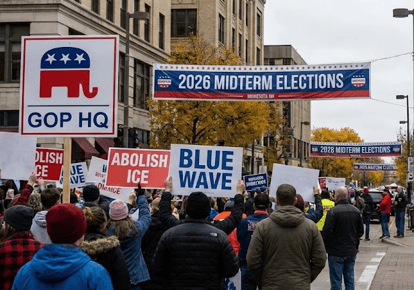
Political analysts warn that the aggressive tactics employed by ICE could undermine Republican support among crucial voting blocs, including Latino voters and suburban moderates in key swing states. The issue is also creating a distraction from the GOP's preferred talking points on the economy and national security. The controversy is forcing Republican candidates to answer for the actions of federal agents, putting them on the defensive and potentially diminishing their traditional advantage on law-and-order issues.
Shifting Public Opinion
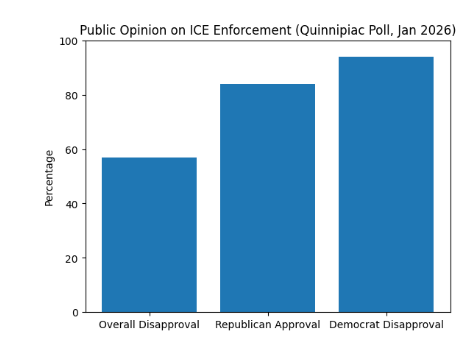
Recent polling data reveals a significant and growing public disapproval of ICE's methods. A Quinnipiac University poll conducted in January 2026 found that 57% of voters disapprove of the way ICE is enforcing immigration laws. The partisan divide on this issue is stark, with 84% of Republicans approving of ICE's actions, while 94% of Democrats disapprove.
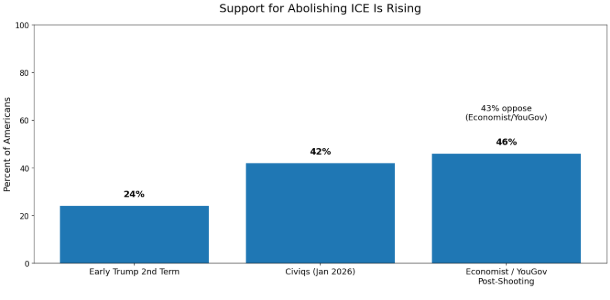
Furthermore, a Civiqs poll from January 2026 shows a dramatic increase in support for abolishing ICE altogether, with 42% of Americans now favoring the idea, a significant jump from 24% at the beginning of Trump's second term. Following the death of Renee Good, a poll by The Economist/YouGov found that 46% of Americans supported abolishing ICE, with 43% opposed. These numbers suggest a rapidly changing public sentiment that could have a major impact at the ballot box.
A Pew Research Center survey from March 2025 provides a more nuanced look at public opinion. While a vast majority of Americans (97%) support the deportation of immigrants who have committed violent crimes, there is far less consensus on the deportation of non-violent offenders or recent arrivals. The survey also found that most Americans oppose immigration arrests taking place in sensitive locations such as places of worship, schools, and hospitals.
The Looming Government Shutdown
The political crisis over ICE has now escalated to a full-blown budget battle on Capitol Hill, with a partial government shutdown looming. In the wake of the Minnesota shootings, Senate Minority Leader Chuck Schumer announced that Democrats will block any government funding bill that includes money for the Department of Homeland Security (DHS) without what he calls "common sense reforms" to rein in ICE.
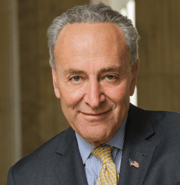
\Senate Minority Leader Chuck Schumer
This move has put Senate Republicans in a difficult position. They need Democratic votes to pass the funding package, but acceding to their demands would be seen as a capitulation by their conservative base. The standoff has made a government shutdown increasingly likely, a scenario that both parties are approaching with a mix of trepidation and political calculation. While a shutdown could be politically damaging, Democrats appear to believe they are on the right side of public opinion on this issue and are willing to use the threat of a shutdown to force concessions from the White House.
Wrap Up
The Minnesota shootings have turned immigration enforcement into a defining political test rather than a reliable rallying issue. What had long been a cornerstone of Republican messaging is now forcing uncomfortable tradeoffs between energizing the base and maintaining broader electoral viability. Public opinion data shows rising unease with ICE’s tactics, particularly among suburban and moderate voters who often decide close elections.
As 2026 approaches, Republicans face a narrowing path that demands strategic clarity. Continuing aggressive enforcement risks further alienation of swing constituencies and complicates efforts to refocus on economic and national security themes. Pulling back, however, carries the risk of internal backlash from a base that views immigration as a defining moral and political issue. The party’s response to this crisis will shape not only the immediate midterm environment but also the long-term balance between ideology, governance, and electability within the GOP.