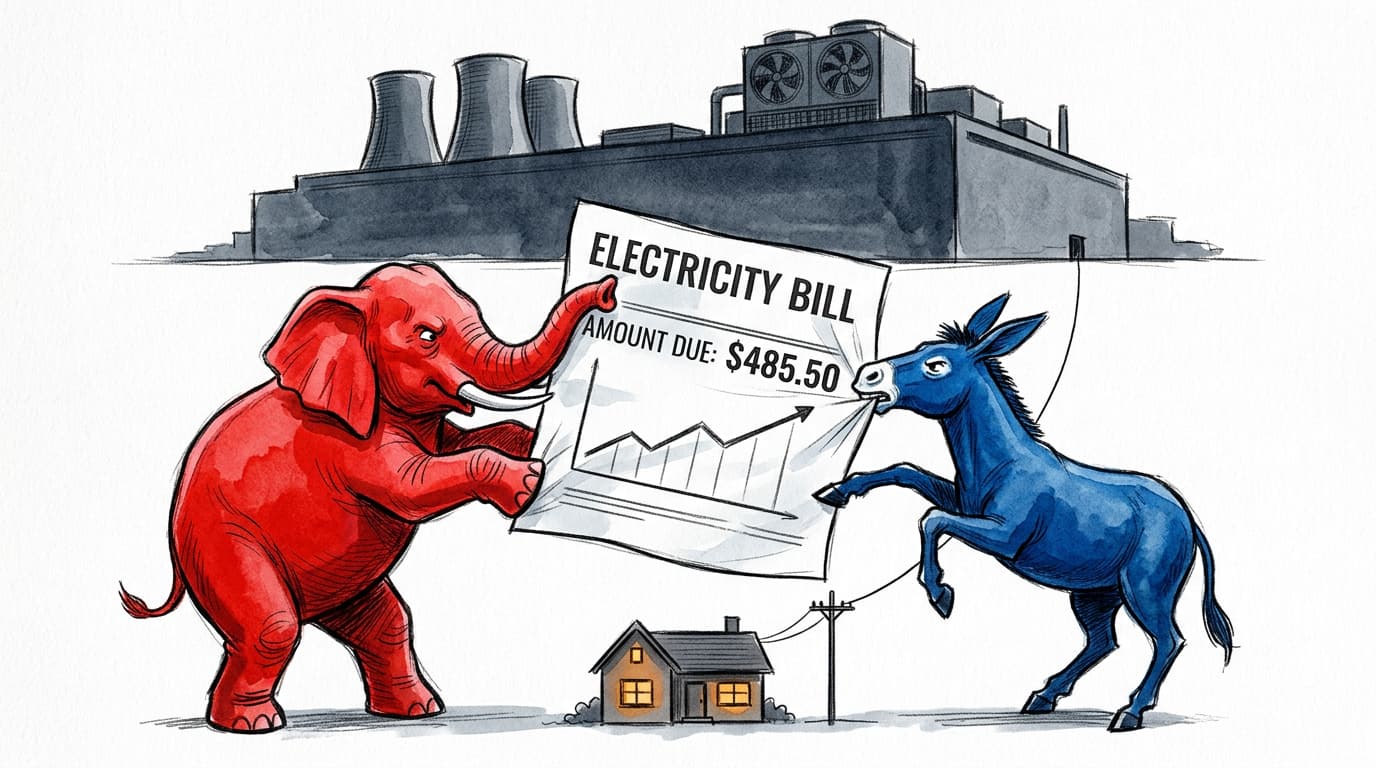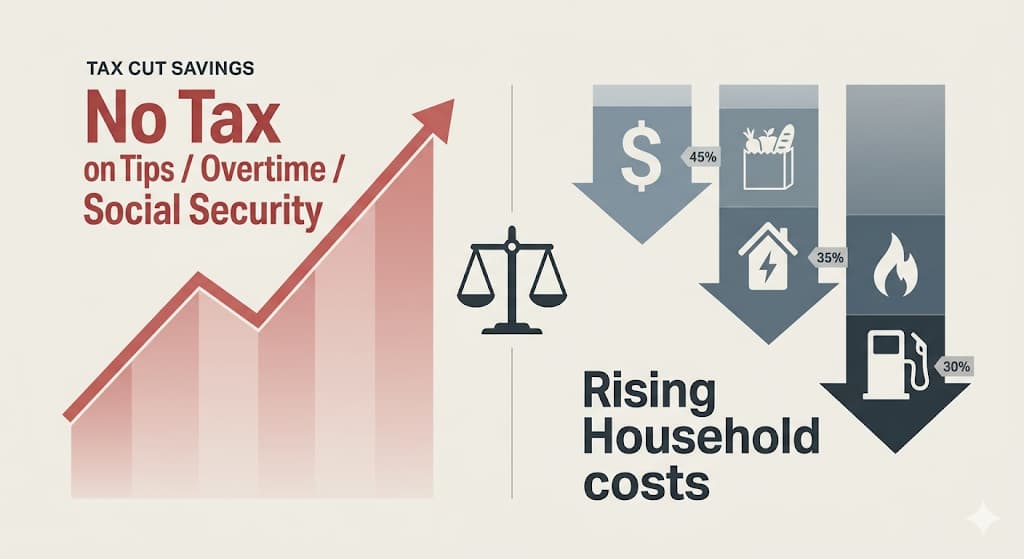


Rahm Emanuel has handed Democrats a disciplined midterm playbook, and Republicans who fail to read it carefully will walk straight into the trap it sets.
What to Know
- Rahm Emanuel, former Obama chief of staff and Chicago mayor, is advising Democrats to run 2026 as a pure referendum on President Trump and the Republican Congress rather than a policy debate
- Emanuel's core target is independent voters, who Republicans must win over in a cycle where the party already holds a razor-thin 218-214 House majority with three vacancies.
- Trump's approval among independents has dropped to 26%, down 15 points in a single year, handing Democrats a ready-made argument that the center has soured on Republican governance
- Senate Republicans voted with Trump 96% of the time in 2025, and House Republicans 95% of the time, a record that directly fuels the "rubber stamp" frame Emanuel wants to hang around every GOP incumbent's neck
- Focaldata polling gives Democrats a 5-7 point lead on the generic House ballot, driven primarily by voter anxiety over the cost of living
- GOP pollsters at the Winston Group warn that Republican double-digit leads on inflation and the economy from 2024 have "dissipated," making the economic narrative a genuine vulnerability heading into November
Rahm Emanuel has spent thirty years winning elections for Democrats, and his blueprint for 2026 deserves to be taken seriously by every Republican running a competitive race this November. His core argument is deceptively simple: stop debating issues, nationalize the election around Trump's unpopularity, and let independents do the rest. The strategy is disciplined, historically tested, and already gaining traction in early polling. Republicans who understand how this trap is constructed are the ones best positioned to dismantle it before it closes.
This analysis draws on reporting and data from NPR, The Ripon Society / Winston Group, Focaldata, Brookings Institution, The Guardian, NPR Fresh Air / The Atlantic, Al-Ahram / Nawa Consulting, CQ Roll Call, and Politico.
Emanuel's Referendum Blueprint
Democrats have been handed a singular strategic instruction for 2026, and it comes from one of the sharpest electoral tacticians their party has ever produced.
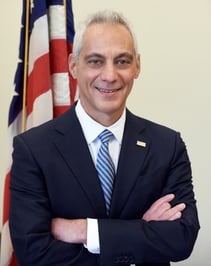
Rahm Emanuel, Former Obama Chief of Staff, DCCC Chair, and Mayor of Chicago
Rahm Emanuel is not a disinterested observer. He ran the Democratic Congressional Campaign Committee in 2006 and personally recruited the candidates who flipped the House. He knows better than most that midterms won on referendum frames are midterms won decisively. His current advice to Democrats is a deliberate echo of that playbook, sharpened for 2026.
As Rahm Emanuel told NPR's Steve Inskeep:
"This is a referendum election. Keep it focused on the rubber stamp Republican Congress to President Trump. He's unpopular. Midterms that have one party in power have the law of physics, massive energy by the party out of power. You have to win independents 2 to 1 to win the House."
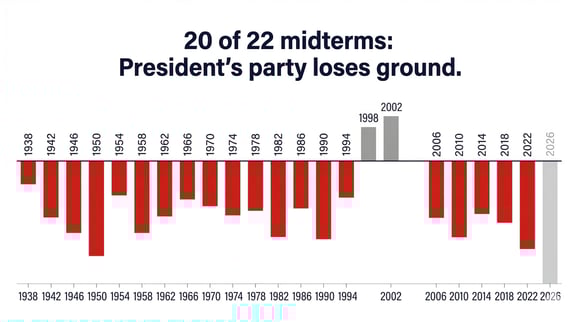
Historical midterm seat loss patterns, Image generated by Campaign Now with Gemini using Data from Brookings Institution
The strategic logic is airtight on its face. Independents are uncomfortable with Trump. They are equally uncomfortable that no institution, not the Roberts Court, not the press, not congressional Republicans, is putting a check on him. Emanuel wants Democrats to make that discomfort the entire election, and the polling environment suggests the raw material for that argument is already in place.
The Message Discipline Democrats Are Being Handed
Winning the referendum frame requires more than attacking Trump. It requires Democrats to stop tripping over their own messaging, and Emanuel is direct about where they have been getting it wrong.
Emanuel's second argument is equally pointed, and more internally disruptive for Democrats. He wants the party to abandon the cultural battlegrounds that cost them persuadable voters and refocus entirely on kitchen-table economics.
"Democrats spent too much time on social justice issues they couldn't win, such as transgender rights."
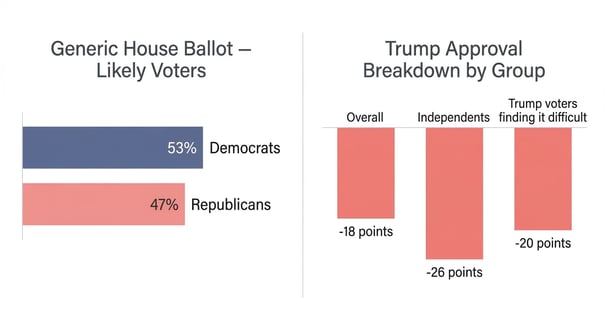
Democratic generic ballot lead and Trump approval, generated by Campaign Now with Gemini using Data from Focaldata
His contrast framing sharpens the economic argument into a single memorable line. As he further stated in the same NPR interview:
"He can talk about Greenland; we'll talk about groceries."
The message is designed to make Republicans look distracted while Democrats appear focused on what voters actually feel in their daily lives. The data backs the political logic of this pivot. A CNN poll conducted in February 2026 found that only 32% of Americans believe Trump has had the right priorities, while 68% say he has not paid enough attention to the country's most important problems. Among independents specifically, Trump's approval has fallen to 26%, a new low. Democrats running on pocketbook concerns have a clear lane.
Why History Amplifies the Threat
The political environment Emanuel is exploiting is not manufactured. It is rooted in structural patterns that have defined midterm elections for nearly a century.
-4.png?width=277&height=277&name=image%20(1)-4.png)
President Donald Trump, 45th and 47th President of the United States
According to Brookings Institution analysis, the president's party has lost ground in 20 of the last 22 midterm elections stretching back to 1938. The two exceptions, 2002 and 1998, each involved extraordinary circumstances with no parallel today. Republicans are defending their majority on extraordinarily thin margins. After 2024, the party holds only 220 House seats, just two more than the minimum needed for a majority.
Brookings projects that a swing of 6.5 points toward Democrats in the overall House vote would produce a Democratic gain of approximately 19 seats and a majority of 33. The most vulnerable Republican districts are concentrated in the Northeast, Mid-Atlantic, and Midwest, areas where a nationalized MAGA message is a liability, not an asset. Republican candidates in these districts face a simple choice: localize their campaigns around constituent results or get swept up in a national wave they cannot control.
-1.png?width=183&height=275&name=image%20(4)-1.png)
William Galston - Senior Fellow, Brookings Institution
As Brookings senior fellow William Galston notes:
"A nationalized Republican campaign featuring the red meat appeals to which the MAGA base responds could backfire badly in the swing districts the party must carry to retain its House majority."
The structural math alone makes Emanuel's referendum strategy viable. The burden is on Republicans to change the terrain before November.
The GOP Countermove That Actually Wins
A referendum frame is not a law of nature. It is a strategic choice by Democrats that Republicans can contest, disrupt, and defeat if they move with discipline and clarity.
-4.png?width=200&height=200&name=image%20(2)-4.png)
Myra Miller, Co-Founder, Winston Group
Republicans have two non-negotiable tasks heading into November: developing a real strategy for independents and winning the economic narrative. The party that wins independents wins the House, and right now that race is wide open.
As Winston Group Co-Founder Myra Miller warns:
"Voters are questioning if Republicans are focused and making progress on the issue that got them elected. And if they aren't, then they're going to take another look at the other side."
That warning carries real weight when 60% of independents currently hold a negative view of both parties, making them persuadable in either direction depending on who speaks to their economic concerns most credibly.
-1.png?width=261&height=261&name=image%20(3)-1.png)
David Winston, Founder, Winston Group
The prescription is clear. Republicans must stop ceding the economic conversation and start aggressively selling their legislative record. Winston Group's David Winston highlighted the One Big Beautiful Bill as the party's signature accomplishment that needs an effective sales job between now and Election Day.
"Even if the economy takes off this year, it should not be assumed that Republicans will naturally benefit. There has to be an effective sales job from the campaigns."
Candidates in swing districts must localize their races, tie their records to tangible constituent outcomes, and force their opponents to run on their own record rather than Trump's.
Wrap Up
Emanuel's playbook is coherent, historically grounded, and already showing results in off-year elections. In the 2025 Virginia and New Jersey gubernatorial races, Democrats running on economic frustration won independents by 19 and 13 points respectively, margins that would be catastrophic if replicated across competitive House districts in November. Republicans who dismiss this as Democratic wishful thinking are making the same mistake Emanuel's opponents made in 2006.
The counter-strategy is not complicated, but it demands discipline. Break the referendum frame by making races about local delivery, not national grievance. Own the economic narrative by communicating what the One Big Beautiful Bill means for families in specific districts. And resist the temptation to nationalize on cultural issues in districts where college-educated suburban independents are the deciding vote.
The trap is set. The countermove is available. Whether Republican campaigns execute it is the only question that matters between now and November.
-4.jpg)