


Campaigns can extend video reach beyond television, but location data and frequency controls determine whether added exposure matters.
What to Know
- A projected $11.6 billion political advertising cycle is increasing pressure to find video inventory beyond broadcast television.
- Digital video is expected to exceed 60% of television and video advertising spending during 2026.
- Programmatic screen availability grew 16% in one measured network as entertainment, retail, and health locations added inventory.
- Out of home advertising can expand digital video reach but requires different creative and measurement rules.
- Venue selection, audience overlap, frequency controls, and legal disclaimers determine whether additional impressions create strategic value.
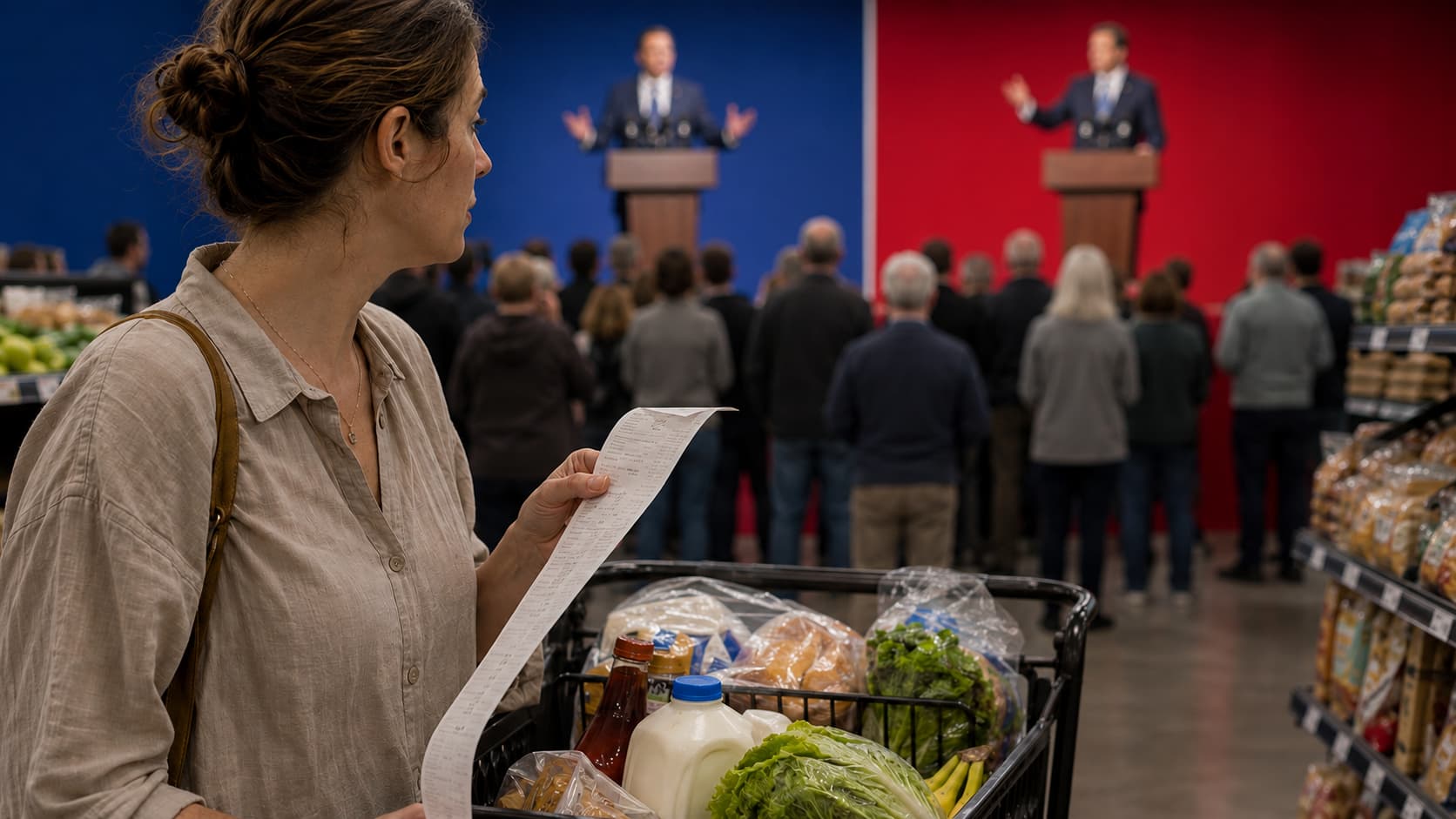
Record political advertising spending is forcing campaigns to look beyond television schedules that become more crowded and expensive near Election Day. Reuters reported that AdImpact projects $11.6 billion in advertising during the 2026 cycle, exceeding the $11.2 billion spent during the 2024 presidential election. More money will chase a limited supply of high value broadcast programs in the states and media markets deciding control of Congress.
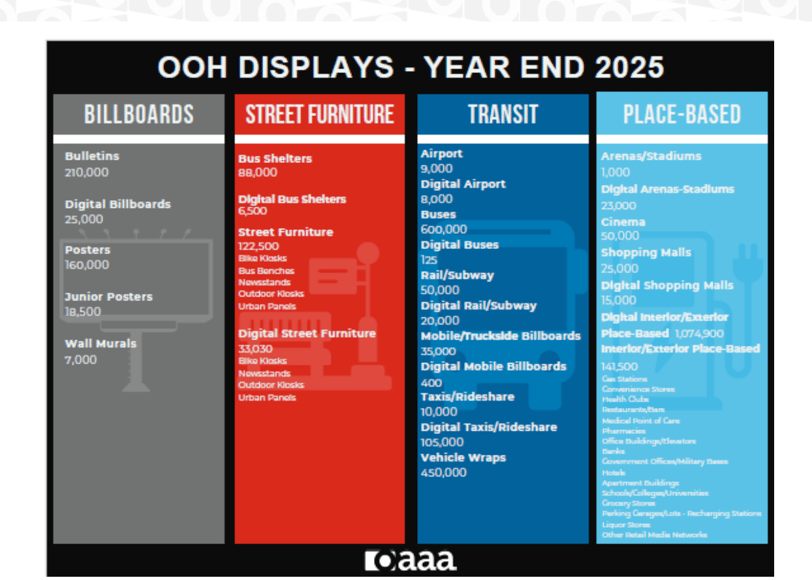
Screens follow voters across daily routines beyond television, via OAAA.
A sponsored Campaigns & Elections briefing presented digital out of home screens as one answer. Campaigns can place video in gyms, bars, gas stations, hotels, medical waiting rooms, and other commercial locations while continuing to reach households through connected television. Added screens create more opportunities for exposure, but availability alone does not establish audience quality, persuasion, or efficiency.
Scarce Television Inventory Makes Additional Screens More Valuable
Digital video has already moved beyond a supporting role in the wider advertising market. The Interactive Advertising Bureau projects United States digital video spending will exceed $80 billion during 2026 and account for more than 60% of all television and video advertising spending. Connected television spending alone is projected to grow 11%, confirming that media buyers increasingly plan television and digital video together.
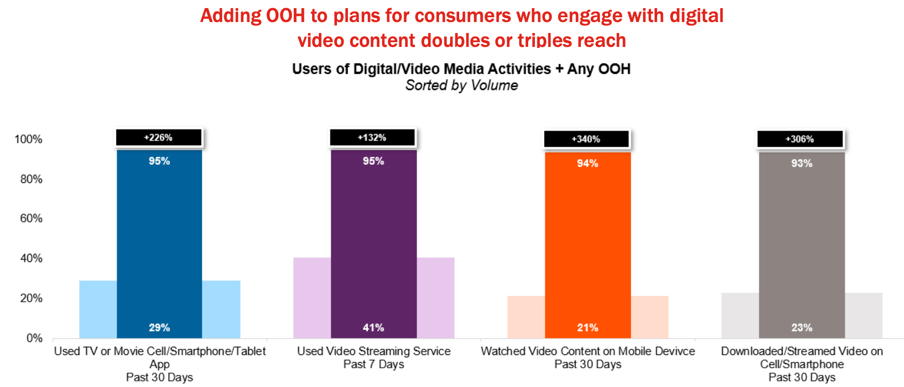
Out of home placements expand digital video reach, via OAAA.
Digital out of home gives political buyers another extension of that screen strategy. OAAA reported that the number of programmatic screens available through Place Exchange grew 16% between the second half of 2024 and the first half of 2025. Entertainment, retail, and health locations drove much of that expansion.
Campaigns gain the most value when these screens reach people missed or underexposed by the existing television plan. A placement that repeatedly reaches the same committed voters adds impressions without necessarily expanding persuasion. Media planners must therefore compare incremental reach, audience overlap, geography, and cost before moving money from broadcast or household connected television.
Industry terminology can also obscure a practical difference. A connected television inside a home generally serves a household, while a screen inside a gym or waiting room serves a shared audience. Campaigns cannot automatically transfer household targeting assumptions, completion rates, or frequency rules from one environment to the other.
Venue Context Extends Reach Without Guaranteeing Persuasion
Location can strengthen a political message when the setting matches the issue. Health care advertising may feel more immediate inside a medical office, while an affordability message can connect naturally with voters purchasing fuel. Relevance creates an opportunity for attention, but it does not prove that the audience agrees with the message or remembers it later.
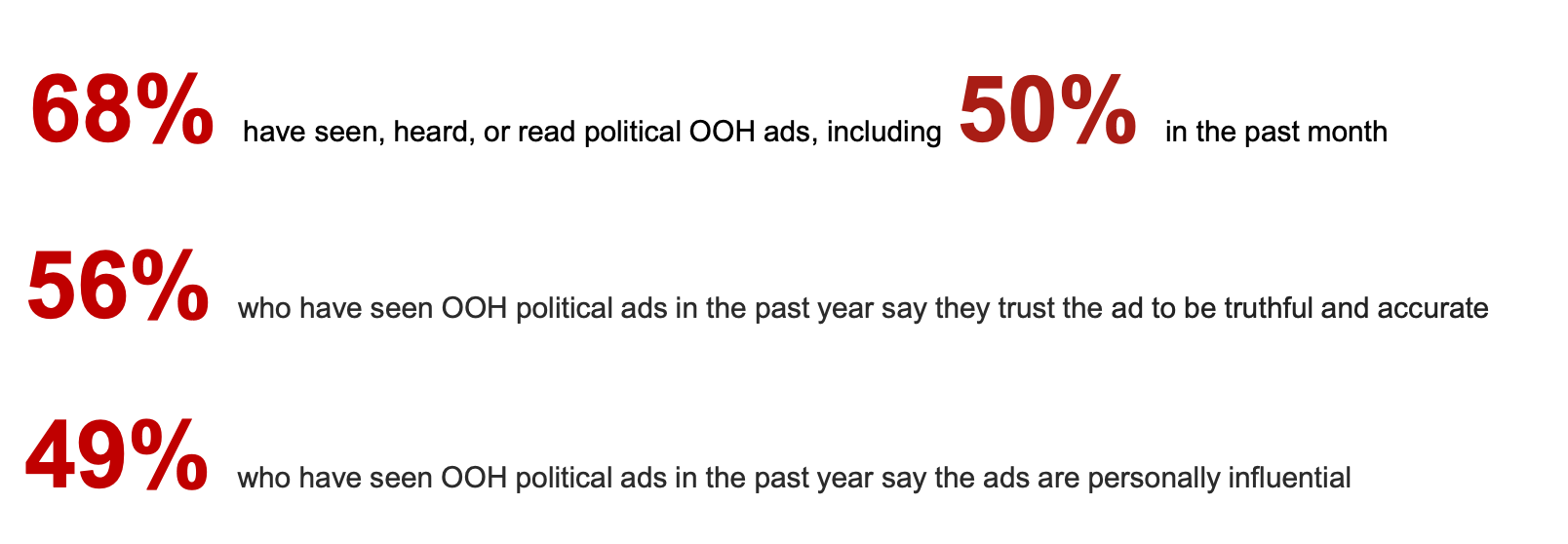
Likely voters report substantial political advertising exposure outdoors, via OAAA.
Research collected in OAAA’s political primer found that 68% of likely voters had encountered political out of home advertising, including 50% during the previous month. Among those exposed during the previous year, 49% described the ads as personally influential and 56% said they trusted them to be truthful and accurate. Those self reported findings show potential, although an industry association sponsored the underlying research and exposure does not establish a change in vote choice.
Campaigns should avoid assigning a fixed voter profile to each venue without supporting audience data. A gym does not automatically deliver younger persuadable voters, and a medical waiting room does not exclusively reach seniors. Reliable plans require verified venue information, geographic boundaries, audience estimates, operating hours, screen visibility, and information about whether audio is available.
|
Venue |
Planning use |
Verify before buying |
|
Fitness locations |
Add daytime screen exposure |
Hours, screen visibility, audio, audience estimate |
|
Bars and restaurants |
Reach shared screen environments |
Competing screens, dwell time, creative readability |
|
Medical waiting rooms |
Pair with health care messaging |
Provider access, screen rules, audience estimate |
|
Fuel and retail locations |
Add commuter and local geographic reach |
Store coverage, repetition, local overlap |
|
Hotels and lobbies |
Reach visitors and business travelers |
District relevance, location, frequency |
Creative must fit the environment as carefully as the audience. Shared screens often require large text, immediate candidate identification, captions, and a message that works without sound. Reusing a television advertisement without adaptation can leave viewers watching an unreadable disclaimer or a visual story that depends entirely on narration.
Frequency Control Separates Added Reach From Wasted Impressions
Timing makes the channel attractive and dangerous at the same time. OAAA’s historical analysis found that 67% of political out of home spending occurred during the second half of even year election cycles, including 44% during the final quarter. Late demand therefore concentrates when campaigns have the least time to correct poor placement, creative, or measurement.
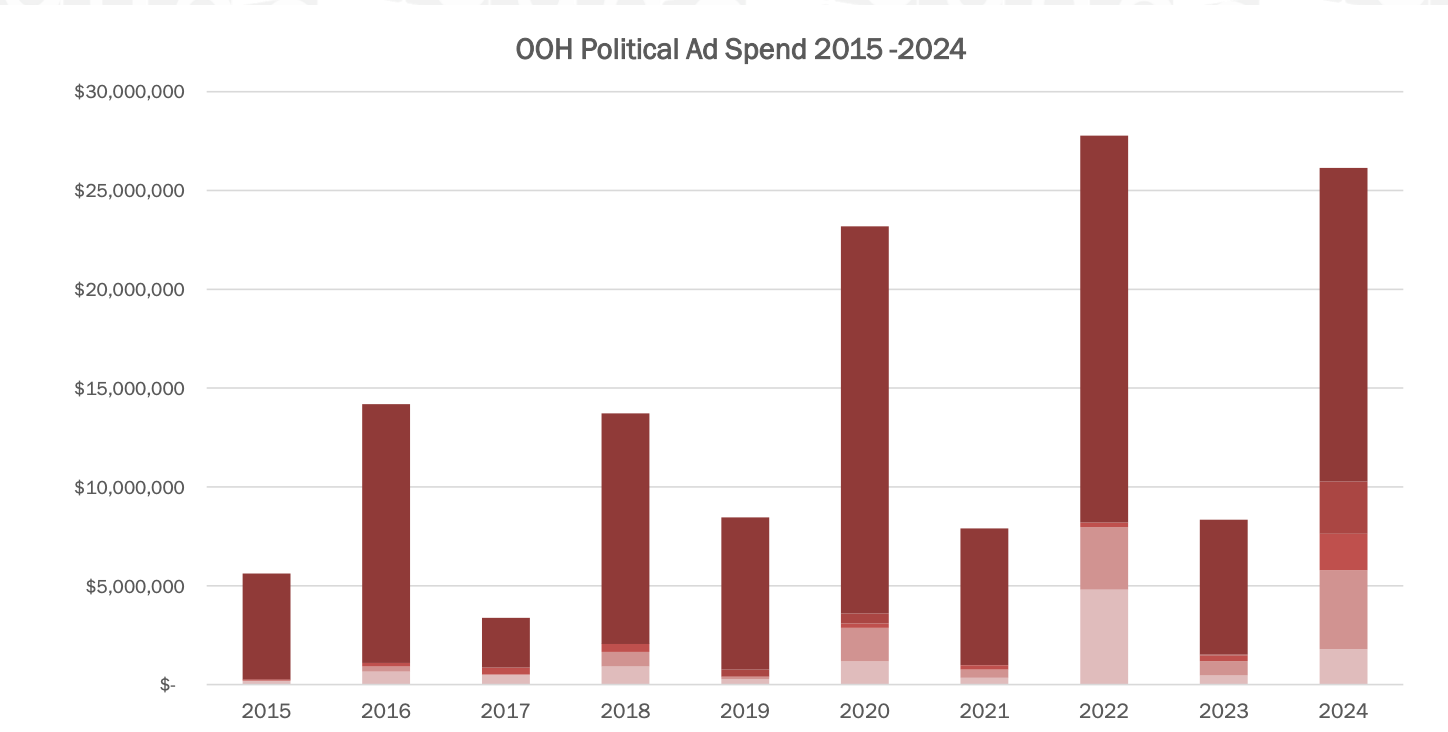
Political out of home spending intensifies late nationally, via OAAA.
Programmatic access can accelerate activation and budget changes, but it does not eliminate measurement problems. The IAB Digital Out of Home Measurement Guide identifies inconsistent standards and fragmented practices as continuing obstacles. Shared screens require estimates of opportunity to see, dwell time, audience movement, and attribution rather than a simple count of household devices receiving an advertisement.
Frequency reports must also connect channels. A voter may encounter the same campaign through broadcast television, household streaming, a mobile device, and a commercial screen during one day. Without audience overlap analysis, campaigns can mistake repeated contact with an already saturated voter for expanded reach.
Compliance belongs inside the creative process. Federal Election Commission guidance requires qualifying political communications to identify who paid for them and whether a candidate authorized them. Media teams should confirm federal, state, platform, and venue requirements before adapting one video across different screen environments.
Wrap Up
Digital out of home advertising gives campaigns another way to protect reach when broadcast inventory tightens. Programmatic access and a growing screen network make the channel easier to buy alongside connected television. Neither advantage guarantees that the resulting impressions reach persuadable voters.
Strong plans begin with the gap in the existing media schedule. Campaigns should identify underserved geography, voter groups, and times of day before choosing venues. Each placement then needs creative designed for its screen, setting, sound conditions, and viewing distance.
More screens can produce more reach, but only disciplined measurement can prove it. Campaigns that monitor overlap, frequency, cost, and audience quality can use digital out of home as a strategic extension of video. Campaigns that count every available screen as equal risk paying for exposure without gaining persuasion.
-Sep-14-2026-09-00-24-5632-AM.jpg)
-Sep-11-2026-07-48-51-8837-AM.jpg)