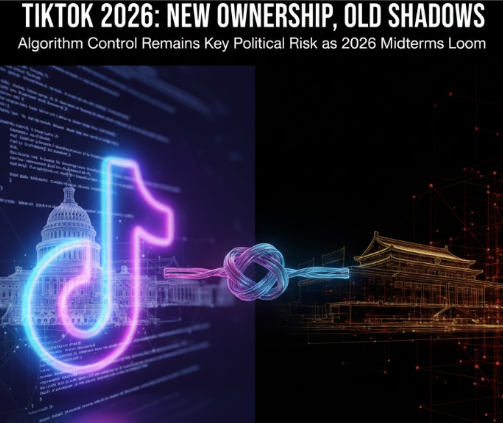

While the new U.S. entity addresses data security on paper, ByteDance's continued algorithm licensing creates significant uncertainty for campaigns ahead of the 2026 midterms.
What to Know:
- TikTok has finalized a deal creating a new U.S. based entity with investors including Oracle and Silver Lake, a move that averts a nationwide ban threatened by U.S. law.
- The deal moves all U.S. user data, from over 200 million American users, to Oracle run domestic servers to address data security demands.
- ByteDance, TikTok's Chinese parent company, will retain a significant 19.9% minority stake in the new joint venture, ensuring its continued financial interest.
- The core issue remains the algorithm: ByteDance will license its powerful content recommendation formula to the new U.S. entity for retraining on American data.
- This arrangement creates a significant gray area, as U.S. law prohibits cooperation with ByteDance on the algorithm, setting the stage for future political and regulatory conflict.
TikTok has finalized a complex and politically charged deal to create a new American led entity, a last minute maneuver that averts the imminent threat of a U.S. ban and ensures the platform’s massive user base of over 200 million Americans can continue scrolling.
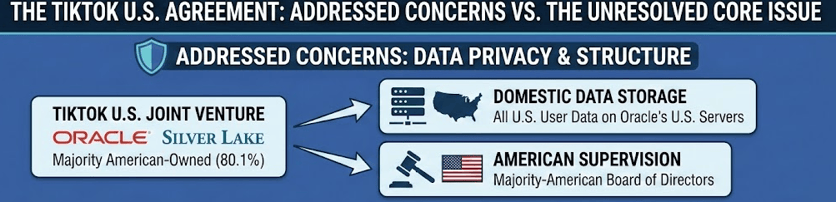
As detailed in a recent report from The Associated Press, the agreement creates TikTok U.S., a joint venture with major American investors like Oracle and Silver Lake, and establishes a framework to house all U.S. user data on domestic servers under American supervision.
While the deal directly addresses the headline national security concern around data privacy, it leaves the most critical and politically sensitive issue unresolved: who truly controls the powerful algorithm that dictates what hundreds of millions of Americans see every day.
President Donald Trump; photo via White House
The agreement, which secured a public endorsement from President Donald Trump, temporarily resolves years of escalating tension between Washington and Beijing over the world’s most popular social media app.
Deconstructing the New TikTok
The deal's structure is a meticulously crafted compromise, balancing the conflicting needs of U.S. national security advocates, Chinese economic stakeholders, and the global technology company caught in the crossfire. The newly formed TikTok U.S. will be governed by a seven member board of directors, with a majority of those seats held by Americans. The leadership will also be American, with Adam Presser, a former TikTok executive, taking the helm as CEO.
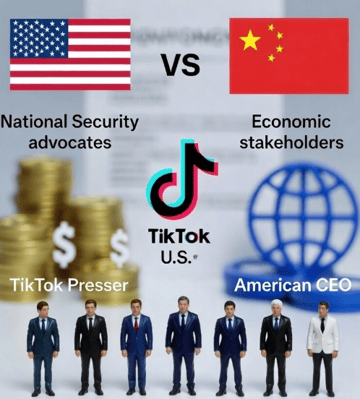
The investor group is a mix of technology and finance heavyweights. Oracle and Silver Lake, two key players in brokering the deal, will each hold a 15% share, as will the Emirati investment firm MGX. ByteDance, TikTok’s Chinese parent company, is not being fully divested. It will retain a significant 19.9% minority stake in the new joint venture, allowing it to maintain a substantial financial interest in the lucrative U.S. market. This minority stake itself is a point of contention, as critics argue it keeps a direct line of influence open to ByteDance.
“What’s more, the TikTok deal may not meet the law’s requirements,” particularly where continued relationships with former owners are concerned. — Adam Conner, Center for American Progress
A central pillar of the agreement is the promise to secure American data. For years, the primary fear articulated by lawmakers from both parties was that the personal data of American citizens could be accessed by the Chinese government through ByteDance.
To neutralize this threat, the deal mandates that all U.S. user data will be migrated to and stored on domestic servers physically located within the United States and managed by Oracle. This “Project Texas” initiative is designed to create a digital fortress, making it operationally impossible for data to be exfiltrated to China and giving U.S. authorities oversight of the data infrastructure.
The Billion-Dollar Question: Who Controls the Algorithm?
While the data storage issue appears settled on paper, the deal leaves a gaping hole around the platform’s most powerful and politically significant asset: its content recommendation algorithm. The algorithm is the "secret sauce" that makes TikTok so uniquely compelling and, in the eyes of its critics, so potentially dangerous.

It is a highly sophisticated system that learns a user’s preferences with startling accuracy, feeding them a continuous, personalized stream of content designed to maximize engagement. Control over this algorithm is effectively control over a primary information source for a huge swath of the American electorate.
Under the terms of the new agreement, the U.S. entity will be responsible for retraining, testing, and updating this algorithm using only U.S. user data. The goal is to create a new, Americanized version of the algorithm, free from any potential influence from its Chinese origins. However, the U.S. company will not be building this technology from scratch. Instead, ByteDance will license its original, world-class algorithm to the new American entity to serve as the foundational code for this retraining effort.
“Who controls TikTok in the U.S. has a lot of sway over what Americans see on the app.” — Anupam Chander, professor of law and technology, Georgetown University
However, the U.S. company will not be building this technology from scratch. Instead, ByteDance will license its original, world-class algorithm to the new American entity to serve as the foundational code for this retraining effort.
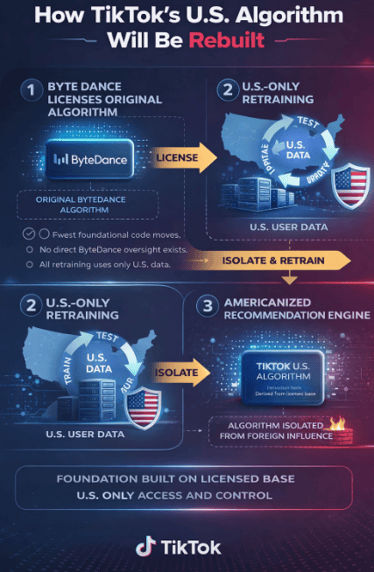
This licensing arrangement is the crux of the problem. It appears to be in direct tension with the explicit text of the divestment law passed by Congress, which was designed to force a clean break. That law prohibits “any cooperation with respect to the operation of a content recommendation algorithm” between ByteDance and the new American owner.
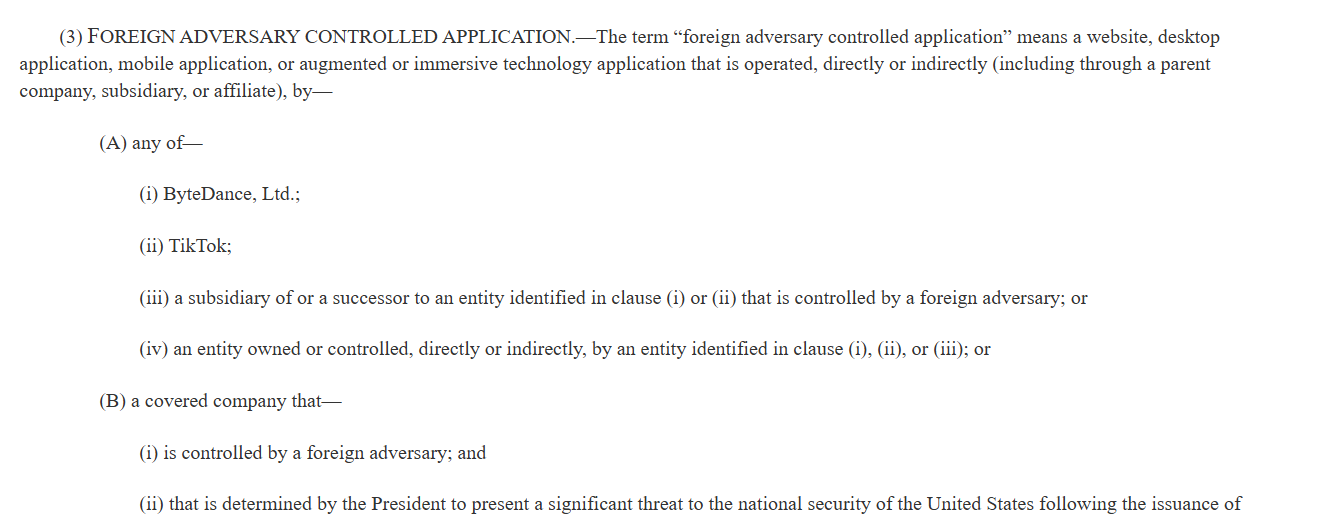
Image of H.R.8038 via Congress
By licensing its core intellectual property, ByteDance is arguably engaging in exactly that kind of cooperation. This unresolved legal and political conflict over who truly owns and influences the code that shapes users' feeds is the single greatest risk for campaigns and political speech moving forward. It creates a permanent justification for future regulatory scrutiny and potential intervention.
Strategic Implications for Political Campaigns
The continued, albeit indirect, involvement of ByteDance in the algorithm’s DNA raises a host of strategic questions for political campaigns. Even with a U.S. board and domestic data storage, the potential for the algorithm to be influenced in subtle ways remains a significant concern.
This influence might not be as overt as direct censorship but could manifest in the downranking of certain political viewpoints, the suppression of get-out-the-vote messages for one party, or the amplification of divisive issue advocacy content that serves a foreign power’s interests.
“The press release provides no additional information that allows observers to judge if the law’s requirement has been met.” — Adam Conner, Center for American Progress
The lack of full transparency into how the algorithm prioritizes and distributes political content means that campaigns are operating on a field where the rules can be changed at any moment without notice or recourse. This uncertainty makes heavy reliance on the platform a dangerous strategic gamble.
With control over the algorithm still a contested issue, campaigns must therefore view TikTok as both a critical and a highly volatile channel. The platform’s ability to shape cultural narratives and mobilize key voting blocs, particularly younger Americans who are notoriously difficult to reach through traditional media, is undeniable. Its format is perfectly suited for creating viral political moments and fostering a sense of community among supporters.
Wrap Up
Despite this significant uncertainty, campaigns preparing for the 2026 midterms cannot afford to simply abandon TikTok. With over 200 million American users, a number that continues to grow, it represents a piece of critical communications infrastructure for modern voter engagement, persuasion, and mobilization.
The platform’s reach into demographics that are not heavy consumers of television news or email is simply too vast to ignore. For the foreseeable future, the strategic imperative for campaigns is to remain on the platform, invest in building an authentic presence, and leverage its unique ability to connect with voters in a format they prefer.
Building a robust, multi-platform digital presence is also essential to avoid over-reliance on a single, unpredictable channel. The smart strategy for 2026 is to harness TikTok’s immense power while acknowledging its inherent instability, treating it as a potent but volatile tool in the modern campaign arsenal.
.png)